.jpg)
- 16 Nov, 2026
How to Lower Cost per Acquisition: 9 Practical Fixes
The campaign is running and customers are coming in, but each one costs more than it should. The advertiser's first instinct is to lower the bid or switch networks. Both can help, but they treat the price of a click, and the price of a customer depends on more than that.
This guide shows how to lower cost per acquisition (CPA), which this site also calls cost per result, by fixing the parts of the path that quietly raise it. It starts with the symptom you are seeing, so you can skip straight to the fixes that matter for you.
In short: To lower cost per acquisition, confirm your tracking records every sale, cut invalid and low-intent traffic, narrow targeting to countries and devices that convert, match each ad to its landing page, refresh tired creatives, and choose a pricing model that fits your goal. Change one thing at a time and judge by cost per result.
Written by: The Adstork Ad Network advertiser team
Last updated: November 2026
Reading time: 8 minutes
Best for: Advertisers whose cost per customer is higher than planned
What Symptom Are You Seeing?
Pick the description that sounds most like your campaign, then start with the fixes listed under it.
"Lots of clicks, few customers"
Traffic arrives but does not convert, so each customer costs a lot.
"It worked at first, then costs crept up"
Early results were good, and the price per customer has risen since.
Key Takeaways
- Cost per acquisition depends on two things: what you pay per click and how many clicks become customers.
- Check tracking first. Missing conversions make a good campaign look expensive.
- Most savings come from cutting waste, not from bidding lower.
- Change one thing at a time so you can see what worked.
What Actually Determines Your Cost per Acquisition?
Cost per acquisition is your total spend divided by the number of customers or other results you got. If you pay per click, it works out to the cost per click divided by the share of clicks that convert. That gives you two levers: pay less for each click, or convert more of the clicks you already pay for.
CPA = cost per click ÷ conversion rate
Here is an illustrative example. The numbers are made up to show the math, not benchmarks. Say clicks cost $0.50 and 2% of them convert.
STARTING POINT
$0.50 per click, 2% convert
$25.00
LEVER 1: PAY LESS PER CLICK
$0.40 per click, 2% convert
$20.00
LEVER 2: CONVERT MORE CLICKS
$0.50 per click, 3% convert
about $16.67
A 20% cheaper click lowered the cost per customer by 20%. A one point gain in conversion rate lowered it by a third. Conversion rate is often easier to improve than click price, which is why most of the fixes below work on conversion, tracking, and waste.
How Do You Lower Cost per Acquisition Step by Step?
The fixes are in a sensible order. Effort levels are our rough guide, not a measurement.
FIX 1
Set your target cost per acquisition first
Why it works: Without a break-even number, "too expensive" is only a feeling.
- Work out what a customer is worth to you and the most you can pay for one.
- Write down a stop line, the cost at which you pause and investigate.
Effort: Low
Read next: How to launch your first ad campaign
FIX 2
Make sure every conversion is recorded
Why it works: If tracking misses some sales, your cost per acquisition looks higher than it really is, and you may cut campaigns that work.
- Complete a test conversion yourself and confirm it appears in your reports.
- Compare the sales the platform reports with your own records for the same days.
Effort: Low
FIX 3
Cut invalid and low-intent traffic
Why it works: Clicks that can never convert still cost money, so they raise your cost per acquisition without giving anything back.
- Break results down by placement, country, device, and format.
- Pause segments with many clicks, no results, and near-zero time on the page, and send your evidence to the network.
Effort: Low to medium
Read next: How to spot ad fraud and invalid traffic
FIX 4
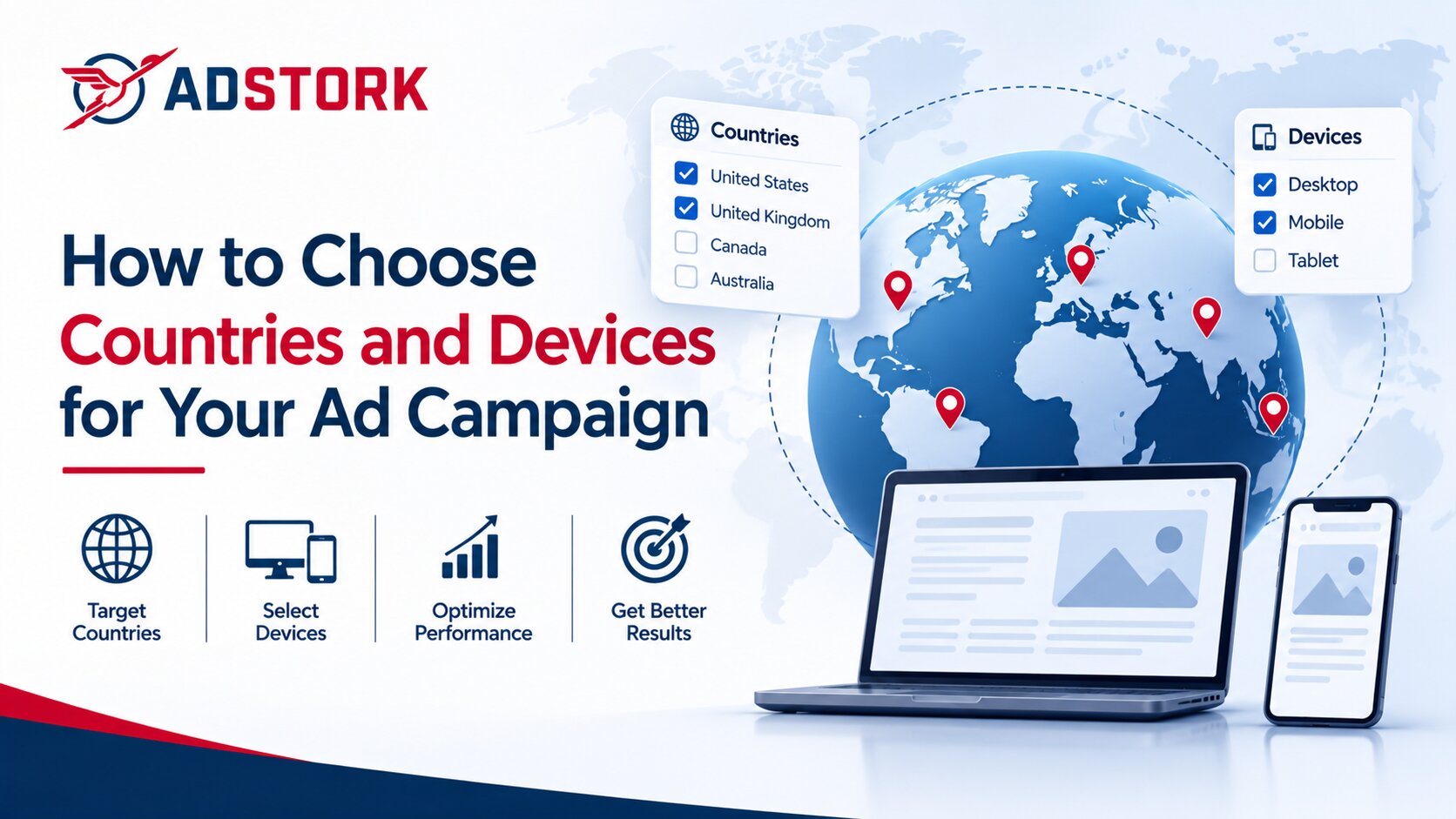
Narrow countries and devices to what converts
Why it works: Cheap clicks from places where your offer cannot work lower your average click price but raise your cost per customer.
- Run each country as its own small campaign, and report mobile and desktop separately.
- Move budget from segments over your target to those under it.
Effort: Medium
Read next: How to choose countries and devices for your ad campaign
FIX 5
Match the ad format to the offer
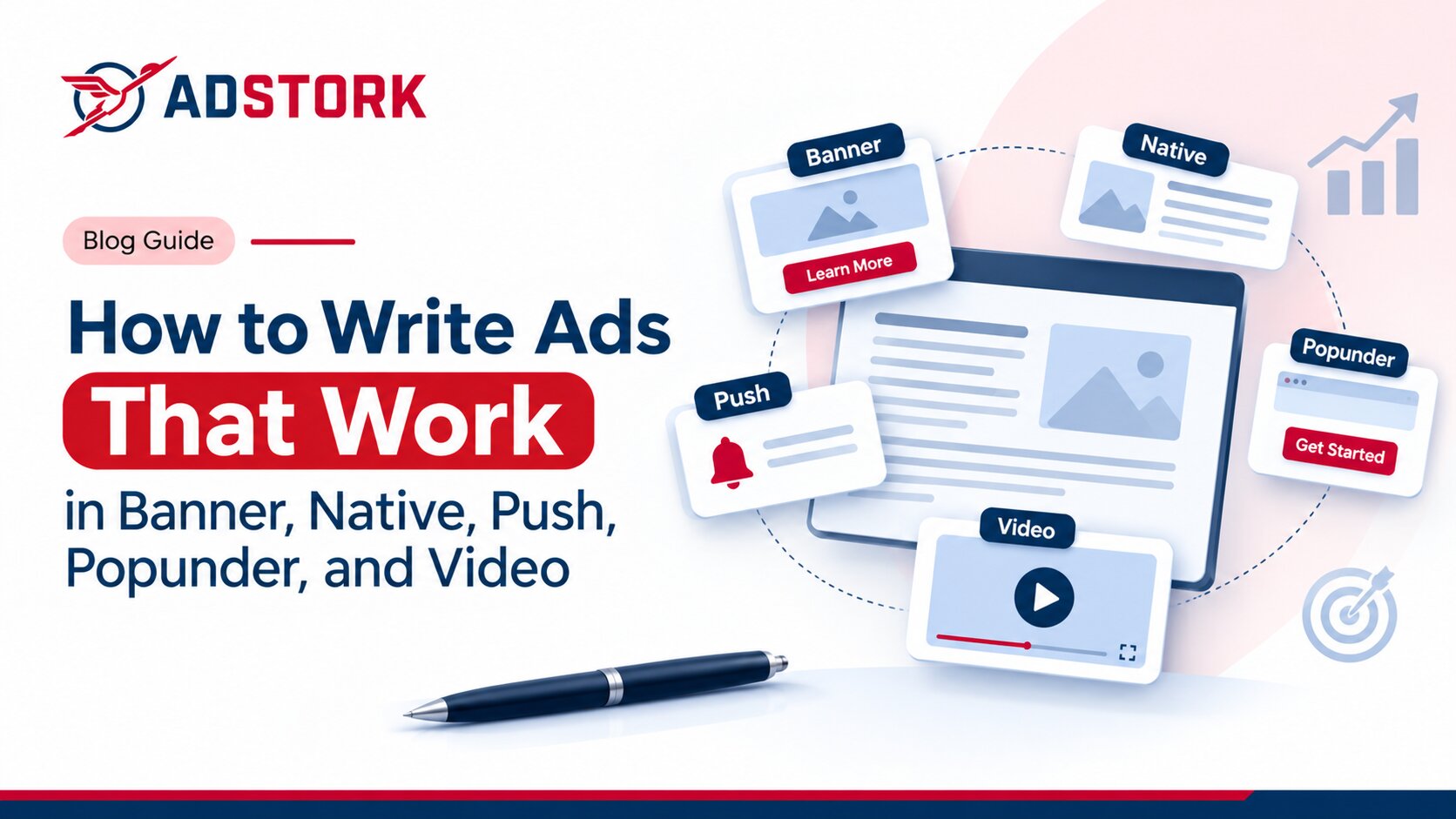
Why it works: Banner, native, push, popunder, and video reach people in different moments, so the same offer can cost very different amounts to convert in each.
- Run the same offer in two formats with equal small budgets.
- Compare cost per result, not clicks, and keep the cheaper format.
Effort: Medium
Read next: the format section of our first campaign guide
FIX 6
Write for the format and keep ad and page consistent
Why it works: When the ad promises one thing and the page shows another, visitors leave, and every lost visitor was a paid click.
- Put the hook in the first words of a push message, and make a popunder landing page explain the offer on its first screen.
- Read each ad out loud and ask whether the page confirms exactly that.
Effort: Medium
Read next: How to write ads that work in banner, native, push, popunder, and video
FIX 7
Refresh creatives before they tire
Why it works: When the same people see the same ad again and again, response falls and your cost per acquisition creeps up with nothing else changed.
- Launch with three to five versions and write down your best first-week numbers.
- Add a new version beside the old one when click-through rate slides, changing one thing at a time.
Effort: Medium
Read next: Ad fatigue: how to spot it, fix it, and stop it draining your ROI
FIX 8
Fix the landing page
Why it works: The biggest drop-off often happens after the click. A better page lifts conversion rate, which lowers cost per acquisition without touching your bids.
- Ask for one action per page, with fewer form fields.
- Open the page on a real phone and complete the action yourself.
Effort: Medium
Read next: the "what to fix first" section of our clicks but no conversions guide
FIX 9
Choose the right pricing model, then scale slowly
Why it works: The pricing model decides who carries the risk and which number tells you whether the campaign worked. The cheapest rate is not always the cheapest result, and costs usually rise as spend grows.
- Compare pricing models by cost per result, and confirm which ones apply to each format.
- Raise the budget on a winner in small steps and go back a step if cost passes your stop line.
Effort: Low to medium
Read next: CPM vs. CPC vs. CPA and How to scale a winning ad campaign
Where Does Adstork Fit In?
Most of these fixes depend on seeing results clearly. Adstork provides reporting by country, device, format, and placement, so you can find the segment raising your cost per acquisition and cut it. You can test the same offer in banner, native, push, popunder, and video from one platform, and ad quality and traffic integrity are screened.
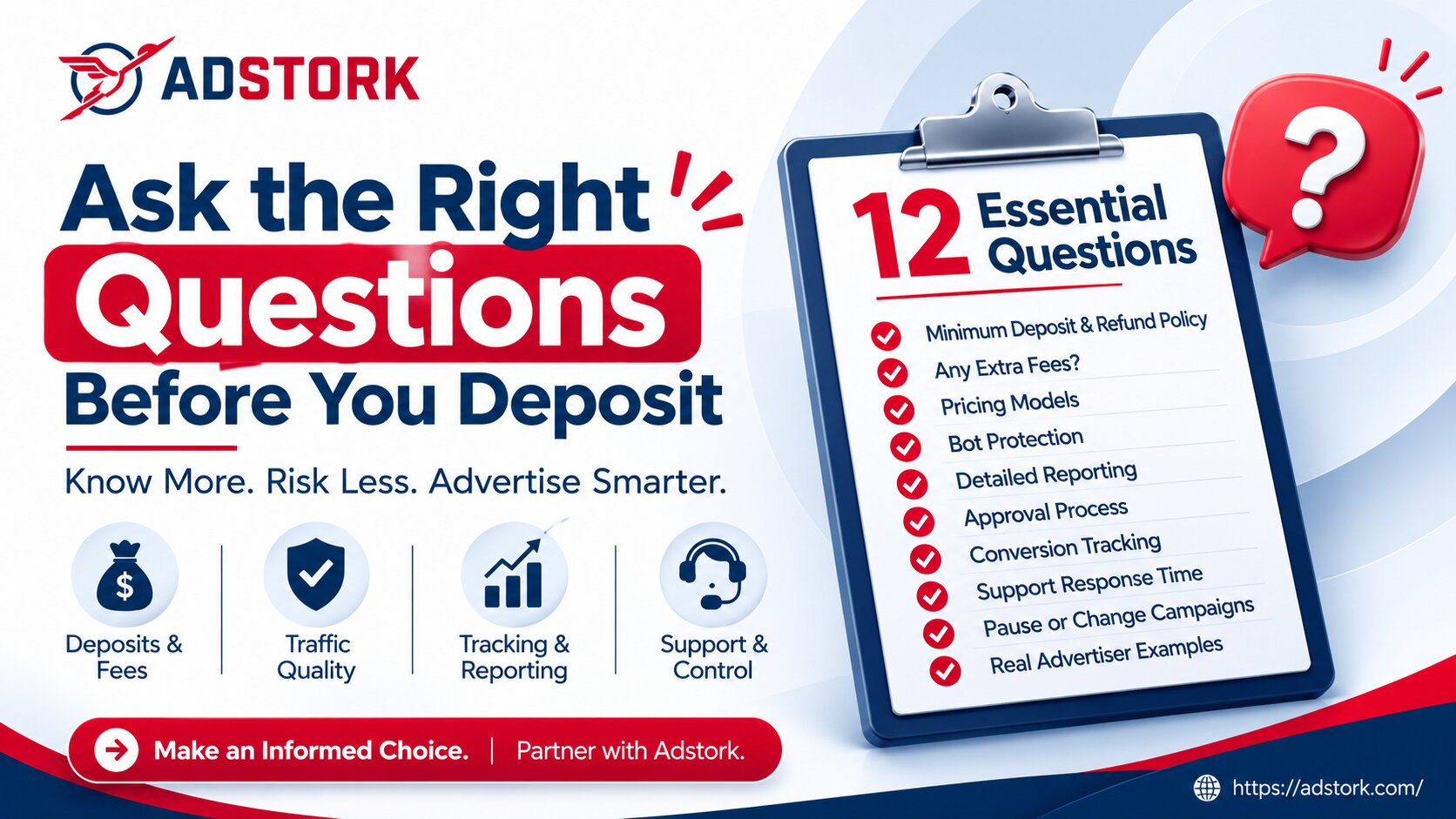
Advertisers can start through the self-serve platform with guided onboarding and live chat, or work with an account manager who can review a campaign with you. Before you deposit, our 12 questions to ask an ad network are a good place to start, and you can read more on our advertiser page.
What Are the Honest Limits?
Reality check: Every offer has a floor below which cost per acquisition will not go, and no network can lower it past what the product, price, and market allow. Small tests can also mislead, since a few conversions make results noisy. Seasonal demand can move your costs without any change from you. Compare against the same period last year when you can.
If every fix leaves the cost above break-even, the offer or price may need work, not the ads.
What Comes Next for Advertiser Measurement?
Third-party tracking is getting less reliable, so advertisers are moving toward first-party conversion data on their own sites. Automated bidding tools are improving too, but they work best when you have already set a clear target and stop line. Clean tracking today makes every later campaign cheaper to run and easier to trust.
Quick recap
Cost per acquisition is cost per click divided by conversion rate. Set a target, confirm tracking, cut waste, narrow targeting, match ad and page, refresh creatives, and pick the right pricing model. Change one thing at a time and judge every change by cost per result.
Final Word
A high cost per acquisition is a symptom, and the cause is usually findable. Start with tracking, work down through traffic, targeting, and creative, and let your own numbers guide each step. At Adstork Ad Network, five ad formats, segment-level reporting, and hands-on account support help advertisers find the leak and fix it faster.
Start lowering your cost per customer
FAQs
How do I lower my cost per acquisition? Confirm your tracking records every sale, cut invalid and low-intent traffic, narrow targeting to countries and devices that convert, match each ad to its landing page, refresh tired creatives, and choose a pricing model that fits your goal. Change one thing at a time.
How do I calculate cost per acquisition? Divide your total ad spend by the number of customers or other results it produced. If you pay per click, you can also divide your cost per click by your conversion rate.
What is a good cost per acquisition? There is no single number. A good cost per acquisition is one comfortably below what a customer is worth to you, so work out your break-even first.
Why is my cost per acquisition so high? Common causes are broken tracking, traffic that cannot convert, targeting countries or devices where the offer does not work, a landing page that loses visitors, and creatives that have worn out. Check them in that order.
Is a lower cost per click always better? No. Cheap clicks that never convert raise your cost per customer. Cost per acquisition depends on both click price and conversion rate, so judge by cost per result.
How long does it take to lower cost per acquisition? Tracking and targeting fixes can show results within days, but give each test enough conversions to read before judging it. Creative and landing page changes may need a couple of weeks.
Should I scale a campaign once my cost per acquisition is low? Yes, but gradually. Costs usually rise as spend grows, so raise the budget in small steps and set a stop line in advance.
How does Adstork help advertisers lower their cost per acquisition? Through reporting by country, device, format, and placement, five ad formats on one platform, screening for ad quality and traffic integrity, and an account manager who can review your campaign.
Leave a Comment