- 28 Oct, 2026
How to Launch Your First Ad Campaign: A Step-by-Step Guide for Advertisers
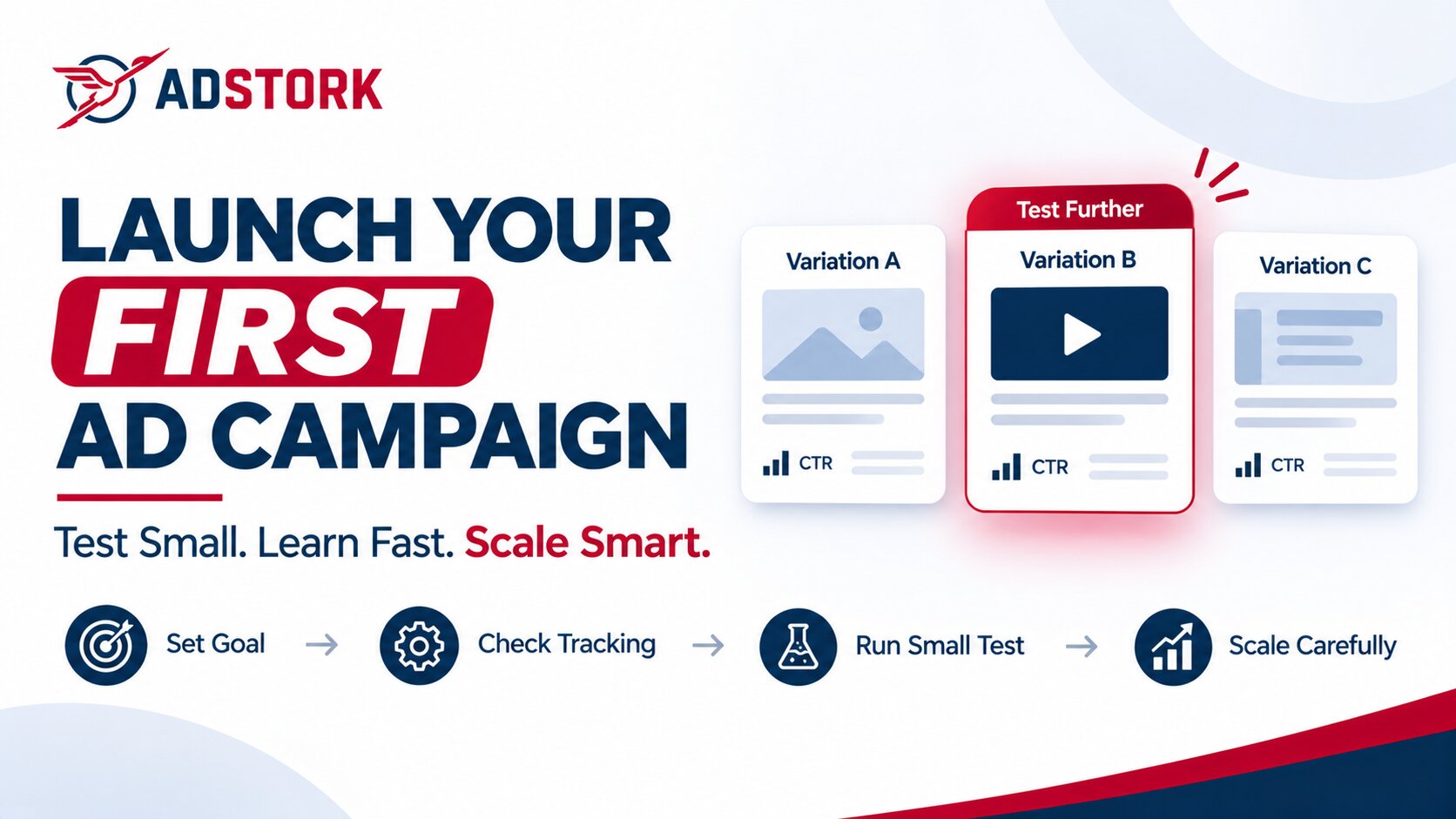
Most first campaigns fail for the same quiet reason: the advertiser spends the whole budget before learning anything. The money goes out in a few days, the results are unclear, and the conclusion is "this channel does not work." Usually the channel was fine. The launch had no plan for what to measure or when to stop.
A good first campaign is not about winning on day one. It is about buying clear answers cheaply, then putting real money behind whatever the answers point to.
In short: To launch your first ad campaign, set one measurable goal, set up conversion tracking, choose an ad format that fits the offer, start with a small split-tested budget, and scale only the variation that beats your target cost per result.
Key Takeaways
- Decide your target cost per result before you spend anything. It is the yardstick for every later decision.
- Test tracking yourself before launch. Broken tracking is the most common false failure.
- Run a small test across a few variations instead of one big bet.
- Scale gradually, and cut what clearly fails.
What Are the Seven Steps to Launch a First Campaign?
Pick one goal and one number.
Choose a single outcome, such as a sale, a sign-up, or an install. Then decide the most you can pay for one of them. If a customer is worth $60 to you, a $30 cost per result leaves room for profit. Without this number, "good" and "bad" results are just opinions.
Get the landing page ready.
Send traffic to a page that matches the ad, loads fast on a phone, and asks for one action. Paid traffic is expensive to waste on a page that is slow, cluttered, or off message.
Set up and test conversion tracking.
Complete a conversion yourself and check that it shows up in your reports. If it does not appear, fix that before spending a cent. Otherwise real results will look like zero.
Choose your format and audience.
Match the format to the offer (see the cards below), then pick a small set of countries and devices where your offer makes sense. A narrow start gives cleaner answers than a global one.
Split a small test budget.
Divide a modest budget across three or so variations, such as different formats or creatives. Keep everything else the same, so you know what caused any difference.
Read results by segment, not just overall.
Break results down by country, device, and format. A campaign that looks weak overall often has one segment that works well, and that segment is where you scale.
Cut the losers and scale the winner gradually.
Pause what clearly misses your target, then raise the winner's budget in steps while watching cost per result. Results often shift as spend grows, so a sudden jump can undo a good test.
Which Ad Format Fits Which Kind of Offer?
Each format reaches people in a different frame of mind. These are starting points to test, not guarantees, since results depend on your offer, country, and creative.
Banner
How it works: A visual ad placed within a page layout.
Good starting fit: Visual products, brand recognition, and retargeting-style messages.
Native
How it works: An ad styled to sit naturally inside page content.
Good starting fit: Offers that need a little explanation, and content-style pitches.
Push
How it works: A short message delivered as a notification to opted-in users.
Good starting fit: Short, clear offers with an immediate hook and a simple next step.
Popunder
How it works: Your page opens in a new window behind the one the visitor is using.
Good starting fit: Volume-driven offers with a landing page that explains itself fast.
Video
How it works: A moving, sound-optional ad that tells a short story.
Good starting fit: Products that are easier to show than describe.
What Does a Small Test Budget Look Like in Practice?
Here is an illustrative test. The numbers are made up to show the method, not benchmarks. Say a sign-up is worth enough that your target cost per result is $30, and you split $300 across three variations.
Against a $30 target, only variation A passes. The sensible move is to pause C, hold B for a second look with a new creative, and put the next budget behind A, raising it in steps. A real test needs more conversions than this to be reliable, so treat a result like this as a direction to confirm, not a final verdict.
Where Does Adstork Fit In?
Advertisers can start through Adstork's self-serve platform, which includes guided onboarding and live chat, or work directly with an account manager who can help plan the first test. Campaigns can run in banner, native, push, popunder, and video formats, so the split test above can happen in one place.
Reporting by country, device, and format makes step six practical, because the winning segment is visible instead of buried in an average. Ad quality and traffic integrity are screened, which helps keep test spend reaching real users. Before launching, confirm conversion tracking and the minimum campaign budget with your account manager.
What Mistakes Should First-Time Advertisers Avoid?
MISTAKE
Spending the full budget in the first few days.
FIX
Start with a test slice and scale only after a clear signal.
MISTAKE
Launching before checking tracking.
FIX
Complete a test conversion and confirm it appears in your reports.
MISTAKE
Changing creative, format, and country at the same time.
FIX
Change one variable per test so the result has a clear cause.
MISTAKE
Judging a campaign by clicks alone.
FIX
Judge by cost per result, the number tied to your actual goal.
What Are the Honest Limits of a First Campaign?
Reality check: A small budget can give a noisy picture, and some offers need several rounds before they work. A weak result can come from the offer or price, which no ad format can fix. Costs also tend to move as you scale, so a winning test does not guarantee the same cost at ten times the spend.
Plan on at least two or three test rounds before judging a channel.
What Comes Next for Advertisers?
Third-party tracking is becoming less reliable, so advertisers are moving toward first-party conversion data and clean measurement on their own sites. Setting that up now makes every later campaign easier to read. Automated optimization will help too, but it works best when you have already defined a clear goal and target cost.
Final Word
A first campaign is a learning exercise with a budget attached. Set the goal, test the tracking, split a small budget, read the results by segment, and scale only what beats your target. At Adstork Ad Network, a self-serve platform, hands-on account support, and transparent reporting help advertisers run that process with confidence.
Ready to launch your first campaign the smart way? Partner with Adstork Ad Network today.
FAQs
How do I launch my first online ad campaign? Set one goal and a target cost per result, prepare a fast landing page, test your conversion tracking, choose a format and a narrow audience, then split a small budget across a few variations and scale the winner.
How much should I spend on a first test? Enough to collect a meaningful number of conversions for each variation, which depends on your conversion rate and target cost. Start with an amount you can afford to lose and confirm minimums with the platform.
Which ad format should a beginner start with? Pick the one that fits how the offer is best explained, such as native for offers needing context or video for products easier to show. Testing two or three is better than guessing one.
What is cost per result? Total spend divided by the number of results, such as sales or sign-ups. It gives one comparable number across formats and pricing models.
When should I scale a campaign? When a variation beats your target cost per result across enough conversions to trust the result. Raise the budget in steps and watch cost per result as spend grows.
How does Adstork help new advertisers? Through a self-serve platform with guided onboarding and live chat, optional account manager support, five ad formats, and reporting by country, device, and format.
Leave a Comment