- 30 Oct, 2026
Ad Fatigue: How to Spot It, Fix It, and Stop It Draining Your ROI
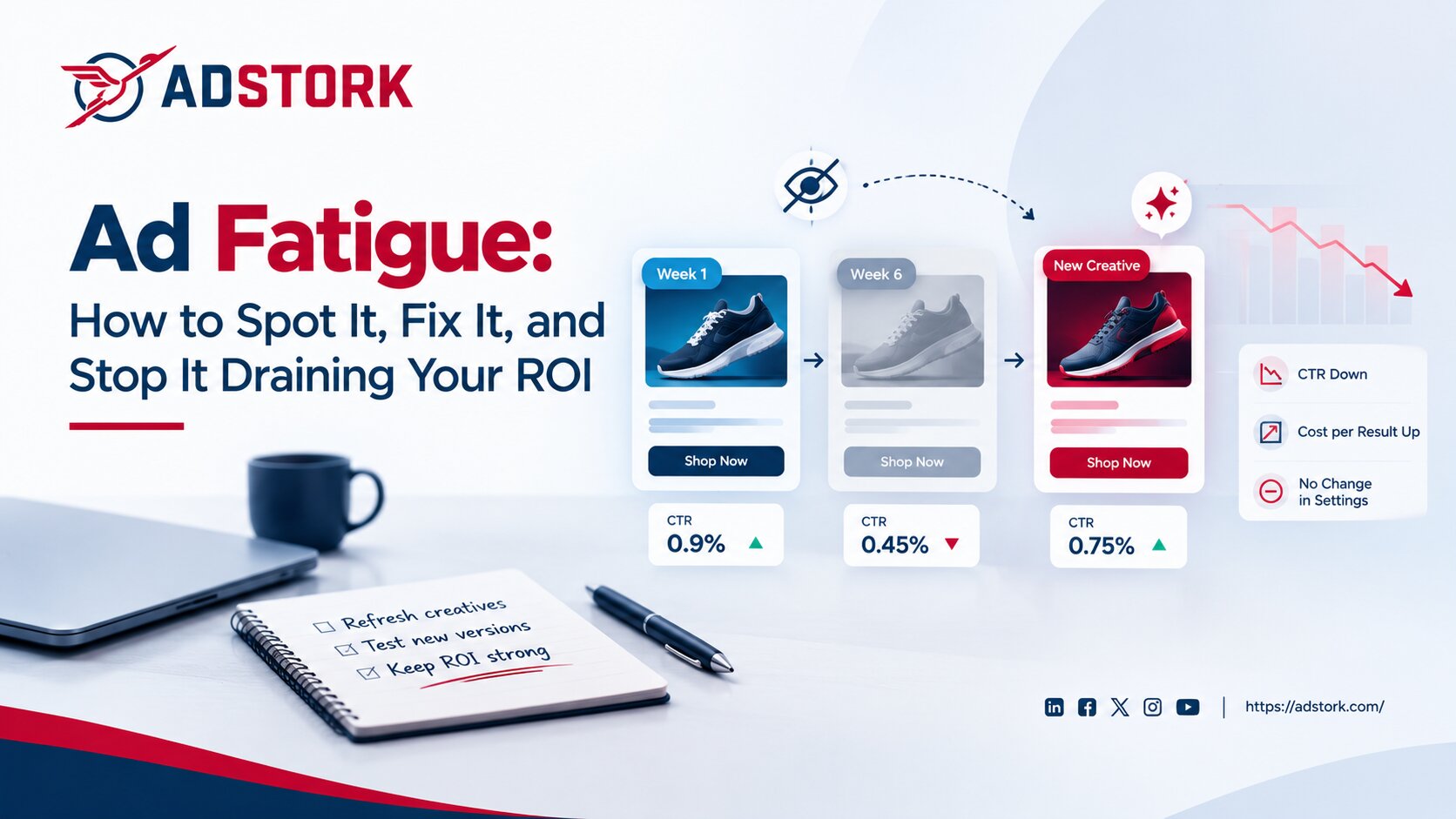
Week one looked great. Week three looked fine. By week six the click-through rate is sliding, the cost per result keeps creeping up, and nothing in the campaign settings has changed. The offer is the same, the budget is the same, and the ad is the same. That last part is usually the problem.
People stop noticing an ad they have seen many times. It is one of the most common reasons good campaigns fade, and one of the cheapest to fix once you know what to look for.
In short: Ad fatigue happens when the same people see the same ad so often that they stop responding. Typical signs are a falling click-through rate and a rising cost per result with no change in targeting or offer. The fix is to refresh creatives on a schedule, limit repeat exposure where possible, and test new versions before the old one fades.
Written by: [Author name], [Job title] at Adstork Ad Network
Reading time: 6 minutes
Best for: Advertisers running campaigns that used to perform
Key Takeaways
- Fatigue looks like a slow slide, not a sudden crash, so it is easy to miss.
- Rule out tracking, traffic quality, and seasonality before blaming the creative.
- Launch with several creatives and keep new ones ready before the winner fades.
- A refresh does not mean a rebuild. Small changes to the headline or image can be enough.
What Is Ad Fatigue and Why Does It Happen?
Attention is the thing you are paying for, and attention wears out. The first few times someone sees an ad, it is new and gets a look. After that, the brain files it as familiar and skips past it. Response drops even though the ad itself has not changed.
It tends to hit faster when your audience is small, your budget is large, or you run only one creative. In those cases the same people meet the same message again and again, with nothing else to break the pattern.
How Can You Tell It Is Fatigue and Not Something Else?
A falling result has several possible causes, so check the usual suspects first. Fatigue is the likely answer only when the others come back clean.
Is tracking broken?
Complete a test conversion yourself. If it does not appear in your reports, fix that first. Fatigue is not the cause if results were never recorded correctly.
Did the traffic change?
Look at results by country, device, and placement. If one segment collapsed while the others held, the problem is that segment, not the ad.
Is it seasonal?
Compare against the same period last year if you can. Demand shifts around holidays and budget cycles can move costs without any change from you.
Did something change on your page?
A slower landing page, a changed price, or a broken form can mimic fatigue. Reload your own page on a phone and check.
What Are the Warning Signs of Ad Fatigue?
Click-through rate falls week after week while impressions stay steady.
Cost per result rises with no change in targeting, offer, or landing page.
The ad that won early is now your weakest. The creative that led the first test has slipped behind newer ones.
Results are worse in smaller segments first. Narrow audiences tire sooner, so a drop in one country often appears before the rest.
Pro tip: Write down your best click-through rate and cost per result from the first week. A written baseline makes a slow slide visible, because day-to-day numbers rarely feel different until you compare them with where you started.
How Do You Fix Ad Fatigue Step by Step?
Confirm the pattern over at least a week.
One bad day is noise. A steady decline in click-through rate alongside rising cost is the signal.
Add fresh creatives next to the old one.
Do not replace the old ad right away. Run the new versions alongside it so you can see whether they actually beat it.
Change one thing at a time.
Swap the headline, or the image, or the call to action. If you change all three, you will not know which one helped.
Try a different format for the same offer.
People who tuned out your banner may respond to a native or push version, because each format reaches them in a different frame of mind.
Widen the audience carefully, or reduce the pressure on it.
If the same small group sees your ad too often, add a new country or device as a separate test, or lower the budget on the tired segment.
Retire the loser and keep the winner in rotation.
Once a new version clearly beats the old one over enough conversions, pause the old one. Keep it in your archive, since a tired ad can work again after a long break.
What Does a Refresh Look Like in Practice?
Here is an illustrative case. The numbers are made up to show the method, not benchmarks. An advertiser's single banner started with a strong click-through rate and has slipped over six weeks. Two new versions are added beside it.
Original, week 1
0.9%
Original, week 6
0.45%
New headline, week 8
0.75%
New image, week 8
0.55%
The new headline recovers most of the lost response, so it earns the larger share of budget. The new image helps only a little, so it stays as a smaller test. Because each version changed one thing, the advertiser also learns that the headline was what had grown stale.
Where Does Adstork Fit In?
Catching fatigue early depends on seeing results by segment. Adstork provides transparent reporting by country, device, and format, so a tired audience shows up in one slice before it drags down the whole campaign. Advertisers can move an offer between banner, native, push, popunder, and video without changing platform, which makes the format test in step four straightforward.
An account manager can review a slipping campaign with you and suggest what to refresh first. If you want to limit how often the same person sees an ad, ask your account manager which exposure controls are available for each format.
What Are the Best Habits for Preventing Fatigue?
01
Launch with several creatives. Starting with three to five versions gives you more chances to find a winner and spreads exposure across more than one message.
02
Keep a backlog of ready ideas. Have the next version designed before you need it, so a refresh is a swap and not a project.
03
Review on a schedule. A weekly look at click-through rate and cost per result catches a slide while it is still small.
04
Match refresh speed to audience size. A small, tightly targeted audience needs new creatives more often than a broad one.
What Are the Honest Limits?
Reality check: There is no universal refresh interval, because fatigue depends on your audience size, budget, and format. A new creative can also underperform the old one, so every refresh is a test and not a guarantee. If the offer itself no longer suits the market, no creative change will bring results back.
Treat fatigue as a normal part of running campaigns, not as a sign that something has gone wrong.
What Comes Next for Creative Testing?
Tools that generate and rotate creative variations are becoming common, which lowers the cost of testing. They still need a human to judge which message is accurate, on brand, and true to the offer. Advertisers who keep a clear baseline and test one change at a time will get the most out of them.
Quick recap
Fatigue shows up as a falling click-through rate and rising cost with nothing else changed. Rule out tracking, traffic, seasonality, and page problems first. Add fresh creatives beside the old one, change one thing at a time, and keep the winner in rotation.
Final Word
A campaign that fades is rarely finished. It is usually asking for something new to look at. Watch your baseline, refresh before the slide gets expensive, and test one change at a time. At Adstork Ad Network, reporting by country, device, and format, five ad formats, and hands-on account support help advertisers spot fatigue early and fix it quickly.
Ready to bring a tired campaign back to life? Partner with Adstork Ad Network today.
FAQs
What is ad fatigue? Ad fatigue is the drop in response that happens when the same people see the same ad too many times. Click-through rate falls and cost per result rises even though the targeting and offer have not changed.
How do I know if my campaign has ad fatigue? Look for a steady decline in click-through rate over a week or more, a rising cost per result, and an early winner that has slipped behind newer creatives. Rule out broken tracking, traffic changes, and seasonality first.
How often should I refresh my ad creatives? There is no fixed interval. Small, tightly targeted audiences tire sooner than broad ones, so refresh when your own numbers start to slide against your baseline and keep new versions ready in advance.
How many creatives should I launch with? Three to five is a common starting point. It gives you several chances to find a winner without spreading a small budget too thin.
Can I reuse an old creative that stopped working? Sometimes. After a long break, a tired creative can perform again with a fresh audience, so archive it instead of deleting it.
How does Adstork help advertisers spot ad fatigue? Through reporting by country, device, and format, access to five ad formats for format tests, and an account manager who can review a slipping campaign.

Leave a Comment