- 04 Nov, 2026
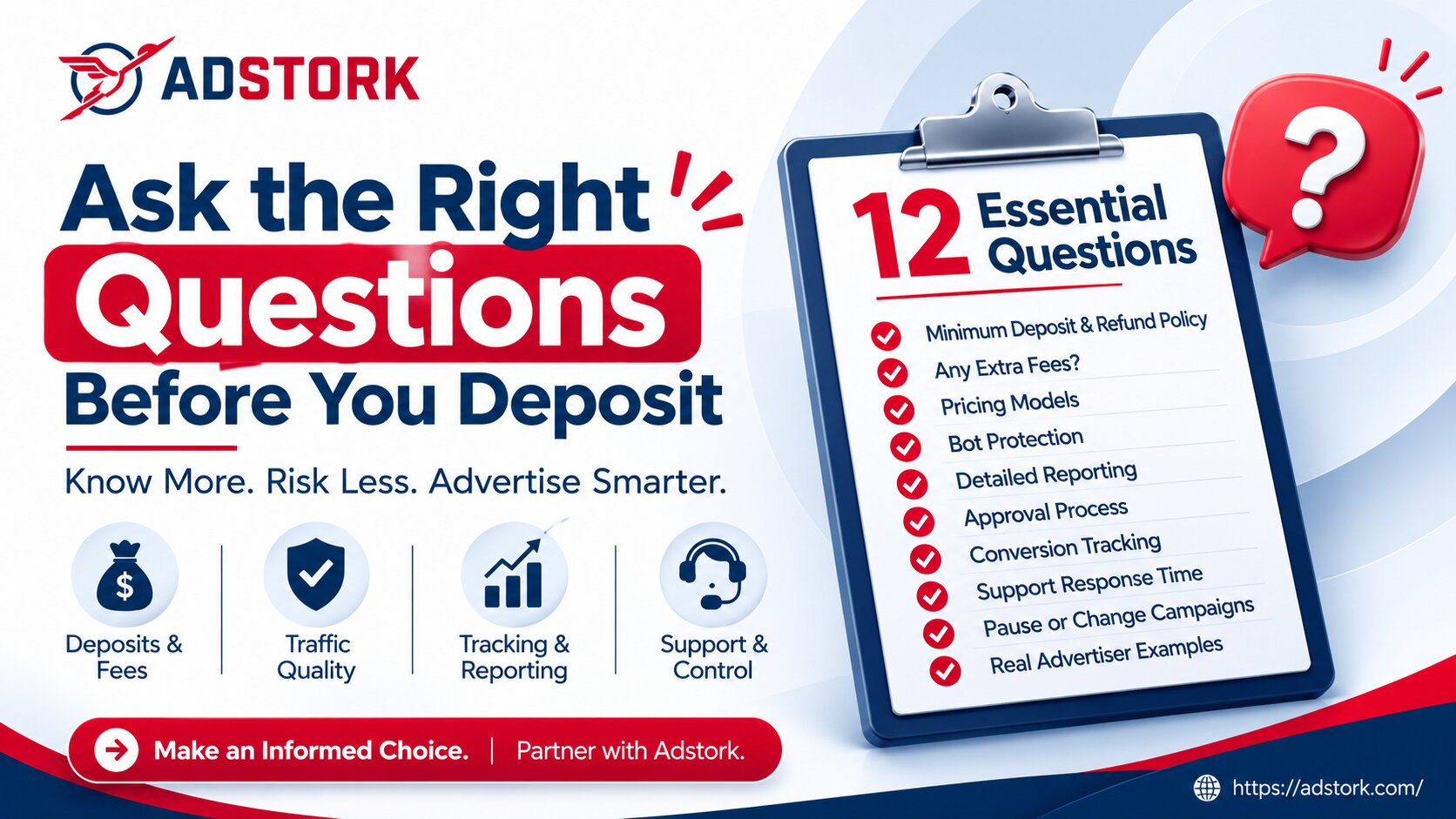
12 Questions to Ask an Ad Network Before You Spend Your First Dollar
An advertiser signs up with a new network, adds a deposit, and launches. A week later the clicks look strange, the reports are thin, and the support replies are vague. Only then does a list of questions form in their head: How do I check this traffic? Can I get unused budget back? Who do I even ask?
Those questions are far cheaper to ask before the deposit than after it. A good network will answer them clearly. The way a network answers tells you almost as much as the answers themselves.
In short: Before spending on an ad network, ask about deposits and fees, how traffic is screened, how tracking and reporting work, and how support and control work. Clear, specific, written answers are a good sign. Vague answers or pressure to deposit quickly are warning signs.
Written by: [Author name], [Job title] at Adstork Ad Network
Reading time: 6 minutes
Best for: Advertisers comparing networks before their first deposit
Key Takeaways
- The best time to ask hard questions is before you deposit, when you still have leverage.
- Twelve questions cover the four areas that decide most advertiser experiences: money, traffic, tracking, and support.
- Ask for answers in writing, so you can compare networks side by side and hold them to what they said.
- Even great answers should be confirmed with a small test budget.
Why Ask Questions Before You Deposit?
Once money is in an account, the relationship changes. You are no longer a prospect being courted, and switching networks now costs you time and sometimes funds. Before the deposit, a network has every reason to explain itself well. That makes it the cheapest moment to find out how it handles problems.
You do not need to be an expert to do this. You need a short list, a place to write down the answers, and the patience to notice what is missing.
Which 12 Questions Should You Ask?
The questions are grouped into four areas. Under each one, you will see why it matters and what a good answer sounds like.
Pro tip: Send the questions by email, not in a chat. A written answer gives you something to compare across networks and something to point back to if the experience later differs.
What Does a Good Answer Look Like Compared With a Weak One?
Here is an illustrative example of the same question answered two ways. The wording is made up to show the difference.
Question: "What happens if I find invalid traffic in my campaign?"
WEAK ANSWER
"Our traffic is always high quality, so that is unlikely. Just launch and see how it goes."
STRONG ANSWER
"Send us the placement, dates, and your data. We will review it, block the source if confirmed, and tell you in writing whether any credit applies under our terms."
The weak answer dismisses the question and promises nothing. The strong one describes a process, names what you need to provide, and avoids guaranteeing an outcome it cannot control. A network that is honest about limits is usually easier to trust than one that promises perfection.
Which Answers Are Green Flags and Which Are Red Flags?
Green Flags
- Specific numbers and named features
- Willingness to put answers in writing
- Encouraging a small first test
- Honest limits, such as "we cannot guarantee conversions"
- Direct access to a real person
Red Flags
- Vague replies and changing the subject
- Pressure to deposit a large amount fast
- Guaranteed results or guaranteed returns
- No way to see data below the account total
- Refusing to explain fees or refund terms
Where Does Adstork Fit In?
Ask us the same twelve questions. Advertisers can start through the self-serve platform with guided onboarding and live chat, or work with an account manager who can answer questions before any money moves. Campaigns run across banner, native, push, popunder, and video, with reporting by country, device, format, and placement, and ad quality and traffic integrity are screened.
Whatever the answers are, ask for them in writing, then use a small first budget to confirm them. That is the safest way to judge any network, including ours.
How Do You Put This Into Practice?
01
Shortlist
Pick two or three networks that support your formats and countries.
02
Ask in writing
Send the same twelve questions to each and keep the replies together.
03
Test small
Start each with a modest budget and test your tracking before spending.
04
Compare reality
After a couple of weeks, check what happened against what you were told.
What Are the Honest Limits of This Checklist?
Reality check: Good answers do not guarantee a good result, and terms can change over time. A network can answer every question well and still not suit your offer or your countries. Some details, such as exact approval times, also vary with volume.
Use the questions to filter out poor fits, then let a small, tracked test make the final call.
What Comes Next in Advertiser Due Diligence?
Advertisers are asking for more transparency about where ads run and how traffic is verified, and networks are responding with more detailed reporting and clearer policies. As privacy rules change how tracking works, questions about measurement will matter even more, so expect "how do I verify my results?" to move to the top of the list.
Quick recap
Ask about money, traffic quality, tracking and reporting, and support and control. Get the answers in writing. Treat specific, honest replies as green flags and vague or pushy ones as red flags. Then confirm everything with a small test before you scale.
Final Word
The first dollar you spend with a network should buy you information as well as impressions. Ask the hard questions early, listen to how they are answered, and let a small test confirm what you were told. At Adstork Ad Network, we would rather you ask everything before you deposit, because an informed advertiser makes a better long-term partner.
Ready to put these questions to us? Partner with Adstork Ad Network today.
FAQs
What should I ask an ad network before advertising? Ask about the minimum deposit and refund rules, fees, how traffic is screened, how conversion tracking works, what reporting you get, how long ad approval takes, and who you can contact for support. Request the answers in writing.
How do I know if an ad network is legitimate? Look for clear terms, specific answers to your questions, visible contact details, transparent reporting, and no promises of guaranteed results. Then test with a small budget and track your own conversions.
How much should I deposit for a first test? Enough to collect a meaningful number of conversions at your target cost per result, but no more than you can afford to lose. Ask the network for a realistic range and confirm any minimum.
Can I get a refund if a campaign does not work? It depends on the network's terms. Ask before you deposit, and get the rules for unused funds and invalid traffic in writing.
Is a self-serve platform or a managed account better for beginners? Self-serve gives you control and a low starting point, while a managed account adds guidance. Many beginners start self-serve with access to support for questions.
How does Adstork support advertisers before they deposit? Through guided onboarding and live chat on the self-serve platform, optional account manager support, and reporting by country, device, format, and placement. Advertisers are encouraged to ask these questions before spending.

Leave a Comment