
-
12 Oct, 2026
What Happens to Ad Revenue When AI Search Answers the Question Before Readers Click
A reader types a question into a search engine and gets a complete answer at the top of the page, sourced from sites like yours. They read it, close the tab, and never visit. The publisher whose work fed that answer sees the impression in a report and nothing in the revenue dashboard.This is the concern behind a lot of recent publisher anxiety, and it is not imaginary. It is also more nuanced than "AI will take all the traffic," and the details decide which sites are exposed.In short: AI-generated answers in search can reduce clicks to publisher sites, especially for simple factual queries, which lowers pageviews and ad revenue. Publishers can respond by building direct audiences, targeting queries that need depth, and structuring content so AI tools cite it, which turns a threat into a new traffic source.Key TakeawaysAI answers hurt simple, fact-lookup content the most and affect in-depth, original content far less.Direct, email, and returning traffic is largely unaffected, which makes owned audiences more valuable than before.Being cited inside an AI answer can send smaller but more engaged traffic.Fewer pageviews make revenue per pageview and per session matter more than raw traffic volume.1. How Do AI Search Answers Reduce Publisher Traffic?When a search engine or chatbot answers a question directly, the reader may never need to open a source page. Research from groups like the Pew Research Center in 2025 found that people clicked traditional results noticeably less often when an AI summary appeared at the top of the results. Treat the exact figures as a snapshot, since they shift as products change, but the direction is consistent across studies.For publishers, fewer clicks mean fewer ad impressions. The effect is uneven. A page that exists to answer a quick factual question is exposed. A page that offers analysis, original data, tools, or a point of view is much harder for a summary to replace.2. Which Kinds of Content Are Most and Least Exposed?Most exposed: Definitions, quick facts, simple how-to steps, and short lookup answers that a summary can fully satisfy.Moderately exposed: General explainers and list articles that cover widely available information.Least exposed: Original research, benchmarks, opinionated analysis, community content, tools, and anything where the reader wants depth or a specific voice.3. What Can Publishers Do About It?Build audiences that do not depend on search. Newsletters, direct visits, and returning readers are not intercepted by an AI summary.Publish what a summary cannot replace. Original data, firsthand testing, and clear expert opinion give readers a reason to click through.Structure content so it can be cited. Question-style headings, concise standalone answers, clear sourcing, and comparison tables make it easier for AI tools to pull from and credit a page.Raise revenue per visit. With fewer visitors, each one needs to be monetized well, through sensible placement and competing demand rather than a single fixed buyer.4. Where Does Adstork Fit In?When traffic is harder to win, every visit has to earn more. Adstork connects publishers to multiple competing demand sources across banner, native, push, popunder, and video formats, so each remaining impression is matched against real competition instead of one fixed rate. Transparent, real-time reporting lets publishers watch revenue per session, not just traffic totals, and see early whether AI-driven changes are reaching their numbers.5. What Are the Honest Limits?No monetization setup replaces visitors who never arrive. Better yield per visit softens the loss but does not remove it, and citation by AI tools is not guaranteed or easily controlled. Publishers whose entire business rests on simple answers searched by anonymous visitors face the hardest adjustment, and for them diversifying content and audience sources is a necessity rather than an option.Content Types and AI ExposureContent TypeExposure to AI AnswersBest ResponseQuick facts and definitionsHighAdd depth, or accept as a citation playGeneral explainersMediumAdd original examples and dataOriginal research and benchmarksLowPublish more, structure for citationNewsletters and direct audienceVery lowInvest and growWhat Comes Next for Publishers and AI Search?AI answer products will keep changing, and so will the share of traffic they send. The durable advantages are the same ones advertisers already reward: first-party audiences, original content, and trust. Publishers who invest in them are better placed whichever way the technology moves.Final WordAI search is changing how readers find content, but it rewards the same fundamentals: original work, loyal audiences, and strong monetization of every visit. At Adstork Ad Network, competing demand and transparent reporting help publishers earn more from the traffic they do get.Ready to get more from every visit? Partner with Adstork Ad Network today.FAQsDo AI Overviews reduce traffic to publisher websites? Studies indicate users click through to sources less often when an AI summary appears, with the largest effect on simple factual queries. The impact varies by site and content type.What type of content is safest from AI answers? Original research, benchmarks, opinionated analysis, tools, and community content, since a short summary cannot fully replace them.How can I get my site cited by AI tools? Use question-style headings, give concise standalone answers, cite sources clearly, include comparison tables, and publish original data. Citation is not guaranteed, but structure improves the odds.Should I stop publishing informational content? No. Shift toward depth and originality, and build owned audiences so traffic does not depend on a single search feature.How can publishers protect revenue if traffic falls? Increase revenue per visit through competing demand sources and sensible placement, and grow direct channels like email that AI summaries cannot intercept.Suggested Internal LinksWhy Does One Website Keep Growing While a Similar Website Stays Stuck?Newsletter Monetization: Turning Email Subscribers Into a Second Revenue StreamThe Publisher's Guide to Surviving a Google Algorithm Update Without Losing Ad Revenue
Read More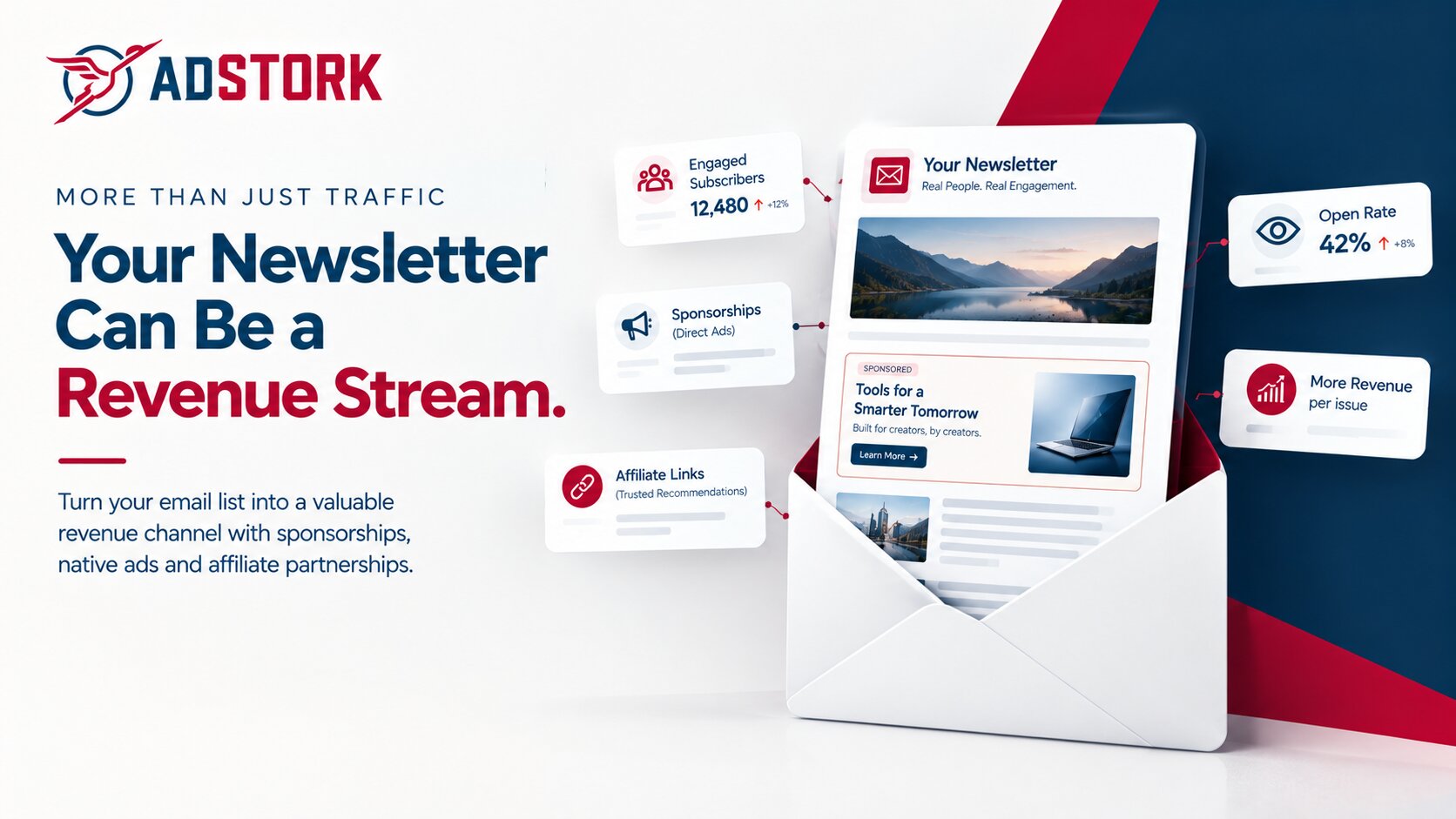
-
07 Oct, 2026
Newsletter Monetization: Turning Email Subscribers Into a Second Revenue Stream
Most publishers spend years building an email list and treat it purely as a traffic funnel, a way to pull subscribers back to the site where the real ads live. The list itself sits there earning nothing on its own.That is a missed asset. A newsletter is not just a traffic source. It is an owned, first-party audience advertisers increasingly want direct access to, and treating it as a second revenue stream, not just a funnel, can meaningfully change a publisher's total earnings.In short: Newsletter monetization means generating revenue directly from email content, through sponsorships, native ad placements, or affiliate links, rather than relying solely on the newsletter to drive site traffic. A list of even a few thousand engaged subscribers can produce meaningful standalone revenue once structured correctly.Key TakeawaysA newsletter list is a first-party asset, exactly the kind of audience advertisers are prioritizing as cookies fade out.Sponsorships and native placements typically outperform display banners inside email.Open rate and click rate matter more than list size when pricing sponsorship slots.Newsletter revenue compounds with site revenue rather than competing with it.1. Why Email Monetizes Differently Than a WebpageA webpage ad competes with a reader's wandering attention. An email ad competes with almost nothing else in that moment, the subscriber opened one message and is reading it start to finish. That attention is worth more to advertisers, which is why well-run newsletter sponsorships often command higher effective rates per reader than the same audience would generate browsing a site.2. Three Ways to Actually Monetize a NewsletterDirect sponsorships. A single advertiser pays a flat rate to be featured in a specific issue, usually with a short blurb and link. Priced based on open rate and list size, not just subscriber count.Native ad placements. A short, clearly labeled promotional section woven into the newsletter's normal format, blending with editorial content rather than interrupting it.Affiliate and product recommendations. Particularly effective in niche newsletters where subscribers trust the publisher's recommendations on tools, products, or services relevant to the topic.3. Pricing Based on the Right NumbersList size alone is a weak pricing signal. A 5,000-subscriber list with a 45% open rate is worth more to an advertiser than a 20,000-subscriber list with an 8% open rate. Price sponsorships against actual opens, not raw subscriber count, and be transparent with advertisers about both numbers upfront.4. Where Adstork Fits InNewsletter revenue works best alongside strong site monetization, not instead of it. Adstork helps publishers capture the full value of the traffic a newsletter sends back to the site, through competing demand sources and transparent reporting, so the newsletter's job of driving return visits and the site's job of monetizing them both get captured fully rather than one subsidizing the other.5. Being Honest About the Effort RequiredDirect sponsorship sales take real time, finding advertisers, negotiating rates, fulfilling placements manually. This is not a passive revenue stream in the way programmatic display ads are. It works best for publishers who already have some advertiser relationships or are willing to build them specifically for this channel.Newsletter vs. Site MonetizationFactorNewsletterSiteAttention levelHigh, focusedVariable, dividedSales effortManual, directAutomated, programmaticScalabilityLimited by sales capacityScales with trafficFinal WordA newsletter that only drives traffic back to the site is leaving a second revenue stream untouched. At Adstork Ad Network, we help publishers capture full value from the traffic their newsletter sends, so both channels work together rather than one doing all the earning.Ready to make your whole audience work for you? Partner with Adstork Ad Network today.FAQsHow many subscribers do I need to monetize a newsletter? There is no strict minimum. A smaller, highly engaged list often sells better than a large, disengaged one. Open rate matters more than size.What should I charge for a newsletter sponsorship? Base pricing on actual opens, not subscriber count. A common starting approach is a CPM-style rate applied to average opens per issue.Do newsletter ads hurt subscriber trust? Not if clearly labeled and relevant to the audience. Native, well-integrated placements perform better and damage trust less than disruptive, off-topic ads.Should I use a newsletter ad network instead of selling directly? Direct sales typically pay more but require more effort. Networks are faster to start but usually pay less per placement.Suggested Internal LinksWhat Makes an Online Audience Valuable to Brands?The RPM Benchmark Report: What Publishers Actually Earn by Niche
Read More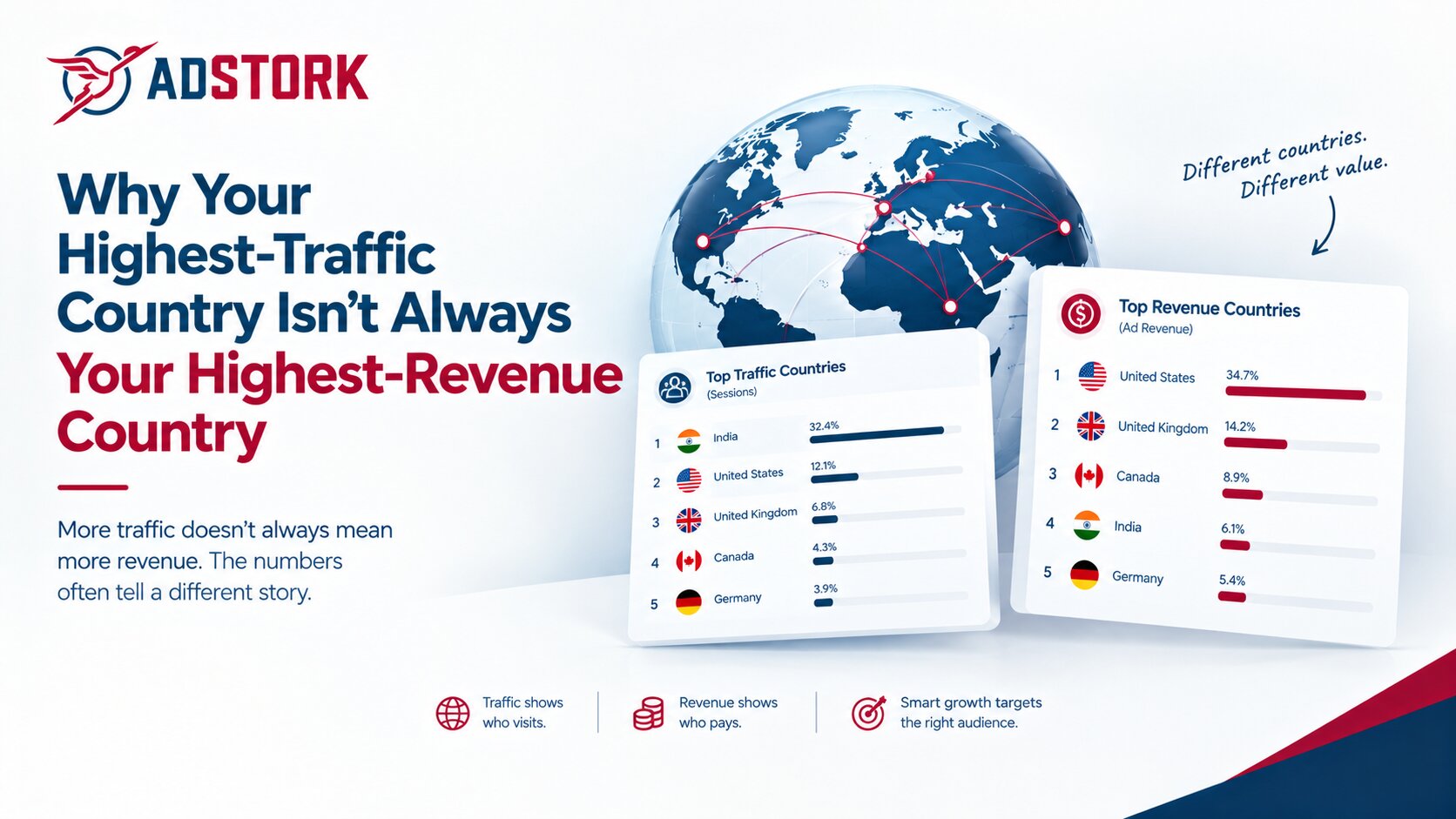
-
07 Oct, 2026
Why Your Highest-Traffic Country Isn't Always Your Highest-Revenue Country
Open the analytics dashboard and the top traffic country is obvious at a glance. Open the revenue dashboard and a different country is often sitting at the top instead. Publishers notice this gap and rarely investigate it beyond a shrug.That gap is worth investigating. It usually reveals exactly where a site's growth strategy and its monetization strategy have quietly drifted apart.In short: A country driving the most traffic is not necessarily driving the most revenue, because CPM varies dramatically by geography regardless of volume. Auditing traffic against revenue by country reveals whether growth efforts are targeting the audience that actually pays, or simply the audience that is easiest to acquire.Key TakeawaysTier-1 traffic can earn 3-5x more per visitor than tier-2 or tier-3 traffic in the same niche.SEO and social growth often skew toward whatever country is easiest to rank or go viral in, not the highest-paying one.A revenue-per-country audit takes under an hour and frequently changes content and acquisition priorities.1. Why This Gap HappensTraffic growth and revenue growth are driven by different forces. SEO tends to reward whichever country has the least competition for a given keyword, which is often not a tier-1 market. Social virality skews toward whatever region a platform's algorithm favors that week. Neither force cares about CPM. The result is a site that can grow traffic steadily while growing revenue far more slowly, simply because the new traffic is arriving from lower-paying geographies.2. How to Run the AuditPull sessions by country from analytics for the last 90 days.Pull revenue by country from the ad network's reporting for the same period.Calculate revenue per session for each country, not just total revenue, since raw totals get skewed by volume.Rank both lists side by side. The gap between the two rankings is the diagnostic.3. What to Do With the ResultIf the top traffic country and top revenue country differ sharply, two responses are worth considering. Content strategy can lean further into topics and keywords that naturally attract the higher-paying geography. Separately, check whether the current demand setup has weak coverage in the top-traffic country specifically, since a GEO's low revenue is sometimes a demand gap rather than an inherent low-value market.4. Where Adstork Fits InThis audit only matters if the underlying demand actually scales with whichever GEO a publisher decides to grow. Adstork's global demand coverage across 195+ regions means growth in a specific GEO is more likely to be matched by real advertiser demand there, rather than growing traffic into a country the current demand stack can't monetize well.5. The Limit of This FrameworkNot every publisher should chase the highest-CPM country. A site with a genuine, built-in audience in a specific region has real value in serving that audience well, even at a lower CPM. This audit is a diagnostic for unconscious drift, not a mandate to abandon an audience that happens to pay less per impression.Sample GEO AuditCountryTraffic RankRevenue RankIndia#1#4United States#3#1United Kingdom#5#2Final WordTraffic growth and revenue growth are not the same goal, and conflating them hides exactly where a site's strategy has drifted. At Adstork Ad Network, global demand coverage means growth in any GEO has a real chance of being matched by actual advertiser demand.Ready to find out where your traffic and revenue actually align? Partner with Adstork Ad Network today.FAQsHow much more does tier-1 traffic earn than tier-3? Typically 3-5x or more for the same content niche, though the exact gap varies by vertical and demand availability.Should I stop targeting lower-CPM countries entirely? Not necessarily. The goal is awareness of the mismatch, not abandoning audiences that pay less, especially if they have other strategic value.How often should I run this audit? Quarterly is reasonable for most sites, or after any major traffic acquisition shift, like a new content vertical or viral event.Suggested Internal LinksWhat Makes a Website Valuable to Advertisers?The RPM Benchmark Report: What Publishers Actually Earn by Niche
Read More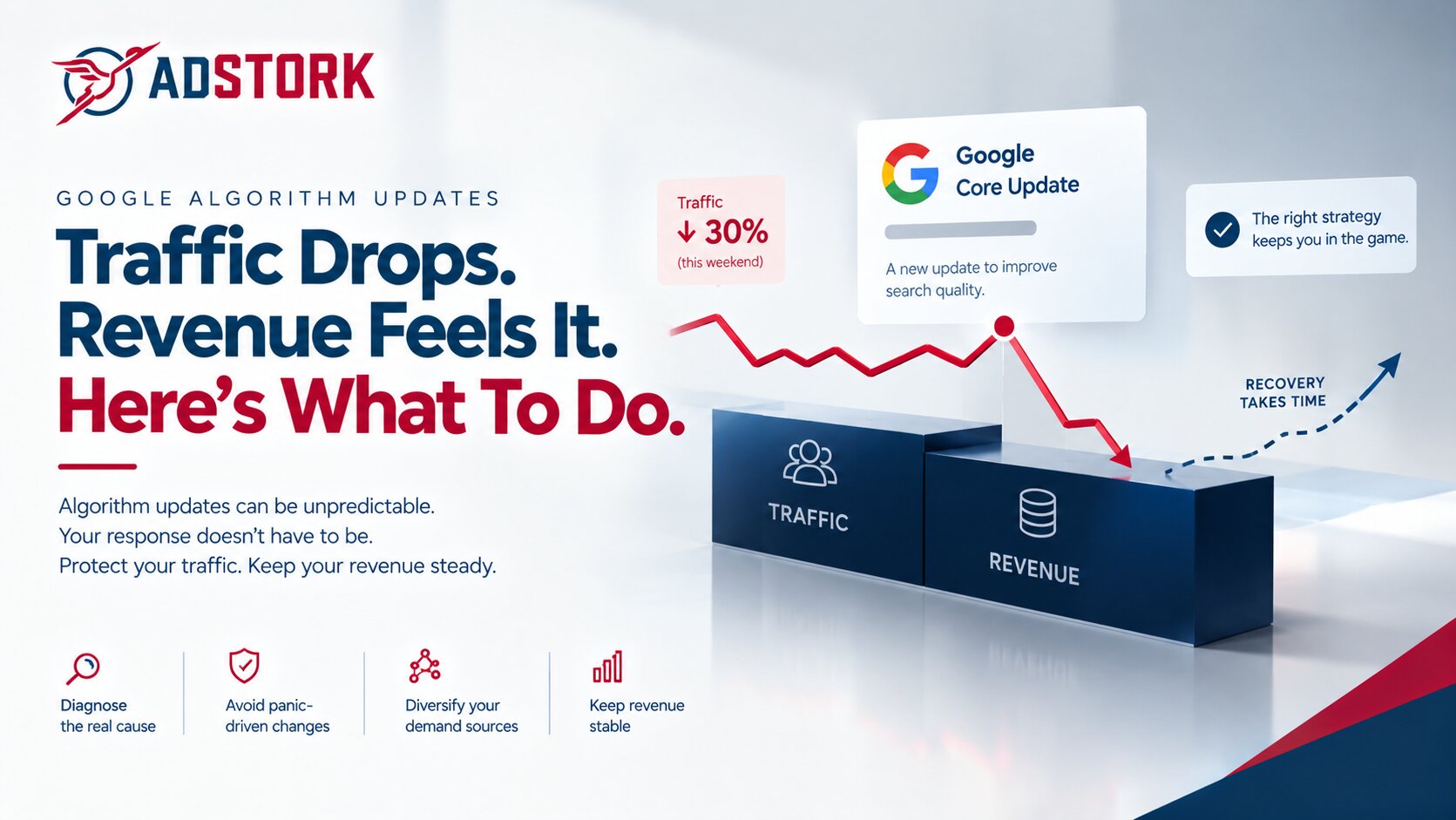
-
07 Oct, 2026
The Publisher's Guide to Surviving a Google Algorithm Update Without Losing Ad Revenue
Traffic drops 30% over a weekend. No code changed, no content was removed, nothing on the site is different. Then the news breaks: Google rolled out a core update. The explanation arrives, but the revenue is already gone for the month.Algorithm updates are one of the few genuinely uncontrollable forces in a publisher's business. The response to them, however, is controllable, and most publishers respond badly in ways that make the financial impact worse than it needs to be.In short: Google algorithm updates can cause sudden traffic volatility that directly impacts ad revenue, but the publishers who recover fastest are the ones who diagnose correctly before reacting, avoid panic-driven content purges, and have a monetization setup resilient enough to absorb a temporary traffic dip without compounding the damage.Key TakeawaysMost traffic drops attributed to "an update" are not actually related to the update at all.Panic-driven content deletion often does more damage than the update itself.Revenue diversification across multiple demand sources softens the financial impact of a traffic dip.Recovery typically takes weeks to months, not days, and rushing the process usually backfires.1. First, Confirm It's Actually the UpdateTraffic drops coincide with update rollouts often enough that publishers assume correlation automatically means causation. Before reacting, check Google Search Console for manual actions, confirm the drop lines up precisely with the rollout date rather than starting days before it, and compare against industry chatter to see if other sites in the same space reported similar timing. A drop that started a week before the update was announced is probably not about the update.2. The Panic Response That Makes Things WorseThe most common reaction, mass-deleting or drastically rewriting content within days of a drop, is usually premature. Core updates take time to fully roll out and for rankings to settle, often several weeks. Making large structural changes mid-rollout means a publisher cannot tell whether a change helped, hurt, or had no effect at all, because the update itself is still moving the baseline underneath them.3. Protecting Revenue While Traffic RecoversDon't cut ad density during the dip. It is tempting to assume fewer ads will help recovery somehow. It will not affect rankings, and it compounds the revenue loss unnecessarily.Check whether the remaining traffic shifted in value. Sometimes an update changes which pages rank, shifting traffic toward lower or higher commercial-intent content than before, which affects RPM independent of volume.Lean on non-search channels temporarily. Direct, email, and social traffic are unaffected by the update and can partially offset the gap while rankings stabilize.4. Where Adstork Fits InA single-network setup with one fixed buyer has no flexibility to absorb a sudden volume change. Adstork's multiple competing demand sources mean that whatever traffic does arrive during a volatile period is still being exposed to real competition for the best possible rate, rather than a fixed, pre-negotiated price that doesn't adjust to changing conditions.5. Being Honest About Recovery TimelinesSome sites recover fully within the same update cycle. Others don't recover for months, or ever, if the update reflected a genuine, lasting shift in what Google considers quality for that content type. There is no guaranteed timeline, and any claim promising one should be treated skeptically.Panic Response vs. Measured ResponseActionPanic ResponseMeasured ResponseContentMass delete/rewrite within daysWait for full rollout, then diagnoseAd densityCut immediatelyLeave unchangedTraffic channelsIgnoredLean on email/direct/socialFinal WordAlgorithm updates are uncontrollable. The response to them is not, and a measured response protects both long-term rankings and short-term revenue far better than panic does. At Adstork Ad Network, competing demand sources mean whatever traffic a site has during a volatile period is still earning what it's actually worth.Ready for a monetization setup that holds steady through SEO volatility? Partner with Adstork Ad Network today.FAQsHow long does it take to recover from a core update? It varies widely, from weeks to several months, and some sites never fully recover if the update reflects a lasting quality shift rather than a temporary fluctuation.Should I delete content that dropped in rankings? Not immediately. Wait for the update to fully roll out and diagnose the actual cause before making structural changes.Does reducing ads help SEO recovery? No. Ad density does not directly affect core update recovery and cutting it only compounds revenue loss unnecessarily.Suggested Internal LinksWhy Does One Website Keep Growing While a Similar Website Stays Stuck?What Happens to Ad Revenue During Major Traffic Events?
Read More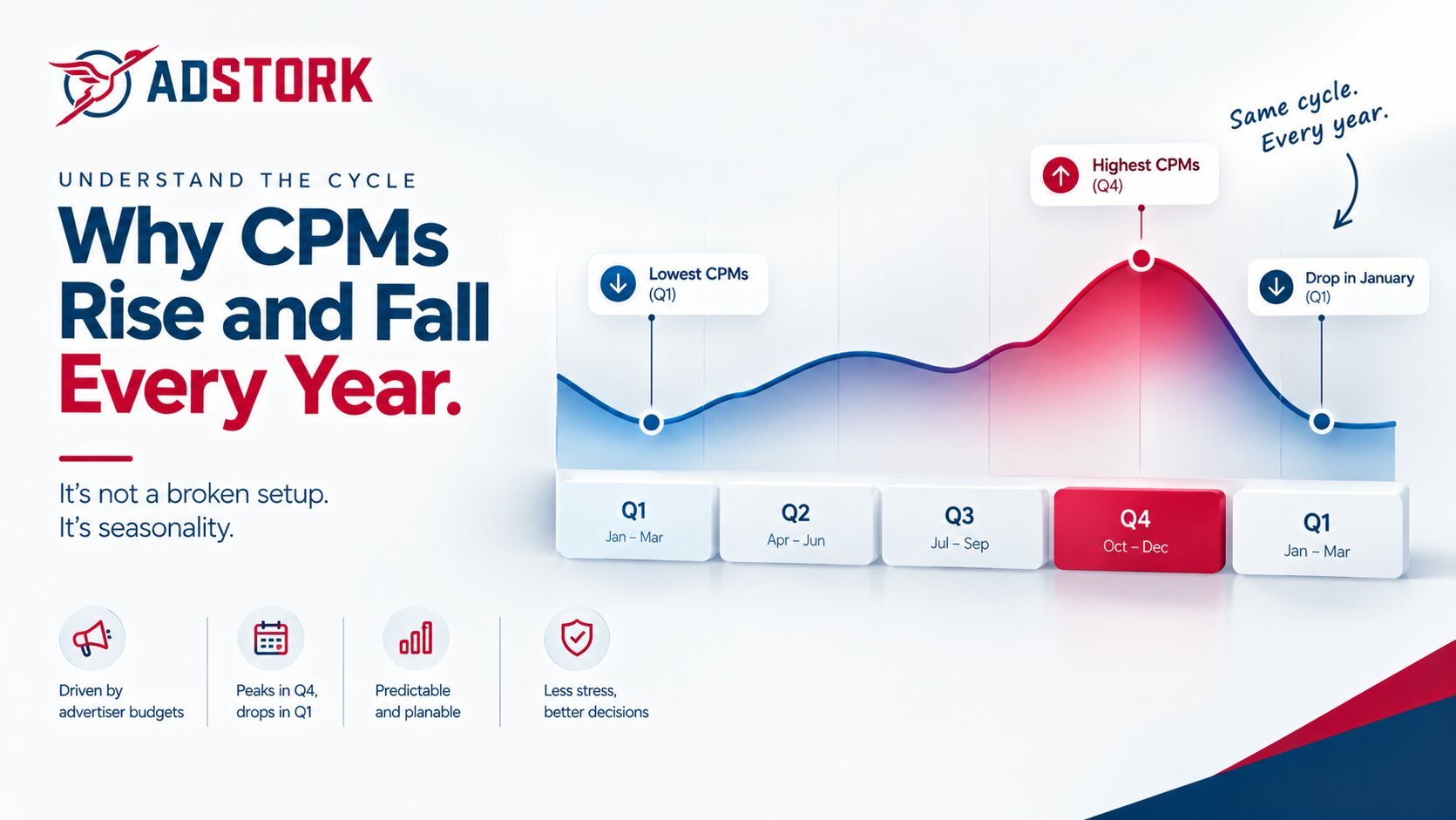
-
07 Oct, 2026
How Seasonal CPM Swings Work: Why Your Rates Drop in January and Spike in November
Every January, the same message appears in publisher communities: "Did something break? My CPM just fell off a cliff." Every November, the opposite message appears: "CPMs are amazing right now, what changed?"Nothing broke in January, and nothing special happened in November beyond the calendar. Both are the same predictable cycle repeating every year, and understanding it removes a lot of unnecessary anxiety.In short: CPMs follow a predictable annual cycle driven by advertiser budget timing, peaking in Q4 around holiday shopping season and dropping in January as new annual budgets restart at lower initial spend. Recognizing this pattern prevents publishers from mistaking normal seasonality for a broken setup.Key TakeawaysCPM seasonality is driven by advertiser budget cycles, not changes in a publisher's own setup.Q4 typically delivers the highest CPMs of the year, Q1 typically the lowest.The swing is predictable enough to plan content and cash flow around.1. The Annual Budget Cycle, ExplainedMost advertisers plan and allocate budgets annually, often with a disproportionate share pushed into Q4 to capture holiday shopping demand. Retail, e-commerce, and consumer brands compete intensely for inventory from October through December, bidding up prices across the board. Once the calendar resets in January, new annual budgets have just been approved but spending typically ramps slowly, since campaigns need to be planned and launched before dollars actually flow into bids.2. The Typical Shape of the YearQ1 (Jan-Mar): Lowest CPMs of the year, slow ramp as new budgets get planned.Q2-Q3 (Apr-Sep): Steady, moderate CPMs as campaigns run at normal pace.Q4 (Oct-Dec): Highest CPMs, driven by holiday shopping competition, peaking around Black Friday and Cyber Monday specifically.3. How to Plan Around the CycleTreat Q1 revenue dips as expected rather than alarming, and avoid making reactive changes to the ad setup based on a seasonal dip alone. For cash flow planning, the gap between Q4 peak earnings and Q1 trough earnings can be significant, smoothing income across the year, or budgeting conservatively based on Q1-level revenue, prevents surprises.4. Where Adstork Fits InCompeting demand sources help soften, though not eliminate, the Q1 trough, since a broader pool of advertisers means a better chance of finding whatever demand is active even during slower months. Transparent reporting also helps publishers distinguish a normal seasonal dip from an actual setup problem, rather than guessing.5. When It's Not Just SeasonalitySeasonality explains a predictable, proportional dip. It does not explain a dip far steeper than prior years, or one that doesn't recover by Q2. If a January drop is dramatically worse than the same period last year, something beyond normal seasonality is worth investigating.Typical Quarterly CPM PatternQuarterTypical CPM TrendQ1Lowest, slow budget rampQ2-Q3Steady, moderateQ4Highest, holiday competitionFinal WordCPM seasonality is predictable, not a sign of a broken setup. Planning around it, rather than reacting to it, saves both stress and unnecessary changes. At Adstork Ad Network, competing demand helps soften the Q1 trough while transparent reporting shows exactly what's seasonal and what isn't.Ready for a setup that holds steady through the seasonal cycle? Partner with Adstork Ad Network today.FAQsWhy does my CPM drop every January? New annual advertiser budgets take time to ramp into active spending, while Q4 holiday competition that drove rates up has ended.When is CPM typically highest during the year? Q4, usually peaking around Black Friday and Cyber Monday, driven by retail and e-commerce competition for holiday shopping traffic.How do I know if a CPM drop is seasonal or a real problem? Compare the drop's severity against the same period in prior years. A proportional, predictable dip is seasonal. A dip far steeper than usual warrants investigation.Suggested Internal LinksWhat Happens to Ad Revenue During Major Traffic Events?The RPM Benchmark Report: What Publishers Actually Earn by Niche
Read More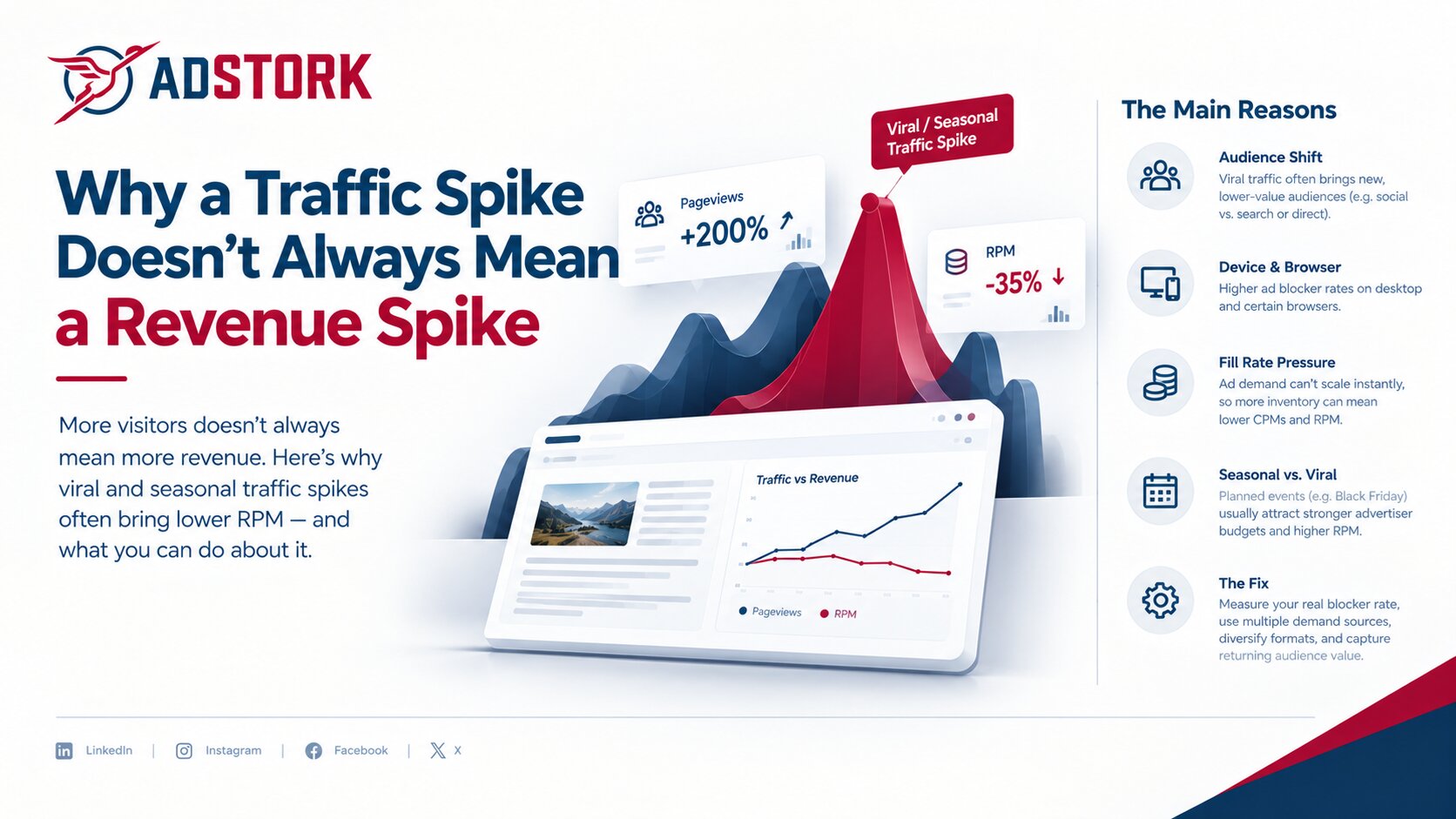
-
05 Oct, 2026
What Happens to Ad Revenue During Major Traffic Events (And Why It's Not Always Good)
A post goes viral. Traffic triples overnight. The publisher checks their revenue dashboard expecting a matching spike, and instead finds RPM quietly dropping while pageviews climb. The excitement of a traffic surge turns into confusion within a day.This happens often enough that it deserves an explanation beyond "sometimes that's just how it goes." There are specific, predictable reasons a traffic spike does not translate into a proportional revenue spike, and understanding them changes how a publisher should actually prepare for one.In short: Sudden traffic surges, whether from viral content, breaking news, or seasonal shopping events, often monetize at a lower RPM than normal traffic because of changes in audience composition, fill rate pressure, and advertiser budget timing. Understanding why prevents publishers from misreading a successful traffic event as a broken ad setup.Key TakeawaysTraffic spikes often bring in lower-value audience segments than a site's normal baseline traffic.Sudden volume increases can outpace demand, dropping fill rate and effective CPM at exactly the moment a publisher expects the opposite.Seasonal events like Black Friday behave differently from viral spikes because advertiser budgets are deliberately concentrated around them.A traffic spike is a one-time event unless a publisher has a plan to convert part of it into returning audience.1. Why Viral Traffic Often Monetizes Worse Than Normal TrafficA viral spike usually arrives through a different channel than a site's normal traffic, often social sharing rather than search or direct visits. That shift in traffic source matters more than most publishers realize. Social traffic typically converts to ad revenue at a meaningfully lower rate than search or direct traffic, partly because these visitors tend to read one page and leave rather than exploring further, and partly because advertisers assign lower value to audiences arriving through social referral compared to audiences who sought the content out directly.The visitors are also frequently new to the site, meaning there is no return-visit history, no prior engagement signal, and often a different geographic mix than the site's usual audience, sometimes skewing toward regions that command lower CPMs.2. The Fill Rate Problem Nobody Warns Publishers AboutAd demand is not infinite and does not scale instantly. A site that triples its traffic overnight also triples its ad requests, but the number of advertisers bidding on that inventory does not triple along with it. The result is a sudden gap between supply and demand, where impressions that would normally fill at a healthy rate go partially unsold or get filled at much lower backup rates.This is one of the more counterintuitive mechanics in programmatic advertising. More inventory, arriving faster than demand can absorb it, often results in a lower average price per impression, not a higher one.3. Why Seasonal Events Behave Differently From Viral SpikesBlack Friday, the holiday shopping season, and similar planned events are a different situation entirely. Unlike a random viral spike, advertisers know these events are coming and deliberately concentrate budget around them months in advance. This means demand actually does scale up to meet the seasonal traffic increase, and CPMs during these windows often rise rather than fall, sometimes significantly, because retail and e-commerce advertisers are competing hard for exactly this kind of commercial-intent attention.The distinction matters: a publisher should expect a viral spike to compress RPM, and a well-timed seasonal spike to expand it, assuming their content and audience are relevant to what advertisers are spending on that season.4. What Publishers Can Actually Do to PrepareSet expectations before the event, not after. Knowing in advance that RPM typically dips during a viral spike prevents a false alarm that leads to unnecessary setup changes mid-surge.Use multiple competing demand sources. A setup with several demand sources bidding simultaneously absorbs sudden volume increases far better than a single-buyer setup, since there are more potential bidders to catch the overflow inventory.Capture the spike for later, not just now. A newsletter signup prompt or a simple on-page nudge during a traffic surge can convert a fraction of one-time visitors into a returning audience, turning a single event into compounding value.Plan seasonal content ahead of the demand curve. For predictable events like Black Friday, publishing relevant content weeks in advance lets it rank and accumulate traffic before the highest-CPM window actually arrives.5. Where Adstork Fits InSudden traffic surges are exactly where a single fixed-rate network setup shows its limits. Adstork connects publishers to multiple competing demand sources simultaneously, which means a sudden volume increase has more places to find a bid rather than overwhelming one buyer's limited demand. For planned seasonal events, this also means publishers are positioned to capture rising advertiser budgets rather than being capped by whatever one network decided to allocate.6. Being Honest About the LimitsNo setup fully eliminates the RPM dip that comes with a sudden, unplanned viral spike. The audience composition problem, new visitors with no engagement history, often arriving from lower-value channels, is structural, not a technical issue a network can fully solve. The realistic goal is softening the dip and capturing lasting value from the event, not preventing the dip entirely.Viral Spike vs. Seasonal SpikeFactorViral SpikeSeasonal Spike (e.g. Black Friday)Advertiser demandUnprepared, lags behind supplyPre-planned, scales with trafficTypical RPM impactDecreasesOften increasesAudience qualityOften new, low engagement historyMix of returning and new, commercial intentPredictabilityLow, hard to prepare forHigh, can be planned months aheadWhat's Next for Traffic Spike MonetizationAs AI-driven traffic patterns continue to shift how and when surges happen, including sudden spikes from being cited in AI answer engines, publishers who already have multiple demand sources and audience-capture mechanisms in place will be far better positioned to monetize unpredictable traffic events than those relying on a single, slower-to-adapt setup.Final WordA traffic spike is not automatically a revenue spike, and understanding why prevents a publisher from panicking over a dashboard that is behaving exactly as expected. At Adstork Ad Network, multiple competing demand sources help absorb sudden volume increases and capture rising seasonal budgets, so publishers get the most realistic outcome a given traffic event can actually produce.Ready for a setup built to handle traffic surges, not just steady-state traffic? Partner with Adstork Ad Network today.FAQsWhy did my RPM drop when my traffic went viral? Viral traffic often arrives through lower-converting channels like social media, comes from new visitors with no engagement history, and can outpace advertiser demand, all of which push RPM down even as pageviews rise.Does Black Friday traffic monetize better than normal traffic? Often yes, because advertisers plan and concentrate budget specifically around seasonal shopping events, unlike an unplanned viral spike where demand has not prepared for the surge.Can I prevent RPM from dropping during a traffic spike? Not entirely, but using multiple competing demand sources and capturing part of the spike into a returning audience, such as through newsletter signups, softens the impact and extends the event's value.Why does fill rate drop during high-traffic moments? Advertiser demand does not scale instantly. A sudden increase in ad requests can outpace the number of advertisers actively bidding, leaving some inventory unfilled or filled at lower backup rates.Should I prepare content in advance for seasonal traffic events? Yes. Publishing relevant content weeks ahead of events like Black Friday allows it to rank and build traffic before the highest-demand window arrives.How does Adstork help during sudden traffic increases? By connecting publishers to multiple competing demand sources simultaneously, which absorbs sudden volume spikes better than relying on a single buyer's limited demand.Suggested Internal LinksWhy Does One Website Keep Growing While a Similar Website Stays Stuck?Should Established Publishers Add Another Ad Network?The RPM Benchmark Report: What Publishers Actually Earn by Niche
Read More