- 07 Oct, 2026
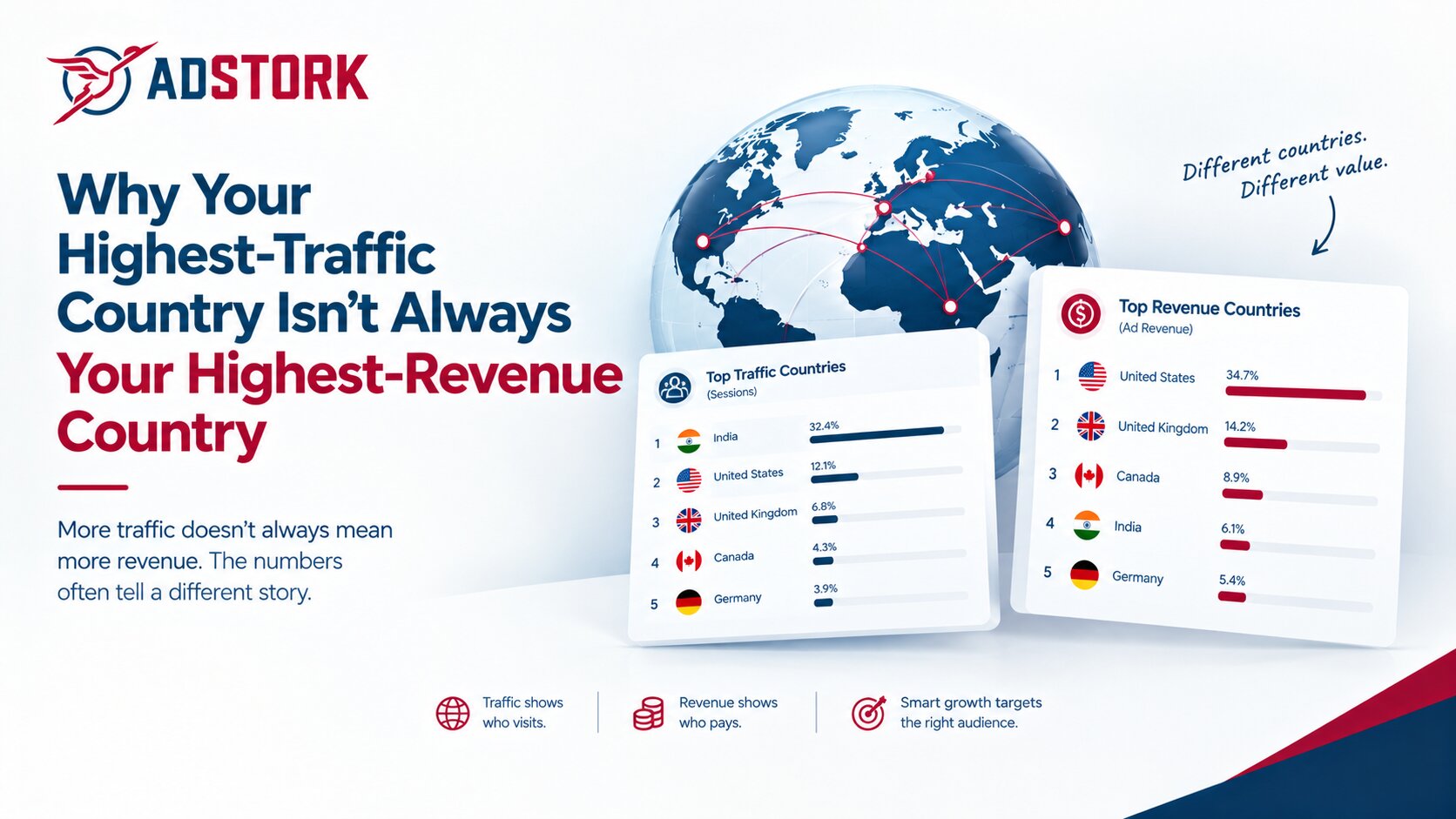
Why Your Highest-Traffic Country Isn't Always Your Highest-Revenue Country
Open the analytics dashboard and the top traffic country is obvious at a glance. Open the revenue dashboard and a different country is often sitting at the top instead. Publishers notice this gap and rarely investigate it beyond a shrug.
That gap is worth investigating. It usually reveals exactly where a site's growth strategy and its monetization strategy have quietly drifted apart.
In short: A country driving the most traffic is not necessarily driving the most revenue, because CPM varies dramatically by geography regardless of volume. Auditing traffic against revenue by country reveals whether growth efforts are targeting the audience that actually pays, or simply the audience that is easiest to acquire.
Key Takeaways
- Tier-1 traffic can earn 3-5x more per visitor than tier-2 or tier-3 traffic in the same niche.
- SEO and social growth often skew toward whatever country is easiest to rank or go viral in, not the highest-paying one.
- A revenue-per-country audit takes under an hour and frequently changes content and acquisition priorities.
1. Why This Gap Happens
Traffic growth and revenue growth are driven by different forces. SEO tends to reward whichever country has the least competition for a given keyword, which is often not a tier-1 market. Social virality skews toward whatever region a platform's algorithm favors that week. Neither force cares about CPM. The result is a site that can grow traffic steadily while growing revenue far more slowly, simply because the new traffic is arriving from lower-paying geographies.
2. How to Run the Audit
- Pull sessions by country from analytics for the last 90 days.
- Pull revenue by country from the ad network's reporting for the same period.
- Calculate revenue per session for each country, not just total revenue, since raw totals get skewed by volume.
- Rank both lists side by side. The gap between the two rankings is the diagnostic.
3. What to Do With the Result
If the top traffic country and top revenue country differ sharply, two responses are worth considering. Content strategy can lean further into topics and keywords that naturally attract the higher-paying geography. Separately, check whether the current demand setup has weak coverage in the top-traffic country specifically, since a GEO's low revenue is sometimes a demand gap rather than an inherent low-value market.
4. Where Adstork Fits In
This audit only matters if the underlying demand actually scales with whichever GEO a publisher decides to grow. Adstork's global demand coverage across 195+ regions means growth in a specific GEO is more likely to be matched by real advertiser demand there, rather than growing traffic into a country the current demand stack can't monetize well.
5. The Limit of This Framework
Not every publisher should chase the highest-CPM country. A site with a genuine, built-in audience in a specific region has real value in serving that audience well, even at a lower CPM. This audit is a diagnostic for unconscious drift, not a mandate to abandon an audience that happens to pay less per impression.
Sample GEO Audit
| Country | Traffic Rank | Revenue Rank |
|---|---|---|
| India | #1 | #4 |
| United States | #3 | #1 |
| United Kingdom | #5 | #2 |
Final Word
Traffic growth and revenue growth are not the same goal, and conflating them hides exactly where a site's strategy has drifted. At Adstork Ad Network, global demand coverage means growth in any GEO has a real chance of being matched by actual advertiser demand.
Ready to find out where your traffic and revenue actually align? Partner with Adstork Ad Network today.
FAQs
How much more does tier-1 traffic earn than tier-3? Typically 3-5x or more for the same content niche, though the exact gap varies by vertical and demand availability.
Should I stop targeting lower-CPM countries entirely? Not necessarily. The goal is awareness of the mismatch, not abandoning audiences that pay less, especially if they have other strategic value.
How often should I run this audit? Quarterly is reasonable for most sites, or after any major traffic acquisition shift, like a new content vertical or viral event.


Leave a Comment