- 05 Oct, 2026
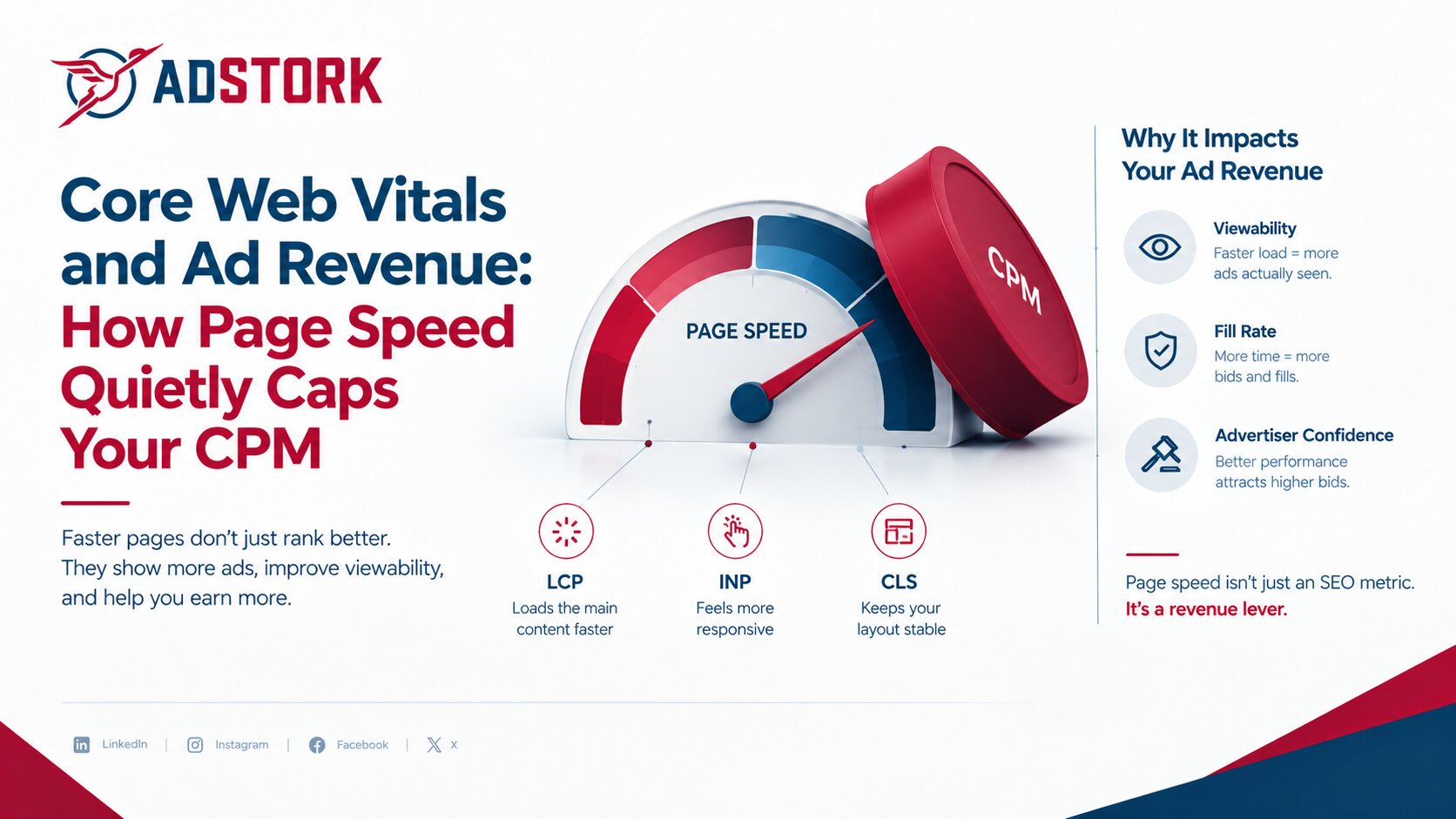
Core Web Vitals and Ad Revenue: How Page Speed Quietly Caps Your CPM
Most publishers treat page speed as an SEO issue. Something to fix because Google says so, filed under technical maintenance rather than revenue strategy. That framing misses half the picture.
A slow page does not just rank worse. It serves ads worse, shows them less often, and gets paid less for the ones it does show. The connection between page speed and ad revenue is direct, measurable, and usually invisible until someone goes looking for it.
In short: Core Web Vitals, the metrics Google uses to measure page experience, directly affect ad revenue through viewability, ad load success rate, and advertiser bid confidence. A page that loads slowly serves fewer viewable impressions and attracts lower bids, regardless of how good the content or traffic quality is.
Key Takeaways
- Core Web Vitals are not just an SEO metric. They directly influence viewability and ad fill success.
- Ad scripts are frequently the single largest contributor to a page's own slowness, creating a feedback loop.
- A user who leaves before a page finishes loading often never saw the ad at all, meaning it was never truly an impression.
- Lazy loading and smarter script management can improve both speed and revenue simultaneously.
1. The Three Metrics That Actually Matter
- Largest Contentful Paint (LCP): How long it takes the main content to become visible. A slow LCP means ads positioned near that content also load late, or users leave before either renders.
- Interaction to Next Paint (INP): How responsive the page feels when a user actually interacts with it. A page that feels sluggish discourages scrolling, which directly reduces how many ad units a user ever reaches.
- Cumulative Layout Shift (CLS): How much content jumps around as the page loads. Ads are one of the most common causes of layout shift, and a user who accidentally clicks an ad because the page jumped is not a genuine engagement, it is a frustrated visitor and a wasted impression.
2. The Feedback Loop Most Publishers Never Notice
Ad tech is frequently one of the heaviest contributors to a page's own load time. Ad scripts, tracking pixels, and third-party tags can each add meaningful weight and network requests before a single ad even renders. The irony is direct: the very ads meant to generate revenue are often what slows the page down enough to suppress that same revenue.
This creates a quiet feedback loop. A heavier ad setup slows the page. A slower page reduces the chance a user sticks around long enough to see later ad units. Fewer viewed impressions mean lower reported viewability. Lower viewability means advertisers bid less on that inventory going forward. The publisher adds more ad density to compensate, which slows the page further.
3. Why Viewability Is the Real Connection Point
An ad that technically loaded but was never actually seen by a user still counts as a served impression in some reporting, but advertisers increasingly pay based on viewable impressions specifically, meaning the ad was actually visible on screen for a meaningful duration. A slow-loading page directly reduces this number in two ways: users leave before scrolling far enough to see lower placements, and ads that do load may render after the user has already moved on or left the page entirely.
Advertisers track viewability rates by publisher over time. A site with consistently low viewability gets bid down, even if the content and traffic are genuinely strong, because the advertiser's own data says the impressions aren't reliably being seen.
4. Fixes That Improve Both Speed and Revenue Together
- Lazy load ads below the fold. Ads only load as a user scrolls near them, rather than all loading at once on page load. This reduces initial page weight while still delivering every placement to users who actually reach it.
- Reserve ad space in advance. Defining a fixed size for each ad slot before it loads prevents the layout shift that happens when an ad suddenly appears and pushes content around.
- Limit the number of simultaneous demand calls on initial load. Not every ad unit needs to fire the instant the page opens. Staggering requests based on what is actually visible reduces the initial network burden.
- Audit third-party scripts regularly. Tracking pixels and tags accumulate over time as new tools get added and old ones rarely get removed. A periodic audit often finds scripts nobody remembers adding, still loading on every page.
5. Where Adstork Fits In
This is a specific area where the ad network itself matters, not just the publisher's own site code. A network running inefficient ad delivery can undo a publisher's entire page speed optimization effort in one script tag. Adstork's delivery is built to support lazy loading and reserved ad space without fighting against a publisher's own speed optimizations, and transparent reporting lets publishers see viewability by placement, so a specific slow-loading or high-shift ad unit can be identified and fixed rather than guessed at.
6. Being Honest About the Trade-off
There is a real tension between ad density and page speed, and no technical fix eliminates it entirely. More ad units mean more scripts, more network requests, and more potential for layout shift, regardless of how well they are implemented. The realistic goal is not zero impact, it is minimizing unnecessary weight, like redundant tracking scripts or non-lazy-loaded below-fold ads, while accepting that some speed cost comes with any monetization setup.
Fast Page vs. Slow Page: The Revenue Difference
| Factor | Fast Page (Good Core Web Vitals) | Slow Page (Poor Core Web Vitals) |
|---|---|---|
| Viewability | 70%+ | Below 50% |
| Bounce before ad loads | Low | High |
| Advertiser bid confidence | Higher | Discounted |
| Accidental clicks from layout shift | Minimal | Common, damages trust |
What's Next for Page Speed and Monetization
As Google continues weighting page experience in both search ranking and as AI-driven search tools increasingly evaluate page quality before citing or summarizing content, the publishers who treat speed as a revenue lever rather than a compliance checkbox will have an advantage on two fronts at once, visibility and monetization, rather than just one.
Final Word
Page speed is not separate from ad revenue, it is one of the quieter levers controlling it. Viewability, fill rate, and advertiser bid confidence all trace back, at least partly, to how fast a page actually loads. At Adstork Ad Network, delivery is built to support speed-friendly practices like lazy loading, so publishers are not forced to choose between a fast site and a monetized one.
Ready for an ad setup that works with your page speed instead of against it? Partner with Adstork Ad Network today.
FAQs
Do Core Web Vitals really affect ad revenue, or just SEO rankings? Both. Slow pages reduce viewability and increase bounce before ads render, which directly suppresses advertiser bid confidence and overall revenue, separate from any SEO ranking impact.
What is viewability and why does it matter for CPM? Viewability measures whether an ad was actually visible on screen long enough to count as genuinely seen. Advertisers increasingly pay based on viewable impressions, so low viewability directly reduces what they're willing to bid.
Do ads themselves slow down a page? Often significantly. Ad scripts, tracking pixels, and third-party tags can each add meaningful load weight, sometimes becoming the single largest contributor to a page's overall slowness.
What is lazy loading and how does it help? Lazy loading delays an ad from loading until a user scrolls near it, rather than loading every ad unit immediately. This reduces initial page weight while still serving every placement to users who reach it.
Can I fix layout shift caused by ads? Yes, by reserving a fixed size for each ad slot in the page's code before the ad actually loads, preventing surrounding content from jumping when the ad appears.
How does Adstork support page speed optimization? Delivery is built to work with lazy loading and reserved ad space, and transparent reporting shows viewability by placement so slow or high-shift ad units can be identified and fixed.


Leave a Comment