- 07 Oct, 2026
Newsletter Monetization: Turning Email Subscribers Into a Second Revenue Stream
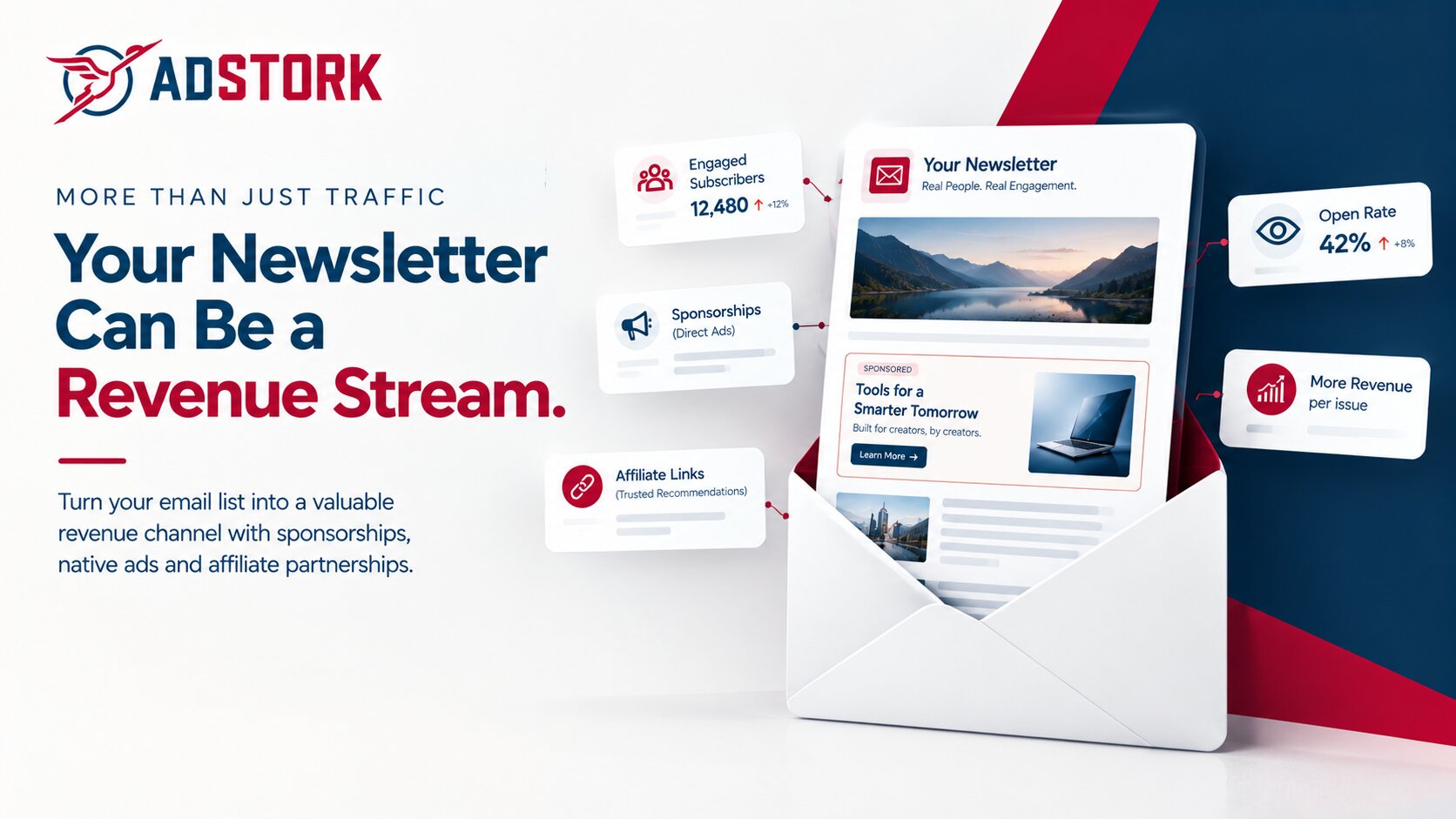
Most publishers spend years building an email list and treat it purely as a traffic funnel, a way to pull subscribers back to the site where the real ads live. The list itself sits there earning nothing on its own.
That is a missed asset. A newsletter is not just a traffic source. It is an owned, first-party audience advertisers increasingly want direct access to, and treating it as a second revenue stream, not just a funnel, can meaningfully change a publisher's total earnings.
In short: Newsletter monetization means generating revenue directly from email content, through sponsorships, native ad placements, or affiliate links, rather than relying solely on the newsletter to drive site traffic. A list of even a few thousand engaged subscribers can produce meaningful standalone revenue once structured correctly.
Key Takeaways
- A newsletter list is a first-party asset, exactly the kind of audience advertisers are prioritizing as cookies fade out.
- Sponsorships and native placements typically outperform display banners inside email.
- Open rate and click rate matter more than list size when pricing sponsorship slots.
- Newsletter revenue compounds with site revenue rather than competing with it.
1. Why Email Monetizes Differently Than a Webpage
A webpage ad competes with a reader's wandering attention. An email ad competes with almost nothing else in that moment, the subscriber opened one message and is reading it start to finish. That attention is worth more to advertisers, which is why well-run newsletter sponsorships often command higher effective rates per reader than the same audience would generate browsing a site.
2. Three Ways to Actually Monetize a Newsletter
- Direct sponsorships. A single advertiser pays a flat rate to be featured in a specific issue, usually with a short blurb and link. Priced based on open rate and list size, not just subscriber count.
- Native ad placements. A short, clearly labeled promotional section woven into the newsletter's normal format, blending with editorial content rather than interrupting it.
- Affiliate and product recommendations. Particularly effective in niche newsletters where subscribers trust the publisher's recommendations on tools, products, or services relevant to the topic.
3. Pricing Based on the Right Numbers
List size alone is a weak pricing signal. A 5,000-subscriber list with a 45% open rate is worth more to an advertiser than a 20,000-subscriber list with an 8% open rate. Price sponsorships against actual opens, not raw subscriber count, and be transparent with advertisers about both numbers upfront.
4. Where Adstork Fits In
Newsletter revenue works best alongside strong site monetization, not instead of it. Adstork helps publishers capture the full value of the traffic a newsletter sends back to the site, through competing demand sources and transparent reporting, so the newsletter's job of driving return visits and the site's job of monetizing them both get captured fully rather than one subsidizing the other.
5. Being Honest About the Effort Required
Direct sponsorship sales take real time, finding advertisers, negotiating rates, fulfilling placements manually. This is not a passive revenue stream in the way programmatic display ads are. It works best for publishers who already have some advertiser relationships or are willing to build them specifically for this channel.
Newsletter vs. Site Monetization
| Factor | Newsletter | Site |
|---|---|---|
| Attention level | High, focused | Variable, divided |
| Sales effort | Manual, direct | Automated, programmatic |
| Scalability | Limited by sales capacity | Scales with traffic |
Final Word
A newsletter that only drives traffic back to the site is leaving a second revenue stream untouched. At Adstork Ad Network, we help publishers capture full value from the traffic their newsletter sends, so both channels work together rather than one doing all the earning.
Ready to make your whole audience work for you? Partner with Adstork Ad Network today.
FAQs
How many subscribers do I need to monetize a newsletter? There is no strict minimum. A smaller, highly engaged list often sells better than a large, disengaged one. Open rate matters more than size.
What should I charge for a newsletter sponsorship? Base pricing on actual opens, not subscriber count. A common starting approach is a CPM-style rate applied to average opens per issue.
Do newsletter ads hurt subscriber trust? Not if clearly labeled and relevant to the audience. Native, well-integrated placements perform better and damage trust less than disruptive, off-topic ads.
Should I use a newsletter ad network instead of selling directly? Direct sales typically pay more but require more effort. Networks are faster to start but usually pay less per placement.
Leave a Comment