- 07 Oct, 2026
How Seasonal CPM Swings Work: Why Your Rates Drop in January and Spike in November
Every January, the same message appears in publisher communities: "Did something break? My CPM just fell off a cliff." Every November, the opposite message appears: "CPMs are amazing right now, what changed?"
Nothing broke in January, and nothing special happened in November beyond the calendar. Both are the same predictable cycle repeating every year, and understanding it removes a lot of unnecessary anxiety.
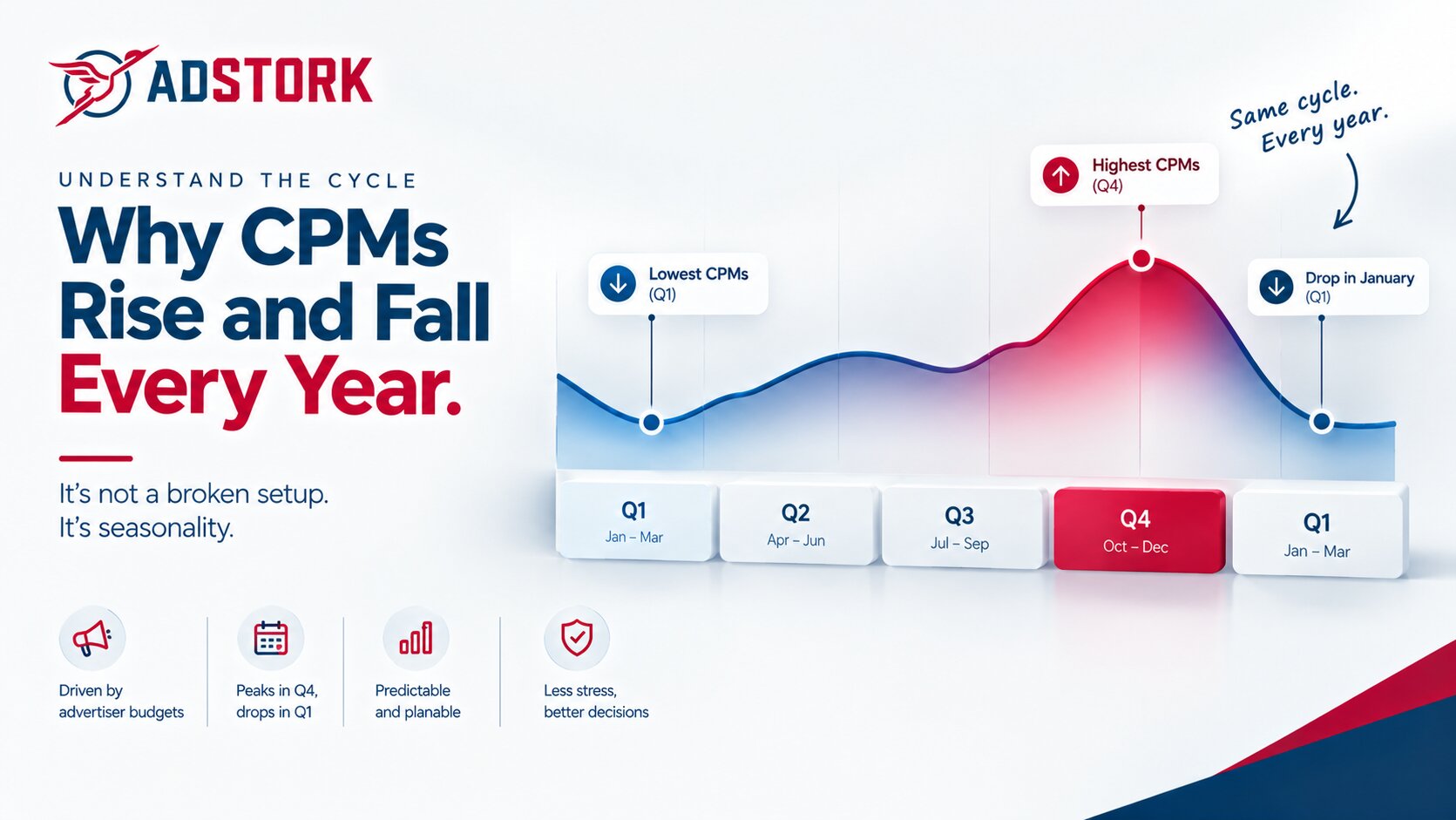
In short: CPMs follow a predictable annual cycle driven by advertiser budget timing, peaking in Q4 around holiday shopping season and dropping in January as new annual budgets restart at lower initial spend. Recognizing this pattern prevents publishers from mistaking normal seasonality for a broken setup.
Key Takeaways
- CPM seasonality is driven by advertiser budget cycles, not changes in a publisher's own setup.
- Q4 typically delivers the highest CPMs of the year, Q1 typically the lowest.
- The swing is predictable enough to plan content and cash flow around.
1. The Annual Budget Cycle, Explained
Most advertisers plan and allocate budgets annually, often with a disproportionate share pushed into Q4 to capture holiday shopping demand. Retail, e-commerce, and consumer brands compete intensely for inventory from October through December, bidding up prices across the board. Once the calendar resets in January, new annual budgets have just been approved but spending typically ramps slowly, since campaigns need to be planned and launched before dollars actually flow into bids.
2. The Typical Shape of the Year
- Q1 (Jan-Mar): Lowest CPMs of the year, slow ramp as new budgets get planned.
- Q2-Q3 (Apr-Sep): Steady, moderate CPMs as campaigns run at normal pace.
- Q4 (Oct-Dec): Highest CPMs, driven by holiday shopping competition, peaking around Black Friday and Cyber Monday specifically.
3. How to Plan Around the Cycle
Treat Q1 revenue dips as expected rather than alarming, and avoid making reactive changes to the ad setup based on a seasonal dip alone. For cash flow planning, the gap between Q4 peak earnings and Q1 trough earnings can be significant, smoothing income across the year, or budgeting conservatively based on Q1-level revenue, prevents surprises.
4. Where Adstork Fits In
Competing demand sources help soften, though not eliminate, the Q1 trough, since a broader pool of advertisers means a better chance of finding whatever demand is active even during slower months. Transparent reporting also helps publishers distinguish a normal seasonal dip from an actual setup problem, rather than guessing.
5. When It's Not Just Seasonality
Seasonality explains a predictable, proportional dip. It does not explain a dip far steeper than prior years, or one that doesn't recover by Q2. If a January drop is dramatically worse than the same period last year, something beyond normal seasonality is worth investigating.
Typical Quarterly CPM Pattern
| Quarter | Typical CPM Trend |
|---|---|
| Q1 | Lowest, slow budget ramp |
| Q2-Q3 | Steady, moderate |
| Q4 | Highest, holiday competition |
Final Word
CPM seasonality is predictable, not a sign of a broken setup. Planning around it, rather than reacting to it, saves both stress and unnecessary changes. At Adstork Ad Network, competing demand helps soften the Q1 trough while transparent reporting shows exactly what's seasonal and what isn't.
Ready for a setup that holds steady through the seasonal cycle? Partner with Adstork Ad Network today.
FAQs
Why does my CPM drop every January? New annual advertiser budgets take time to ramp into active spending, while Q4 holiday competition that drove rates up has ended.
When is CPM typically highest during the year? Q4, usually peaking around Black Friday and Cyber Monday, driven by retail and e-commerce competition for holiday shopping traffic.
How do I know if a CPM drop is seasonal or a real problem? Compare the drop's severity against the same period in prior years. A proportional, predictable dip is seasonal. A dip far steeper than usual warrants investigation.




Leave a Comment