- 07 Oct, 2026
The Publisher's Guide to Surviving a Google Algorithm Update Without Losing Ad Revenue
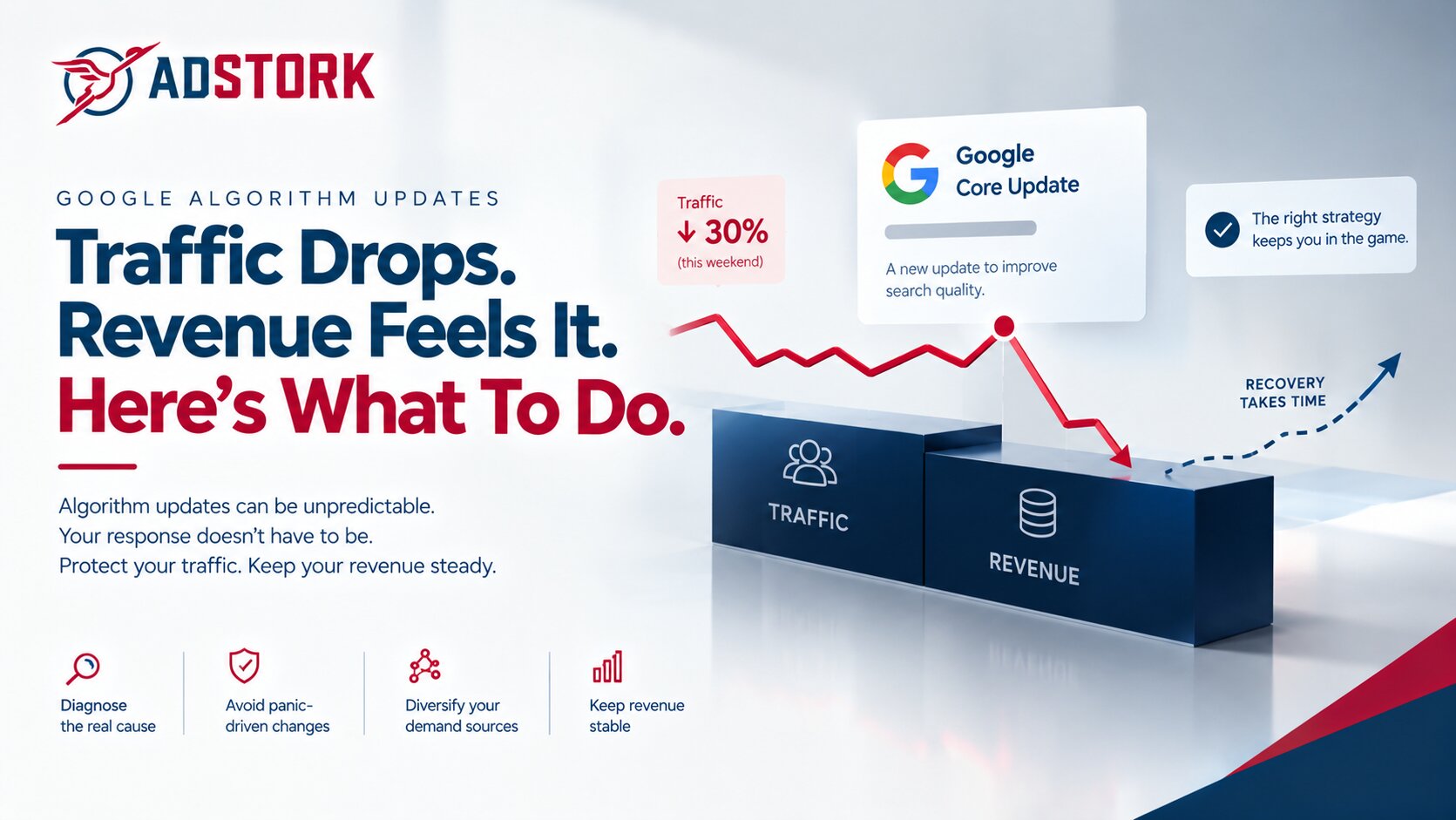
Traffic drops 30% over a weekend. No code changed, no content was removed, nothing on the site is different. Then the news breaks: Google rolled out a core update. The explanation arrives, but the revenue is already gone for the month.
Algorithm updates are one of the few genuinely uncontrollable forces in a publisher's business. The response to them, however, is controllable, and most publishers respond badly in ways that make the financial impact worse than it needs to be.
In short: Google algorithm updates can cause sudden traffic volatility that directly impacts ad revenue, but the publishers who recover fastest are the ones who diagnose correctly before reacting, avoid panic-driven content purges, and have a monetization setup resilient enough to absorb a temporary traffic dip without compounding the damage.
Key Takeaways
- Most traffic drops attributed to "an update" are not actually related to the update at all.
- Panic-driven content deletion often does more damage than the update itself.
- Revenue diversification across multiple demand sources softens the financial impact of a traffic dip.
- Recovery typically takes weeks to months, not days, and rushing the process usually backfires.
1. First, Confirm It's Actually the Update
Traffic drops coincide with update rollouts often enough that publishers assume correlation automatically means causation. Before reacting, check Google Search Console for manual actions, confirm the drop lines up precisely with the rollout date rather than starting days before it, and compare against industry chatter to see if other sites in the same space reported similar timing. A drop that started a week before the update was announced is probably not about the update.
2. The Panic Response That Makes Things Worse
The most common reaction, mass-deleting or drastically rewriting content within days of a drop, is usually premature. Core updates take time to fully roll out and for rankings to settle, often several weeks. Making large structural changes mid-rollout means a publisher cannot tell whether a change helped, hurt, or had no effect at all, because the update itself is still moving the baseline underneath them.
3. Protecting Revenue While Traffic Recovers
- Don't cut ad density during the dip. It is tempting to assume fewer ads will help recovery somehow. It will not affect rankings, and it compounds the revenue loss unnecessarily.
- Check whether the remaining traffic shifted in value. Sometimes an update changes which pages rank, shifting traffic toward lower or higher commercial-intent content than before, which affects RPM independent of volume.
- Lean on non-search channels temporarily. Direct, email, and social traffic are unaffected by the update and can partially offset the gap while rankings stabilize.
4. Where Adstork Fits In
A single-network setup with one fixed buyer has no flexibility to absorb a sudden volume change. Adstork's multiple competing demand sources mean that whatever traffic does arrive during a volatile period is still being exposed to real competition for the best possible rate, rather than a fixed, pre-negotiated price that doesn't adjust to changing conditions.
5. Being Honest About Recovery Timelines
Some sites recover fully within the same update cycle. Others don't recover for months, or ever, if the update reflected a genuine, lasting shift in what Google considers quality for that content type. There is no guaranteed timeline, and any claim promising one should be treated skeptically.
Panic Response vs. Measured Response
| Action | Panic Response | Measured Response |
|---|---|---|
| Content | Mass delete/rewrite within days | Wait for full rollout, then diagnose |
| Ad density | Cut immediately | Leave unchanged |
| Traffic channels | Ignored | Lean on email/direct/social |
Final Word
Algorithm updates are uncontrollable. The response to them is not, and a measured response protects both long-term rankings and short-term revenue far better than panic does. At Adstork Ad Network, competing demand sources mean whatever traffic a site has during a volatile period is still earning what it's actually worth.
Ready for a monetization setup that holds steady through SEO volatility? Partner with Adstork Ad Network today.
FAQs
How long does it take to recover from a core update? It varies widely, from weeks to several months, and some sites never fully recover if the update reflects a lasting quality shift rather than a temporary fluctuation.
Should I delete content that dropped in rankings? Not immediately. Wait for the update to fully roll out and diagnose the actual cause before making structural changes.
Does reducing ads help SEO recovery? No. Ad density does not directly affect core update recovery and cutting it only compounds revenue loss unnecessarily.


Leave a Comment