- 12 Oct, 2026
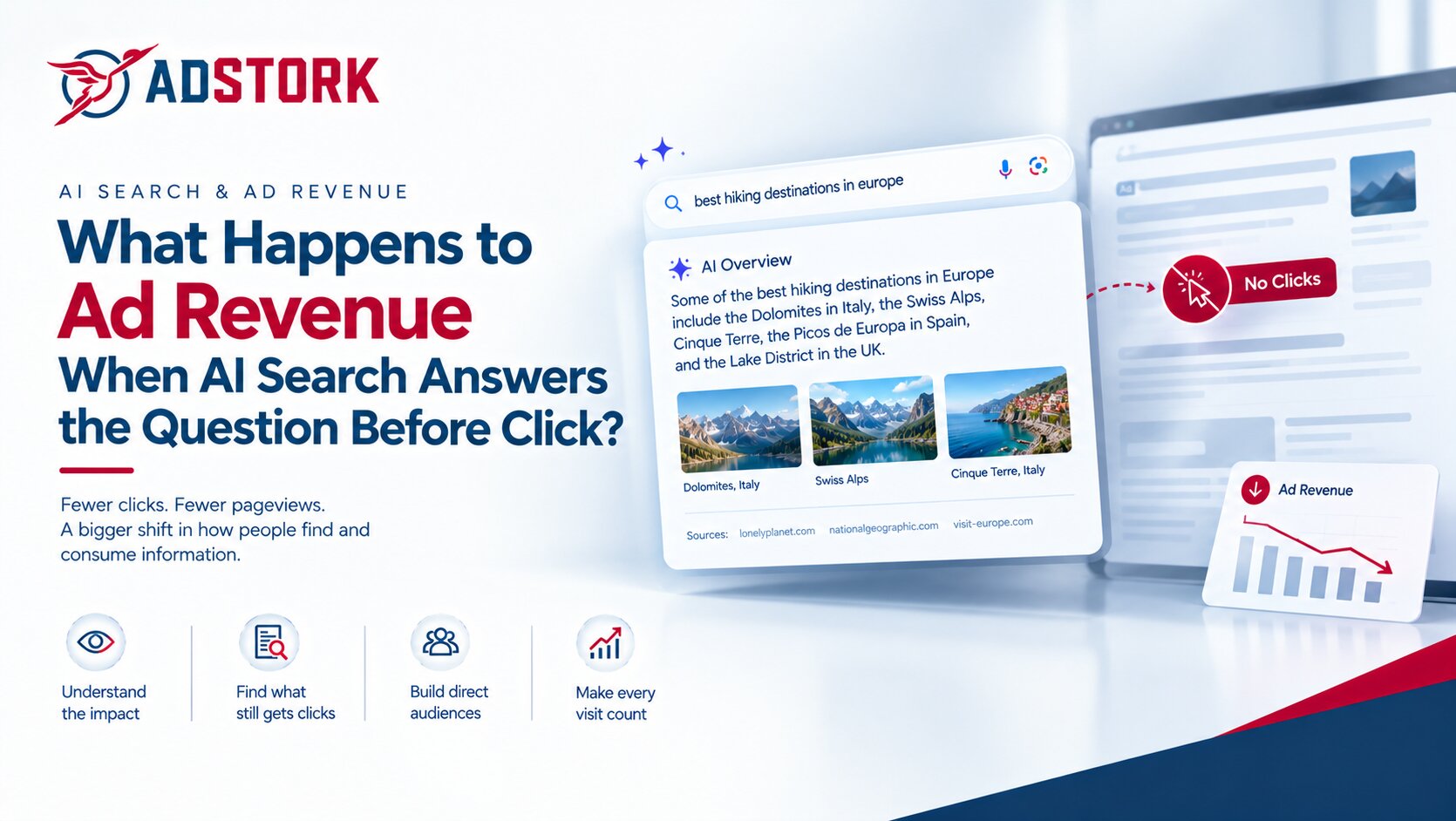
What Happens to Ad Revenue When AI Search Answers the Question Before Readers Click
A reader types a question into a search engine and gets a complete answer at the top of the page, sourced from sites like yours. They read it, close the tab, and never visit. The publisher whose work fed that answer sees the impression in a report and nothing in the revenue dashboard.
This is the concern behind a lot of recent publisher anxiety, and it is not imaginary. It is also more nuanced than "AI will take all the traffic," and the details decide which sites are exposed.
In short: AI-generated answers in search can reduce clicks to publisher sites, especially for simple factual queries, which lowers pageviews and ad revenue. Publishers can respond by building direct audiences, targeting queries that need depth, and structuring content so AI tools cite it, which turns a threat into a new traffic source.
Key Takeaways
- AI answers hurt simple, fact-lookup content the most and affect in-depth, original content far less.
- Direct, email, and returning traffic is largely unaffected, which makes owned audiences more valuable than before.
- Being cited inside an AI answer can send smaller but more engaged traffic.
- Fewer pageviews make revenue per pageview and per session matter more than raw traffic volume.
1. How Do AI Search Answers Reduce Publisher Traffic?
When a search engine or chatbot answers a question directly, the reader may never need to open a source page. Research from groups like the Pew Research Center in 2025 found that people clicked traditional results noticeably less often when an AI summary appeared at the top of the results. Treat the exact figures as a snapshot, since they shift as products change, but the direction is consistent across studies.
For publishers, fewer clicks mean fewer ad impressions. The effect is uneven. A page that exists to answer a quick factual question is exposed. A page that offers analysis, original data, tools, or a point of view is much harder for a summary to replace.
2. Which Kinds of Content Are Most and Least Exposed?
- Most exposed: Definitions, quick facts, simple how-to steps, and short lookup answers that a summary can fully satisfy.
- Moderately exposed: General explainers and list articles that cover widely available information.
- Least exposed: Original research, benchmarks, opinionated analysis, community content, tools, and anything where the reader wants depth or a specific voice.
3. What Can Publishers Do About It?
- Build audiences that do not depend on search. Newsletters, direct visits, and returning readers are not intercepted by an AI summary.
- Publish what a summary cannot replace. Original data, firsthand testing, and clear expert opinion give readers a reason to click through.
- Structure content so it can be cited. Question-style headings, concise standalone answers, clear sourcing, and comparison tables make it easier for AI tools to pull from and credit a page.
- Raise revenue per visit. With fewer visitors, each one needs to be monetized well, through sensible placement and competing demand rather than a single fixed buyer.
4. Where Does Adstork Fit In?
When traffic is harder to win, every visit has to earn more. Adstork connects publishers to multiple competing demand sources across banner, native, push, popunder, and video formats, so each remaining impression is matched against real competition instead of one fixed rate. Transparent, real-time reporting lets publishers watch revenue per session, not just traffic totals, and see early whether AI-driven changes are reaching their numbers.
5. What Are the Honest Limits?
No monetization setup replaces visitors who never arrive. Better yield per visit softens the loss but does not remove it, and citation by AI tools is not guaranteed or easily controlled. Publishers whose entire business rests on simple answers searched by anonymous visitors face the hardest adjustment, and for them diversifying content and audience sources is a necessity rather than an option.
Content Types and AI Exposure
| Content Type | Exposure to AI Answers | Best Response |
|---|---|---|
| Quick facts and definitions | High | Add depth, or accept as a citation play |
| General explainers | Medium | Add original examples and data |
| Original research and benchmarks | Low | Publish more, structure for citation |
| Newsletters and direct audience | Very low | Invest and grow |
What Comes Next for Publishers and AI Search?
AI answer products will keep changing, and so will the share of traffic they send. The durable advantages are the same ones advertisers already reward: first-party audiences, original content, and trust. Publishers who invest in them are better placed whichever way the technology moves.
Final Word
AI search is changing how readers find content, but it rewards the same fundamentals: original work, loyal audiences, and strong monetization of every visit. At Adstork Ad Network, competing demand and transparent reporting help publishers earn more from the traffic they do get.
Ready to get more from every visit? Partner with Adstork Ad Network today.
FAQs
Do AI Overviews reduce traffic to publisher websites? Studies indicate users click through to sources less often when an AI summary appears, with the largest effect on simple factual queries. The impact varies by site and content type.
What type of content is safest from AI answers? Original research, benchmarks, opinionated analysis, tools, and community content, since a short summary cannot fully replace them.
How can I get my site cited by AI tools? Use question-style headings, give concise standalone answers, cite sources clearly, include comparison tables, and publish original data. Citation is not guaranteed, but structure improves the odds.
Should I stop publishing informational content? No. Shift toward depth and originality, and build owned audiences so traffic does not depend on a single search feature.
How can publishers protect revenue if traffic falls? Increase revenue per visit through competing demand sources and sensible placement, and grow direct channels like email that AI summaries cannot intercept.

Leave a Comment