-
12 Aug, 2026
Publisher Monetization Tips: How to Earn More From Your Website Traffic
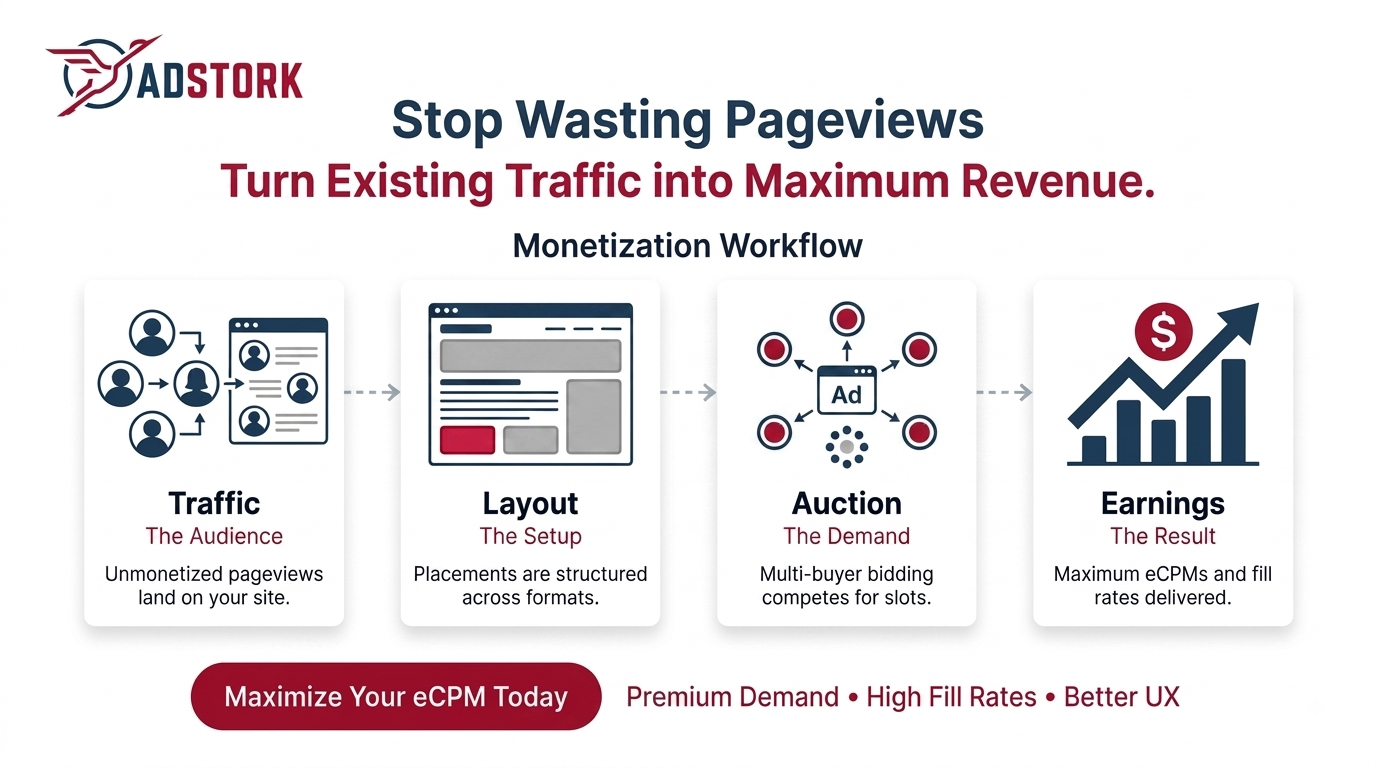
Your traffic is growing. Pageviews are up, engagement looks solid, but revenue barely moves. It is one of the most frustrating spots a publisher can be in: the audience is there, but the money is not following.Usually, it is not a traffic problem. It is a monetization problem.In short: Publisher monetization is the process of turning website or app traffic into ad revenue through strategies like ad placement optimization, format diversification, and demand competition (like header bidding). Done right, it can lift revenue significantly without adding a single extra visitor.Key TakeawaysMore traffic does not automatically mean more revenue. Optimization matters more than volume.Ad placement, format mix, and fill rate all directly impact eCPM.Competing demand sources, like header bidding, consistently outperform single-network setups.Over-monetizing hurts user experience and long-term revenue. Balance is critical.The right ad network partner can boost earnings without extra development work.1. Why Traffic Growth Alone Does Not Pay OffNot all impressions are equal. A visitor who bounces in three seconds generates a different value than one who stays and scrolls. If your ad setup is not built to capture engaged attention, then with the right placement, format, and timing, you are leaving money on every single pageview, no matter how much traffic you drive.2. Fix Your Ad Placement FirstPlacement is usually the single biggest lever.Above the fold – highest visibility, highest eCPM, but do not overload it.In-content (between paragraphs) – strong engagement without disrupting reading.Sticky/anchor units – stay visible during scroll, good for mobile.Avoid stacking too many units – it hurts load speed and user experience, which quietly kills long-term revenue.3. Diversify Your Ad FormatsRelying on one format caps your ceiling. A mix typically performs best:Display – reliable baseline revenue.Native – blends with content, strong CTR, less intrusive.Video – highest eCPM per impression, best for engaged pages.Push/interstitial – high revenue but use sparingly; overuse drives users away.4. Let Demand Sources Compete for YouThis is the single biggest technical upgrade most publishers skip. Instead of selling inventory to one buyer at a fixed rate, header bidding lets multiple advertisers bid simultaneously for the same ad slot in real time.Higher competition leads to higher eCPM.No dependency on a single network's fill rate.Removes the "waterfall" delay of asking buyers one at a time.5. Watch Your Fill Rate, Not Just Your CPMA high CPM means nothing if half your impressions go unsold. Fill rate; the percentage of ad requests actually filled with an ad is just as important as the rate you are paid per impression. Low fill rate is often a sign of too narrow a demand pool.Monetization Model ComparisonModelBest ForPublisher EarnsTrade-offCPMHigh-traffic, brand pagesPer 1,000 viewsNeeds volume to add upCPCContent/blog sitesPer clickDepends on engagementHeader BiddingAny site with real demandHighest competing bidRequires setup/integrationNativeContent-heavy sitesPer view/clickLower per-unit, high volumeCommon Mistakes Publishers MakeOverloading pages with ads, tanking page speed and user retention.Sticking to one demand source instead of letting buyers compete.Ignoring mobile-specific placements, where a huge share of traffic now lands.Never testing placement changes. Treating the ad setup as "set and forget."Where Adstork Fits InThis is exactly where a good network partner changes the math. Adstork connects publishers to premium, non-intrusive ad inventory and competing demand sources, so instead of settling for one buyer's rate, your inventory gets matched against real competing bids. Combined with anti-fraud filtering, that also means the traffic you are being paid for is traffic that actually counts, protecting the payouts you have already earned.It is not about cramming more ads onto the page. It is about making every existing impression worth more.Being Honest About the Trade-offsMore ad units or more intrusive formats can boost short-term revenue, but they cost you engagement, page speed, and repeat visitors over time. The publishers who monetize best long-term are not the ones who fill every pixel with an ad; they are the ones who treat user experience as part of the revenue equation, not separate from it.What's Next for Publisher MonetizationAs third-party cookies fade out, contextual targeting and first-party data are becoming the new backbone of publisher revenue rewarding sites that build direct audience relationships rather than relying purely on tracking-based ads.Final WordGrowing traffic is only half the job. The other half is making sure every visitor you already have is monetized properly through smarter placement, diversified formats, and real demand competition. At Adstork Ad Network, we help publishers do exactly that, turning existing traffic into meaningfully higher revenue.Ready to earn more from the traffic you already have? Partner with Adstork Ad Network today.FAQsWhat is publisher monetization? Turning website or app traffic into ad revenue through optimized placement, formats, and demand sources.What's the fastest way to increase ad revenue? Diversifying demand sources through header bidding usually has the biggest immediate impact.Does more traffic always mean more revenue? No, unoptimized placement and format choices can leave significant revenue on the table regardless of traffic volume.What is fill rate? The percentage of ad requests that are actually filled with an ad, distinct from the rate paid per impression.Can too many ads hurt revenue? Yes, overloading pages slows load speed and drives users away, hurting long-term earnings.How does Adstork help publishers earn more? By connecting inventory to competing demand sources and filtering out fraudulent traffic that erodes payouts.
Read More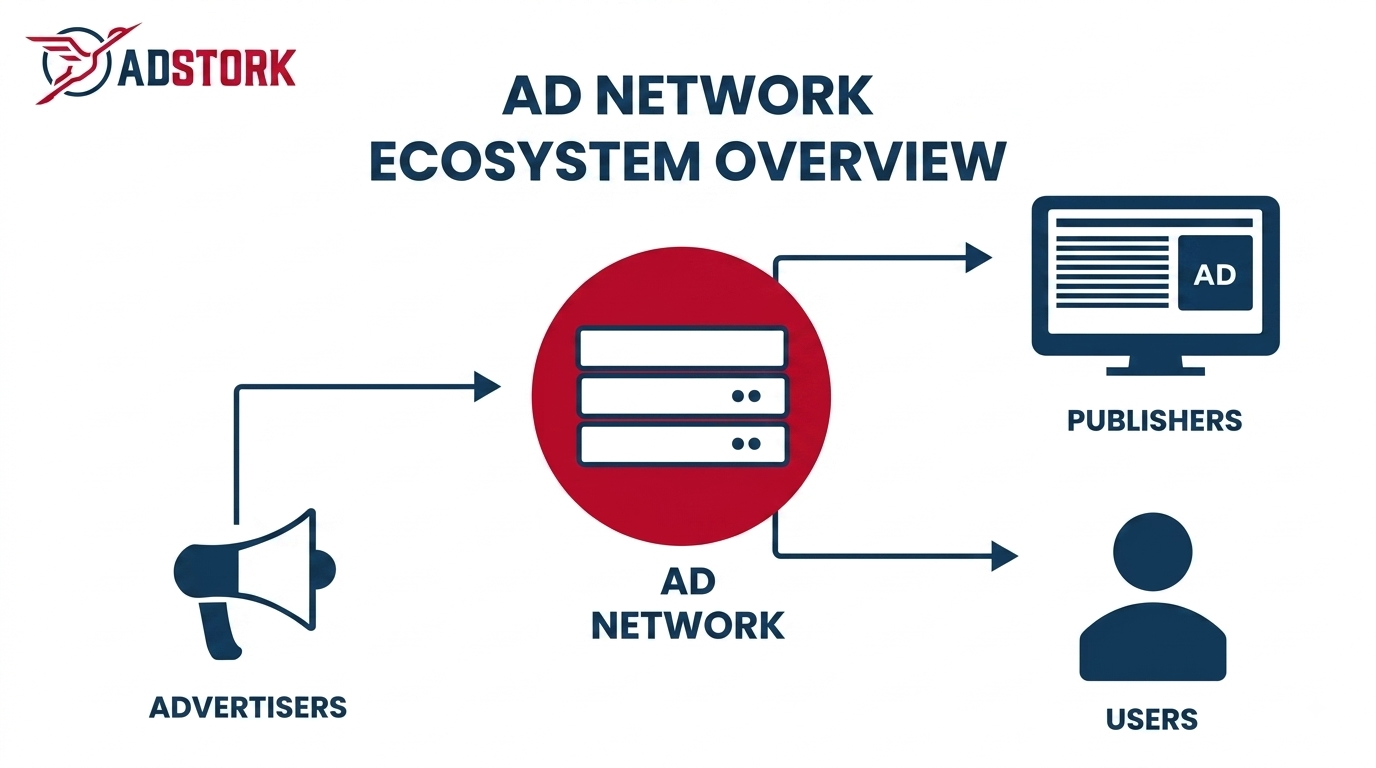
-
17 Dec, 2025
The Role of Ad Networks in Shaping the Future of Digital Advertising
In today’s rapidly evolving digital landscape, ad networks play a pivotal role in shaping how advertisers connect with their target audiences. These platforms act as crucial intermediaries between advertisers seeking exposure and publishers offering ad space, streamlining the complex process of digital media buying and selling.By aggregating vast amounts of ad inventory across websites, mobile apps, and digital platforms, ad networks allow advertisers to launch scalable campaigns that are both cost-effective and performance-driven. Through advanced audience targeting, real-time bidding (RTB), and optimization tools, they ensure that each impression is delivered to the right user, at the right time, and in the right context.Ad networks also provide valuable infrastructure for measuring success like tracking impressions, clicks, conversions, and more. With billions of ad impressions served daily, these networks have become the backbone of programmatic advertising, helping brands reach wider audiences while maximizing ROI.As digital advertising continues to move toward automation, personalization, and cross-platform delivery, ad networks are no longer just optional—they are essential. Their ability to bridge the gap between demand and supply, while adapting to privacy regulations and evolving user behavior, positions them as key drivers in the future of online advertising. Ad Networking in the Modern MarketToday’s advertising environment is dynamic, data-driven, and evolving at record speed. What was once a manual, relationship-based industry has transformed into an automated ecosystem powered by real-time technologies and intelligent algorithms.At the heart of this transformation are programmatic tools like Real-Time Bidding (RTB), Supply-Side Platforms (SSPs), and Demand-Side Platforms (DSPs). These components work together to automate and optimize the process of buying and selling ad impressions. Rather than relying on traditional direct deals, advertisers now use DSPs to bid on individual impressions in real time, while publishers leverage SSPs to maximize the value of their available ad inventory. This highly efficient exchange takes place on ad exchanges, where each impression is auctioned within milliseconds delivering speed, scale, and precision that manual trading could never achieve.However, with this technological leap comes a new set of responsibilities. In a privacy-first advertising era, ad networks must now balance performance with regulatory compliance and user trust. The deprecation of third-party cookies, introduction of frameworks like GDPR and CCPA, and a growing demand for transparency and data control have reshaped how campaigns are run.To adapt, modern ad platforms are pivoting toward first-party data strategies, contextual targeting, and AI-powered optimization. These advancements not only help advertisers maintain reach and relevance but also ensure that user privacy is respected throughout the journey. Machine learning models are now used to analyze user behavior patterns, predict intent, and optimize ad delivery. All without compromising sensitive personal data.In short, the future of digital advertising belongs to intelligent, privacy-aware ad networks that can deliver both performance and accountability at scale. Ad Networking in the Modern MarketThe global programmatic advertising market is experiencing steady year-over-year growth, with billions being spent across formats like display, video, native, and mobile. While major platforms command a significant share of the ecosystem, there’s growing space for agile ad networks that offer flexible pricing models, fraud prevention, transparent reporting, and niche audience targeting.Today’s publishers seek monetization partners that provide greater control, higher fill rates, and real-time insights. At the same time, advertisers are focused on solutions that deliver precise targeting and measurable return on investment (ROI) driving demand for smarter, more responsive ad platforms. How Adstork Enhances the Ad Network ExperienceAt Adstork, we’re more than just a bridge between advertisers and publishers. We’re an intelligent hub that empowers both sides with performance, control, and transparency.For publishers, our integration with leading SSPs ensures premium demand and maximized yield.For advertisers, our DSP tools deliver high-precision targeting, creative flexibility, and real-time optimization.For partners, our platform architecture offers seamless onboarding, reporting, and traffic validation, all within a single, powerful interface.Whether it’s through our direct relationships, self-serve tools, or advanced analytics, Adstork is committed to simplifying and strengthening every step of the ad delivery process.Conclusion: The Future is Programmatic, and Adstork is Built for ItAs the advertising industry accelerates toward automation, personalization, and privacy, the role of ad networks becomes more critical than ever. At Adstork, we’re not just keeping pace with change, we’re driving it. Whether you’re an advertiser seeking conversions or a publisher looking to increase yield, Adstork is your partner for smarter, faster, and more effective advertising.Let’s grow together. The future of advertising starts here.
Read More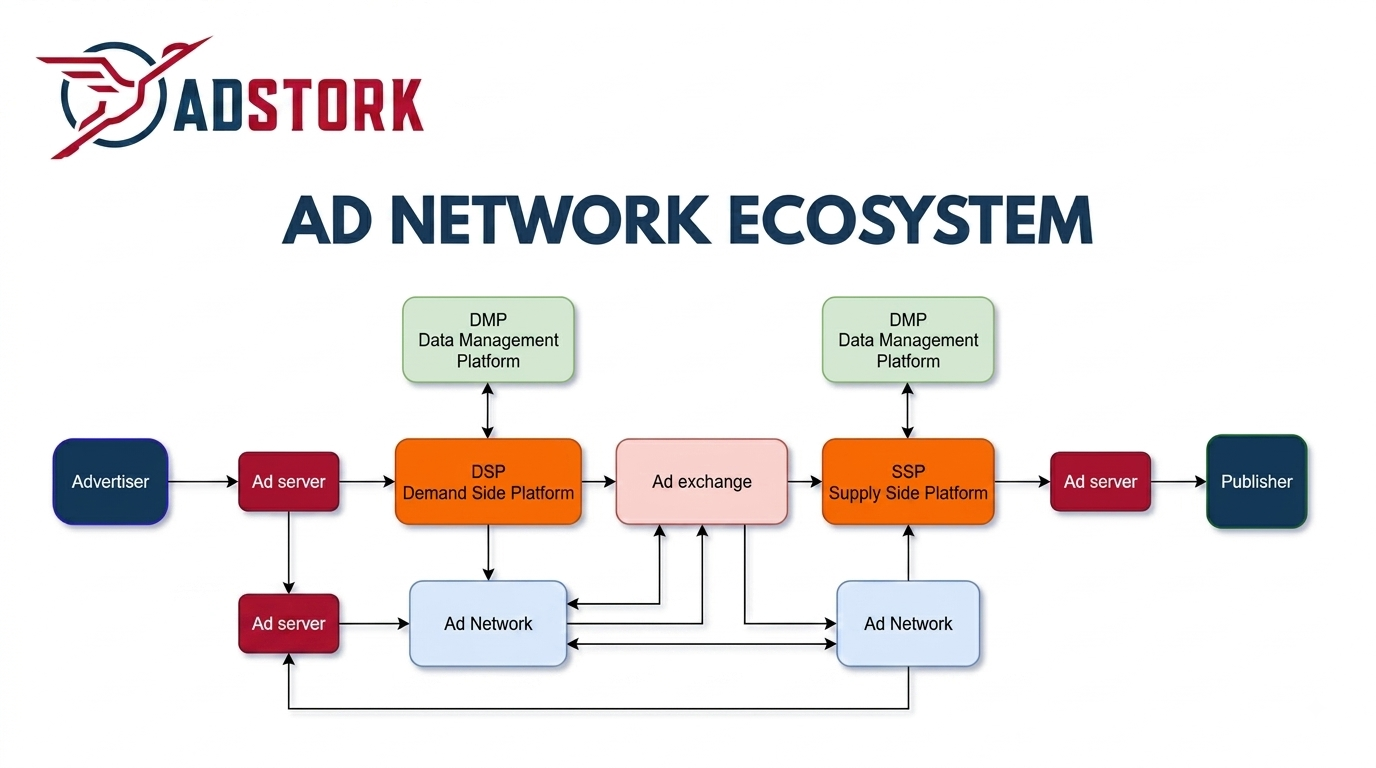
-
17 Dec, 2025
The Ultimate Guide to Ad Network Operations and the Digital Advertising Ecosystem
Digital advertising is no longer as simple as “buy an ad, get a click.”Instead, it has evolved into a highly competitive, multi-layered ecosystem where advertisers chase attention, publishers struggle to monetize, and both sides demand more transparency and performance.At the heart of this system are ad networks — the matchmakers connecting advertisers with publishers. By aggregating inventory and optimizing campaigns, they provide scale, efficiency, and measurable results.But not all ad networks are created equal. Some lack transparency. Some suffer from fraud. Others overwhelm advertisers with too many choices (paradox of choice).This guide breaks down how ad networks operate, the challenges they face, and how smart agencies like Adstork Ad Network are rewriting the rules with trust, innovation, and growth.1. How Ad Networks Operate: The Matchmakers of Digital MediaAd networks are digital connectors. They aggregate ad space from publishers and sell it to advertisers.Typical workflow:Publisher Onboarding → Publishers integrate ad tags/SDKs to make inventory available.Advertiser Setup → Advertisers define goals, budgets, and creatives.Ad Matching & Targeting → Algorithms decide the best audience fit.Ad Serving → Ads delivered in real-time.Reporting & Payouts → Metrics tracked, revenue split, network commission deducted.2. Types of Ad NetworksVertical Networks → Niche categories like gaming, health, or finance.Premium Networks → High-quality publishers, brand-safe environments.Performance Networks → Focused on CPA, CPL, ROI.Format-Specific Networks → Mobile, native, video, or CTV.3. Ad Serving Architecture: Behind the ScenesAd serving is what makes ads appear almost instantly when you load a page.Ad Tags trigger ad requests.Ad Servers choose the right ad.CDNs deliver content globally in milliseconds.Optimization matters: latency (ads must load fast), scalability (traffic spikes handled smoothly), and tracking accuracy.4. Ad Tracking & Analytics: Data is the New CurrencyWhat gets measured gets improved.Impressions → How many times ads displayClicks → Interactions recordedConversions → Actual actions (sign-ups, purchases)Advanced metrics: eCPM, CTR, viewability, attribution.5. Monetization Models: Choosing the Right PathModelAdvertiser PaysPublisher EarnsUse CaseCPMPer 1,000 impressionsPer 1,000 ad viewsAwarenessCPCPer clickPer clickTrafficCPAPer actionConversionE-commerceCPLPer leadLead submissionB2BCPI/CPVPer install/viewInstalls/video completionMobile/Video 6. Key Players in the Ad EcosystemAdvertisers → Set goals, budgets, creatives.Publishers → Provide inventory.Ad Networks → Aggregate and optimize inventory.Ad Exchanges, DSPs, SSPs → Power programmatic transactions.DMPs & CDNs → Manage audience data and ad delivery.Agencies/Brokers → Strategy, media planning, execution.7. Advanced Technologies & AuctionsHeader Bidding → Increases CPM by letting multiple buyers compete.Real-Time Bidding (RTB) → Ads bought in milliseconds.DMPs → Power retargeting and lookalike modeling.8. Challenges in Digital AdvertisingTransparency → Opaque fees erode trust.Ad Fraud → Bots and fake clicks drain budgets.Brand Safety → Risk of appearing in harmful environments.Ad Blocking → Users skipping ads entirely.9. Regulations & PrivacyWith GDPR, CCPA, and privacy-first models, ad networks must respect consent and data ethics.Future opportunities lie in first-party data and contextual targeting. Final WordThe ad network ecosystem can often feel complex and overwhelming, from integrations and targeting to fraud prevention and optimization. At Adstork Ad Network, we simplify it all. By combining cutting-edge technology, full transparency, and proven marketing psychology, we create advertising campaigns that don’t just run. They perform with measurable impact, driving real growth and ROI for publishers and advertisers alike.
Read More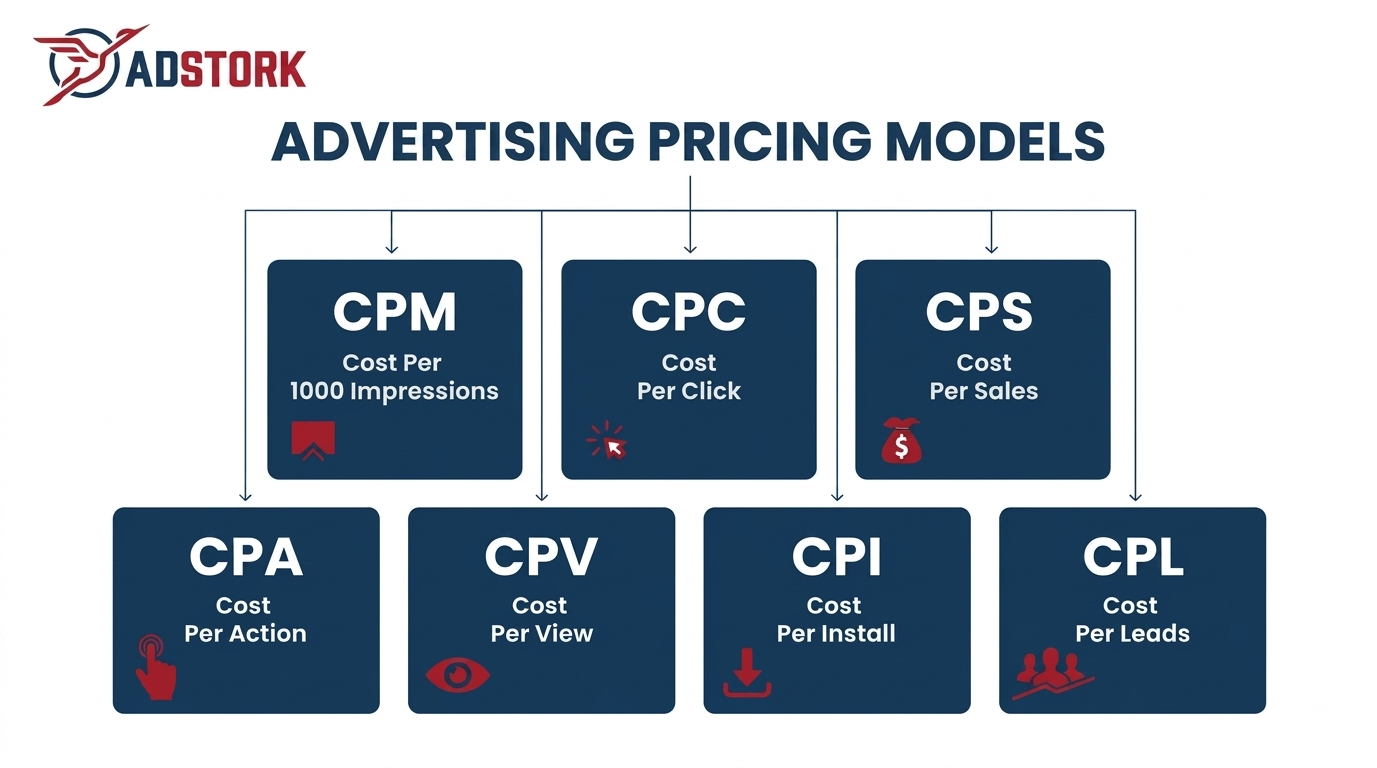
-
16 Dec, 2025
CPC vs CPM Advertising: Which Model Suits Your Strategy Best?
Digital advertising thrives on precision, strategy, and adaptability, and selecting the right pricing model is often the first critical step toward a successful campaign. The way you choose to pay for advertising can significantly influence not only your results but also how efficiently your budget is spent. Whether you’re looking to boost engagement, increase visibility, or generate leads, understanding the dynamics of each model is essential.In this blog, we take a deep dive into two of the most widely used advertising pricing models: CPC (Cost Per Click) and CPM (Cost Per Mille). We break down what each model entails, the scenarios in which they work best, and the distinct advantages they offer to both advertisers and publishers. By the end, you’ll have a clearer understanding of how these models function and how to leverage them to maximize your reach, optimize performance, and ensure a strong return on investment in today’s fast-paced digital landscape. What is CPC (Cost Per Click)?CPC is a performance-based ad model where advertisers are charged only when someone clicks on their ad. It’s widely used in search engine ads, display networks, and affiliate campaigns where the goal is direct action — whether it’s a site visit, form submission, or product purcha Key Benefits of CPCGreat for visibility and brand lift.Predictable pricing for broad reach.Often cheaper per exposure compared to CPC.When Should You Use CPC?Launching a limited-budget campaign.Driving traffic to a landing page or offer.Testing multiple creatives and CTAs.What is CPM (Cost Per Mille)?CPM means you pay per 1,000 impressions every time your ad is viewed, not clicked. This model is ideal for branding and reach-focused campaigns where the goal is high visibility and mass awareness. Key Benefits of CPMGreat for visibility and brand lift.Predictable pricing for broad reach.Often cheaper per exposure compared to CPC.When Should You Use CPM?Promoting a new product or brand name.Reaching a wide, targeted audience.Running campaigns with high-quality creatives.CPC vs CPM: Which Should You Choose?Let’s break it down:For Advertisers: Test, Track, and ScaleA smart advertiser doesn’t stick to just one model. A/B testing, performance analysis, and channel-based strategies often reveal surprising results. For example:Start with CPM for brand push.Switch to CPC when retargeting users who already saw your ad.For Publishers: Monetize SmartlyNot all traffic is created equal. If your audience is highly engaged, CPC models may yield better results. On the other hand, high-volume traffic sites often do better with CPM.Platforms like ours give publishers the flexibility to set rates, select models, and manage campaigns in real-time Final ThoughtsObjective Recommended ModelDrive Traffic CPCMaximize Visibility CPMOptimize Conversation CPCBuild Brand Awereness CPMLimited Budget CPC Both CPC (Cost Per Click) and CPM (Cost Per Mille) are fundamental pillars of modern digital advertising, each offering unique advantages depending on your marketing objectives. CPC is performance-focused, ensuring that you only pay when a user takes action by clicking on your ad, which is ideal for driving traffic, generating leads, or increasing conversions. On the other hand, CPM emphasizes visibility, making it a powerful option for building brand awareness and reaching a broader audience through high-volume impressions.Choosing the right model isn’t just a matter of preference; it’s a strategic decision that should align closely with your business goals, budget, and the nature of your campaign. For example, if your aim is to establish a strong online presence and reinforce brand recall, CPM may offer more value. If you’re targeting measurable engagement and ROI, CPC could be the better route.With the right combination of strategic planning, audience targeting, and performance analysis, you can strike the perfect balance between cost-efficiency and campaign effectiveness. Leveraging the strengths of CPC and CPM wisely enables advertisers to scale results, maximize revenue, and sustain long-term growth in a competitive digital ecosystem.
Read More