- 12 Aug, 2026
Publisher Monetization Tips: How to Earn More From Your Website Traffic
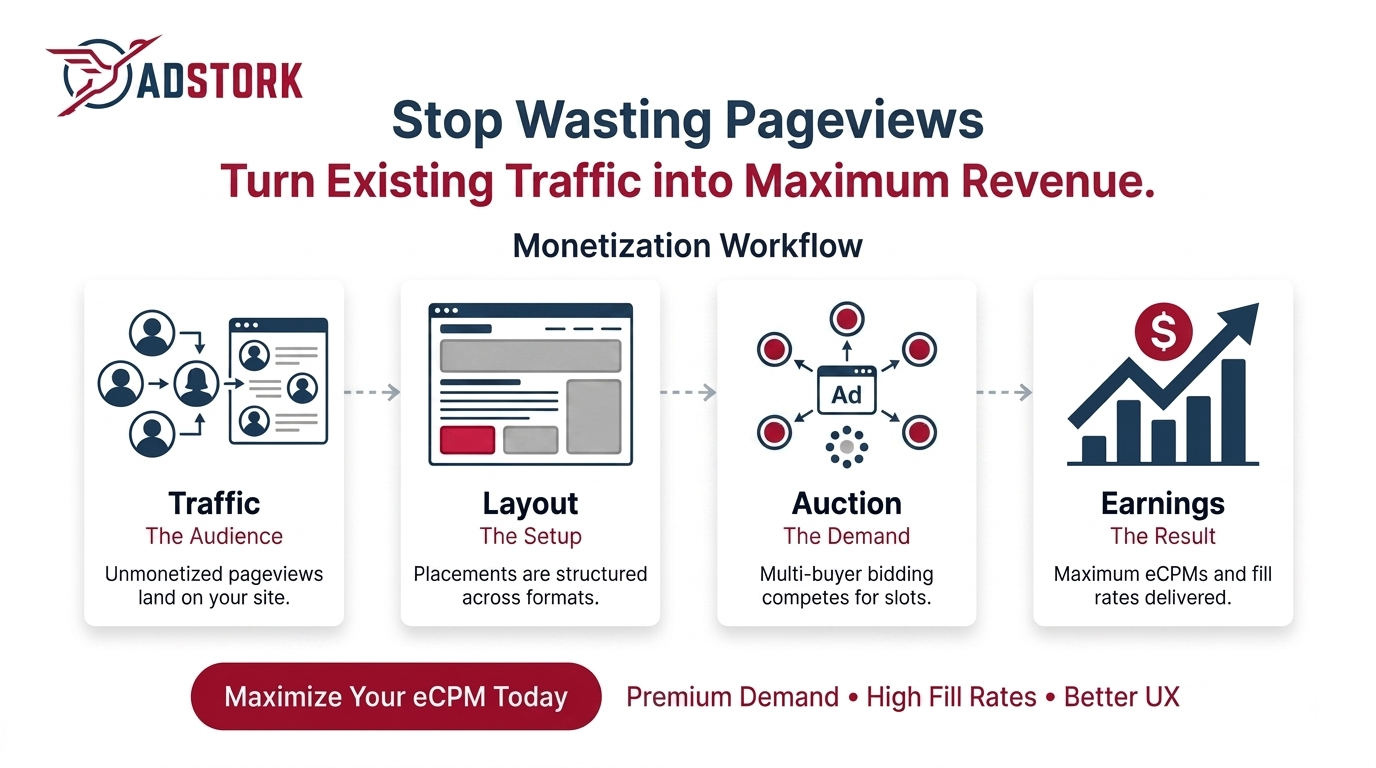
Your traffic is growing. Pageviews are up, engagement looks solid, but revenue barely moves. It is one of the most frustrating spots a publisher can be in: the audience is there, but the money is not following.
Usually, it is not a traffic problem. It is a monetization problem.
In short: Publisher monetization is the process of turning website or app traffic into ad revenue through strategies like ad placement optimization, format diversification, and demand competition (like header bidding). Done right, it can lift revenue significantly without adding a single extra visitor.
Key Takeaways
- More traffic does not automatically mean more revenue. Optimization matters more than volume.
- Ad placement, format mix, and fill rate all directly impact eCPM.
- Competing demand sources, like header bidding, consistently outperform single-network setups.
- Over-monetizing hurts user experience and long-term revenue. Balance is critical.
- The right ad network partner can boost earnings without extra development work.
1. Why Traffic Growth Alone Does Not Pay Off
Not all impressions are equal. A visitor who bounces in three seconds generates a different value than one who stays and scrolls. If your ad setup is not built to capture engaged attention, then with the right placement, format, and timing, you are leaving money on every single pageview, no matter how much traffic you drive.
2. Fix Your Ad Placement First
Placement is usually the single biggest lever.
- Above the fold – highest visibility, highest eCPM, but do not overload it.
- In-content (between paragraphs) – strong engagement without disrupting reading.
- Sticky/anchor units – stay visible during scroll, good for mobile.
- Avoid stacking too many units – it hurts load speed and user experience, which quietly kills long-term revenue.
3. Diversify Your Ad Formats
Relying on one format caps your ceiling. A mix typically performs best:
- Display – reliable baseline revenue.
- Native – blends with content, strong CTR, less intrusive.
- Video – highest eCPM per impression, best for engaged pages.
- Push/interstitial – high revenue but use sparingly; overuse drives users away.
4. Let Demand Sources Compete for You
This is the single biggest technical upgrade most publishers skip. Instead of selling inventory to one buyer at a fixed rate, header bidding lets multiple advertisers bid simultaneously for the same ad slot in real time.
- Higher competition leads to higher eCPM.
- No dependency on a single network's fill rate.
- Removes the "waterfall" delay of asking buyers one at a time.
5. Watch Your Fill Rate, Not Just Your CPM
A high CPM means nothing if half your impressions go unsold. Fill rate; the percentage of ad requests actually filled with an ad is just as important as the rate you are paid per impression. Low fill rate is often a sign of too narrow a demand pool.
Monetization Model Comparison
| Model | Best For | Publisher Earns | Trade-off |
|---|---|---|---|
| CPM | High-traffic, brand pages | Per 1,000 views | Needs volume to add up |
| CPC | Content/blog sites | Per click | Depends on engagement |
| Header Bidding | Any site with real demand | Highest competing bid | Requires setup/integration |
| Native | Content-heavy sites | Per view/click | Lower per-unit, high volume |
Common Mistakes Publishers Make
- Overloading pages with ads, tanking page speed and user retention.
- Sticking to one demand source instead of letting buyers compete.
- Ignoring mobile-specific placements, where a huge share of traffic now lands.
- Never testing placement changes. Treating the ad setup as "set and forget."
Where Adstork Fits In
This is exactly where a good network partner changes the math. Adstork connects publishers to premium, non-intrusive ad inventory and competing demand sources, so instead of settling for one buyer's rate, your inventory gets matched against real competing bids. Combined with anti-fraud filtering, that also means the traffic you are being paid for is traffic that actually counts, protecting the payouts you have already earned.
It is not about cramming more ads onto the page. It is about making every existing impression worth more.
Being Honest About the Trade-offs
More ad units or more intrusive formats can boost short-term revenue, but they cost you engagement, page speed, and repeat visitors over time. The publishers who monetize best long-term are not the ones who fill every pixel with an ad; they are the ones who treat user experience as part of the revenue equation, not separate from it.
What's Next for Publisher Monetization
As third-party cookies fade out, contextual targeting and first-party data are becoming the new backbone of publisher revenue rewarding sites that build direct audience relationships rather than relying purely on tracking-based ads.
Final Word
Growing traffic is only half the job. The other half is making sure every visitor you already have is monetized properly through smarter placement, diversified formats, and real demand competition. At Adstork Ad Network, we help publishers do exactly that, turning existing traffic into meaningfully higher revenue.
Ready to earn more from the traffic you already have? Partner with Adstork Ad Network today.
FAQs
What is publisher monetization? Turning website or app traffic into ad revenue through optimized placement, formats, and demand sources.
What's the fastest way to increase ad revenue? Diversifying demand sources through header bidding usually has the biggest immediate impact.
Does more traffic always mean more revenue? No, unoptimized placement and format choices can leave significant revenue on the table regardless of traffic volume.
What is fill rate? The percentage of ad requests that are actually filled with an ad, distinct from the rate paid per impression.
Can too many ads hurt revenue? Yes, overloading pages slows load speed and drives users away, hurting long-term earnings.
How does Adstork help publishers earn more? By connecting inventory to competing demand sources and filtering out fraudulent traffic that erodes payouts.


Leave a Comment