- 14 Sep, 2026
Why Does One Website Keep Growing While a Similar Website Stays Stuck?
Two publishers, same niche, same content category, similar audience targets. Both doubled their monthly sessions over two years. One doubled its revenue. The other grew revenue by less than 20%.
The instinct is to look for a difference in SEO, content quality, or monetisation setup. Sometimes one of those is the answer. But often the real difference is simpler and harder to see: they grew different kinds of traffic.
Most publishers track growth as a single number. Sessions, users, pageviews. That number goes up and the business is assumed to be growing. But the number does not tell you what changed inside those sessions. And what changed inside them is what advertisers actually pay for.
The argument in short
• Traffic growth is not one thing. Growth in sessions and growth in session depth have completely different monetisation outcomes.
• Impressions per session and impressions per pageview are the strongest predictors of publisher revenue, outperforming fill rate, viewability, and CPM.
• Four growth types exist: breadth, depth, frequency, and identity. Only three of them raise the monetisation ceiling.
• A publisher can hit every traffic target and still miss revenue targets, because they grew the wrong dimension.
• The ad stack built for a breadth-growth site is usually the wrong stack for a depth or identity-growth site.
What Growth Actually Consists Of
A publisher's traffic can grow in four distinct dimensions, and the analytics dashboard usually shows only the total.
Breadth. More sessions, from more people, behaving roughly the same way. A publisher who acquires new visitors from a new source or a new topic is growing breadth. Session count rises, but pages per session and return rate stay flat.
Depth. The same visitors consuming more content per visit. A publisher whose internal linking, related content, or site architecture improves will see pages per session rise even if session count stays flat.
Frequency. The same visitors returning more often. A publisher whose newsletter, editorial cadence, or brand loyalty improves will see return visits rise without new audience acquisition.
Identity. The same visitors becoming known. A publisher who moves anonymous readers into email subscriptions, logged-in accounts, or paid relationships is growing the proportion of its audience that advertisers value most in the post-cookie market.
These four dimensions are not interchangeable. Growth in one does not produce the same revenue outcome as growth in another. And the dashboard, which reports them all as "sessions" or "pageviews," does not distinguish between them.
Why the Difference Matters
Playwire analysed aggregated ad performance across thousands of publisher websites, covering 8.8 billion sessions, 28.6 billion pageviews, and 113.6 billion ad impressions. The finding that matters most for growth strategy is this: impressions per session (r=0.60) and impressions per pageview (r=0.57) were the two strongest predictors of revenue performance, outperforming fill rate, viewability, CPM, and session duration.
Read that against the four growth dimensions. Breadth growth, if it produces more sessions with the same pages per session, does not move the metric that correlates most strongly with revenue. Depth growth does. So does frequency growth, because returning visitors generate more sessions per user, which is a different path to the same underlying variable.
This is the mechanism behind the two publishers in the opening scenario. Both doubled sessions. One doubled them by acquiring new first-time visitors who read one page and left. The other doubled them by getting existing readers to come back more often and read more deeply. Both dashboards showed the same headline growth. Only one of those patterns raises the revenue ceiling.
The Freestar case study offers a related signal. When the company removed 50% of ad units from one publisher site, revenue fell only 5% while traffic from the publisher's top five sources rose 28%. Revenue later surpassed pre-cleanup levels. That outcome is only possible if the site's audience relationship was strong enough to withstand a reduction in ad friction and reward it with more return visits. The depth and frequency were already there. Removing ads revealed them.
The Revenue Premium on the Right Kind of Growth
The dimensions that raise monetisation do not just produce more impressions. They produce more valuable ones.
Direct traffic is the clearest example. News Corp has reported that direct traffic is ten times more valuable to advertisers than social traffic and five times more valuable than search. Direct visitors have chosen the brand, remember the domain, and are more likely to be in a session that continues. A publisher growing direct traffic is growing frequency and identity simultaneously, and the CPM premium reflects that.
Authenticated audiences are the second. The Reuters Institute's Digital News Report found that 79% of news publishers now rate first-party data strategy as a top three priority. That number reflects a real valuation shift. In a market where third-party identifiers have eroded, publishers who can offer verified, consented audience segments command premium CPMs that anonymous traffic cannot match. Identity growth is not a branding exercise. It is an inventory upgrade.
Both premiums exist because advertisers pay for what they can measure and trust. A direct visitor who returns weekly is a measurable relationship. An authenticated reader is a known audience member. A first-time visitor from a social referral is neither. The two publishers in the opening scenario may have had the same traffic number, but they did not have the same inventory.
What Breadth Growth Does to Monetisation
Breadth growth is not bad. It is necessary. Every publisher needs to keep acquiring new readers, and a site that stops doing so eventually shrinks.
The problem is that breadth growth alone does not lift the monetisation ceiling. It adds sessions without changing the underlying composition of the audience. If new visitors behave like the existing first-time visitors, the site's overall revenue-per-session stays roughly constant. Sessions double, revenue doubles, and the publisher has grown linearly rather than compounding.
Worse, breadth growth can dilute. If the new audience arrives from a source with lower commercial value than the existing audience, the blended average CPM can fall even as traffic rises. A publisher who adds 500,000 sessions from a low-value geography or a low-intent channel has grown the traffic number and moved the revenue number in the wrong direction.
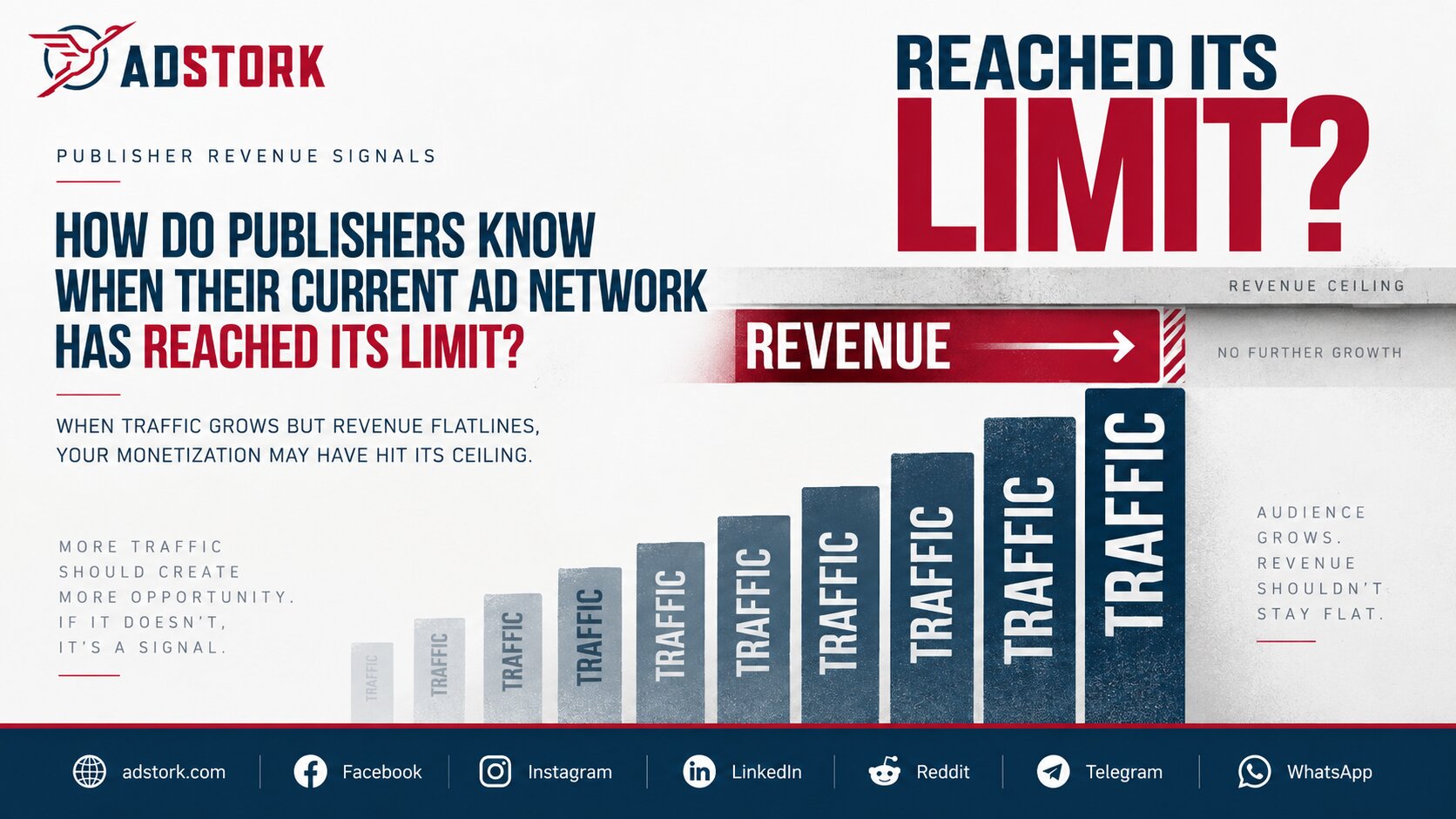
This is the specific pattern behind many publishers who report strong traffic growth and flat revenue. They are not failing at monetisation. They are succeeding at a kind of growth that does not show up in monetisation.
Diagnosing Which Growth You Are Producing
The practical work is separating the four dimensions in your own reporting. Most analytics platforms can surface them with modest configuration.
For breadth: sessions and users over time, split by acquisition channel. If growth is concentrated in a new channel while pages per session and return rate stay flat, you are growing breadth.
For depth: pages per session and pages per user, tracked over time. If these are rising, internal linking and content architecture are working. If they are flat while sessions rise, the new traffic is not going deeper.
For frequency: return visitor rate and sessions per user. Direct traffic share is a useful proxy. If direct share is flat or declining while total sessions rise, the new audience is not converting to familiarity.
For identity: newsletter subscribers, logged-in users, and paying subscribers as a percentage of total audience. If this ratio is falling while traffic rises, the publisher is adding anonymous visits faster than known relationships.
The diagnostic question is not whether each metric is growing. It is whether the mix is shifting toward the dimensions that raise monetisation or away from them. A publisher can have growing traffic and shrinking monetisation capability at the same time, if the growth is concentrated in the wrong dimension.
The Ad Stack Question This Creates
Publishers who diagnose this pattern often discover a second problem downstream. The ad stack was built for the site they used to be.
A breadth-growth publisher running a high-volume, low-CPM setup is a reasonable configuration. Efficiency comes from scale, floors are set to maintain fill, and the formats are tuned for a first-time visitor who will read one page and leave. There is nothing wrong with that stack for that audience.
A depth-and-identity publisher needs something different. Depth audiences read further, so the ad density appropriate for a two-page session is wrong for a six-page session. Identity audiences justify premium floor prices, because advertisers will pay more for known readers. Frequency audiences produce the return visits that command the direct traffic premium, and the floor logic should reflect that.
When the growth composition has shifted but the ad stack has not, the publisher has two problems layered on top of each other. The traffic is not producing the revenue it should, and the setup is not capable of capturing what the traffic has become.
This is where the partner question becomes concrete rather than rhetorical. If a publisher has grown depth, frequency, and identity, and their revenue has not tracked, the diagnosis is usually not a tuning problem. It is a demand-side gap: the current stack is not exposing the site's premium inventory to buyers who would pay for it. Testing a second demand source against the highest-value segment is the cleanest way to find out whether the ceiling is the market or the current setup.
Publishers who have genuinely grown the valuable dimensions of their traffic often find that the gap is not on the demand side at all. It is that the current stack was never built for the audience the site has become. Adstork works with established publishers in exactly that position, usually as a second demand source tested against specific high-value segments rather than a wholesale replacement. You can request a segment-level review here if the pattern in this article looks familiar and you want an external view on where the gap sits.
What This Changes About Growth Strategy
Most publishers set growth targets in a single number. Ten million sessions by the end of the year. Fifty percent more users. Another million pageviews per month. These targets are easy to track and easy to communicate, and they are almost always the wrong target.
A publisher who hits ten million sessions by growing breadth alone has achieved the number and missed the business. A publisher who hits seven million sessions by growing depth, frequency, and identity has achieved something more valuable, and their revenue will show it.
The practical shift is to set targets in the dimensions that matter. Growth in pages per session. Growth in return rate. Growth in direct share. Growth in authenticated audience. These are harder to move than session count, and they compound in a way that session count does not.
Two publishers can start in the same niche, publish similar content, and target the same readers. If one grows breadth and the other grows depth, frequency, and identity, they will not end up with the same business. The traffic numbers may look similar for a while. The revenue will not. And by the time the gap is obvious in the reporting, the underlying cause will be years in the past.
FAQs
Why does my traffic keep growing but my revenue does not? The most common cause is that growth is concentrated in breadth, meaning more sessions from new visitors behaving like existing first-time visitors, rather than in depth, frequency, or identity. Playwire's ecosystem analysis found that impressions per session and impressions per pageview are the strongest predictors of revenue, so growth that does not move those metrics will not move revenue proportionally. Diagnose which dimension is growing before assuming the problem is in monetisation.
Is direct traffic really worth more than search or social? Yes, and by a wide margin. News Corp has reported that direct traffic is ten times more valuable to advertisers than social and five times more valuable than search. The premium reflects what direct visitors signal: brand familiarity, higher trust, and a greater likelihood of being in a session that continues. A publisher whose direct share is growing is not just growing traffic. They are growing the composition of their audience in a way that advertisers pay for.
Should I change ad partners if my growth has shifted toward depth and identity? Only after confirming the diagnosis. A depth-and-identity publisher with a flat revenue line has two possible problems: the ad stack is configured for a breadth-growth site, or the demand stack is not exposing the premium inventory to buyers who would pay for it. The first is a tuning problem. The second is a partner question. Test a second demand source against the highest-value segment and compare revenue per session, not headline CPM. The result will tell you which problem you actually have.



Leave a Comment