- 26 Nov, 2026
How to Choose a Product to Advertise First
Imagine you own an online store selling shoes, bags, watches and clothing. You want to start advertising, but there is one question: which product should you promote first?
Advertising everything at once can make it difficult to understand what customers actually want. A better starting point is to choose one product, understand why people might buy it, and give it a fair chance to attract customers.
In short: Choosing the right product to advertise starts with checking whether people want it, whether you can make a reasonable profit, whether it is available to buy, and whether its benefits are easy to explain. Start with one suitable product instead of promoting your entire store at once.
Written by: The Adstork Ad Network advertiser team
Last updated: November 2026
Reading time: 6 to 8 minutes
Best for: New online store owners and e-commerce advertisers
Key Takeaways
- You do not need to advertise every product in your store.
- Choose products that people want and that your business can sell profitably.
- Check product availability before spending money on promotion.
- Test one product first and use the results to decide what to promote next.
Why Should You Advertise One Product First?
When a store has many products, it is tempting to promote all of them. More products may seem like more chances to get customers. However, this can make your advertising harder to manage.
Think about a store selling 20 different products. If you promote all of them with one general advertisement, customers may not understand what makes the store worth visiting.
Now imagine promoting just one product, such as a popular backpack. You can show its design, explain its useful features, mention its price and direct customers to its product page.
Promoting everything
Customers see many products and may not know which one they should look at first.
Promoting one product
Customers get one clear message and know exactly what the advertisement is offering.
This also makes it easier to understand which product attracts interest. If you are new to advertising, this is a much simpler way to begin.
What Makes a Product Worth Advertising?
A product does not become a good choice just because it looks attractive or has a high price. Before choosing what to advertise, look at these four basic things.
1. Do people want it?
Think about whether people have a reason to buy this product. Does it solve a common problem? Is it useful for a particular group of customers? Do people already ask about it?
2. Can you make a profit?
Selling a product does not always mean earning money. Check what it costs to buy or make the product, pack it, deliver it and handle other expenses. You need enough room to cover advertising costs too.
3. Is it available?
Imagine an advertisement brings customers to a product that is already out of stock. They may leave without buying anything. Make sure you have enough stock or a reliable way to restock it.
4. Can you explain it easily?
A customer should quickly understand what the product is and why it may be useful. If you need a very long explanation before someone understands its value, you may need a clearer offer or a different product to start with.
Try This: A Simple Product Selection Scorecard
You may have three or four products in mind. Instead of guessing, compare them using the same questions.
Give each product a score from 1 to 5 for every question. A score of 1 means it performs poorly, while 5 means it performs very well. These scores are your own judgement, not industry benchmarks.
| What to check | Product A | Product B | Product C |
|---|---|---|---|
| Customer interest | ____ | ____ | ____ |
| Profit potential | ____ | ____ | ____ |
| Product availability | ____ | ____ | ____ |
| Easy to explain | ____ | ____ | ____ |
| Total score | ____ / 20 | ____ / 20 | ____ / 20 |
The product with the highest score may be a good starting choice. But do not select it based on the total alone. If it has no stock or leaves almost no profit, it may not be suitable for advertising.
Remember: The scorecard helps you compare products. It does not guarantee that a product will sell. Real customer responses will tell you more after you start testing.
A Simple Example: Choosing Between Three Products
Let's imagine an online store sells backpacks, watches and phone covers. The owner wants to promote one product first.
The following example uses made-up scores to show how the comparison works.
Backpack
Interest: 4/5
Profit: 4/5
Stock: 5/5
Easy to explain: 5/5
Total: 18/20
Watch
Interest: 3/5
Profit: 4/5
Stock: 3/5
Easy to explain: 3/5
Total: 13/20
Phone cover
Interest: 4/5
Profit: 2/5
Stock: 5/5
Easy to explain: 5/5
Total: 16/20
In this example, the backpack gets the highest score. The owner could choose it for the first advertising test because it has good stock, reasonable profit potential and clear benefits to show customers.
The owner should still check actual customer response before deciding to spend more. A score is a starting point, not proof of future sales.
What Should You Show in the Advertisement?
Once you choose a product, make sure the advertisement gives customers a clear reason to look at it.
Show the product
Use a clear image or video so people can understand what you are selling.
Explain one benefit
Tell customers what makes the product useful or different.
Give a clear next step
Tell people whether they can shop now, view details or contact your store.
For example, instead of writing "Visit our store for great products", a backpack advertisement could say:
A Backpack for Your Everyday Needs
Explore a practical design for work, study and everyday travel.
Shop Now
The message is simple. Customers know what the product is and what they can do next. You can also learn more about writing advertisements for different formats.
Where Should Customers Go After Clicking?
When someone clicks your advertisement, take them directly to the page for the product you are promoting.
For example, if your advertisement promotes a backpack, the customer should land on the backpack's product page, not a general homepage where they have to search for it again.
Check the product page
- Is the product price easy to find?
- Are the product images clear?
- Can customers understand its main features?
- Is the product available to order?
- Is the buying or contact process easy to follow?
A clear product page helps customers understand what they are buying. You can also read why advertising clicks do not always turn into customers.
How Do You Know If Your Product Is Working?
After your advertisement starts running, look at what customers actually do. Do not judge the product only by how many people click the ad.
For example, people may click because the product image looks interesting, but that does not mean they will buy it. Check whether visitors add the product to their cart, ask questions or complete an order.
A simple way to review your test
Many clicks, no orders: Check the product price, page information and buying process.
People add products to their carts but do not buy: Review delivery costs, payment options and checkout steps.
People buy but profit is low: Check product costs and advertising expenses.
People buy and the numbers make sense: Consider testing a larger budget carefully.
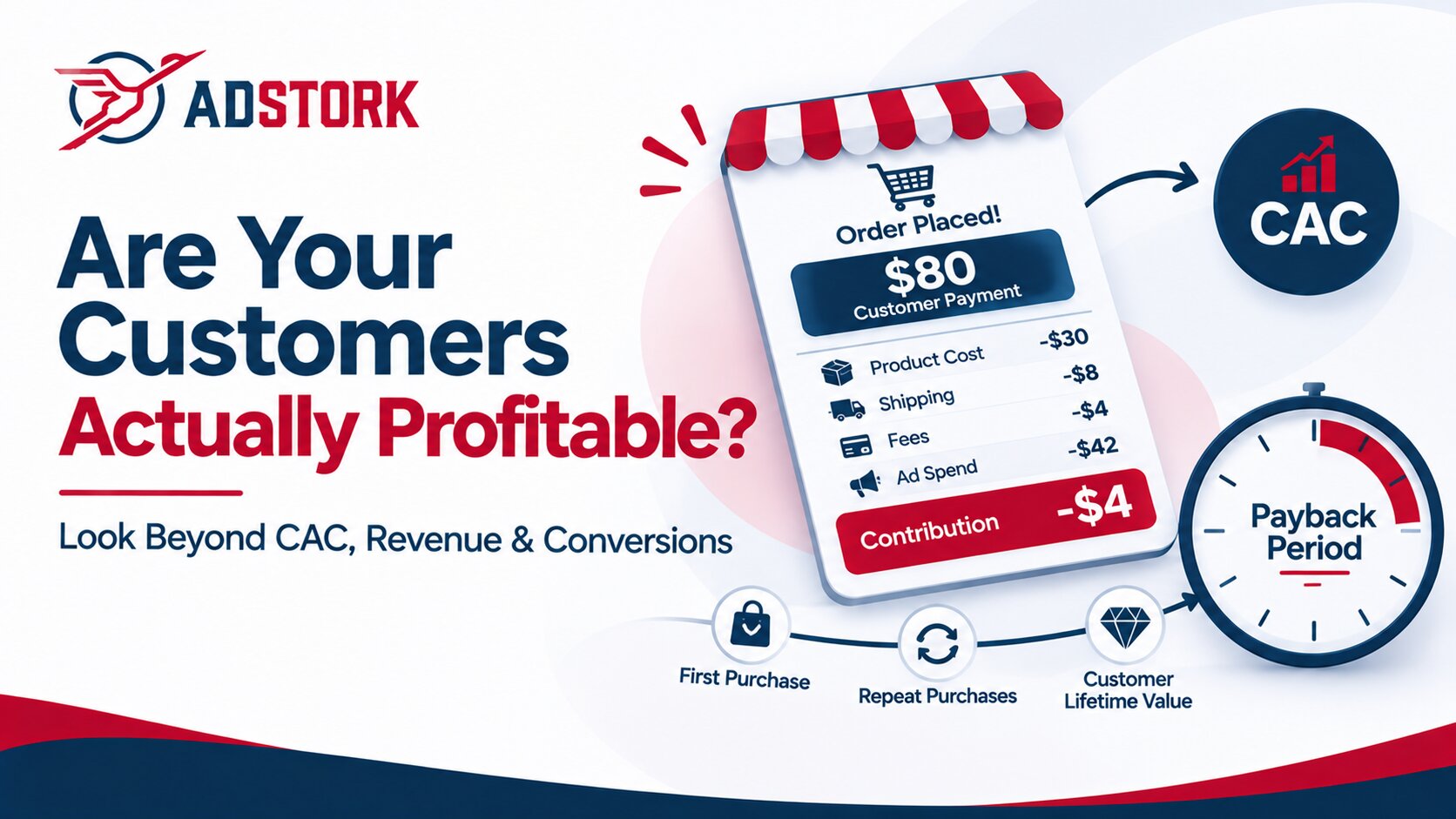
If you need help understanding whether your sales cover your advertising expenses, read how to check whether each customer is profitable.
Where Does Adstork Fit In?
Once you know which product you want to promote, the next step is choosing how to reach potential customers. Adstork offers banner, native, push, popunder and video advertising formats for advertisers.
You can explore the Adstork advertising platform to learn about its campaign options and available support. Choose your product and offer first, then discuss a suitable starting test with your account manager.
What Are the Honest Limits?
Even if a product gets the highest score, it may not become your best-selling product. Customers may like the product but find the price too high. They may also prefer another design, brand or seller.
A small advertising test may also produce too little information to make a final decision. Do not stop a product or increase your budget based on just a few clicks.
Use your scorecard to make the first choice, then use real orders, costs and customer feedback to make the next one.
Quick Recap
You do not need to advertise your entire store at once. Choose one product that people want, that you can sell profitably and that you can keep available. Test it, check the results and use what you learn before promoting more products.
Final Word
Your first advertising decision should not be about promoting everything you sell. It should be about finding one product that gives customers a clear reason to buy. Start with a simple choice, test it carefully and let the results guide your next step.
When you are ready to reach more potential customers, explore the advertising options available through Adstork Ad Network.
Frequently Asked Questions
1. Should I advertise all my products at once?
Not necessarily. If you are new to advertising, start with one suitable product so you can understand how customers respond before promoting more products.
2. How do I choose a product to advertise?
Check customer interest, possible profit, product availability and how easily you can explain its benefits. Compare your options before choosing one.
3. Should I advertise my cheapest product?
Not always. A low price may attract attention, but you should also check how much profit remains after product costs and advertising expenses.
4. What if my advertised product goes out of stock?
Pause or update the advertisement and make the product's availability clear on your website. Avoid continuing to promote something customers cannot buy.
5. How long should I test one product?
There is no fixed period for every product. Give the test enough time and budget to collect useful information, and consider how long customers normally take to make a purchase.
6. Can I advertise another product after the first test?
Yes. Once you have reviewed the first test, you can choose another product and compare its results using the same basic checks.
Keep Reading
Comments (0)
Latest Blog
Leave a Comment