- 24 Nov, 2026
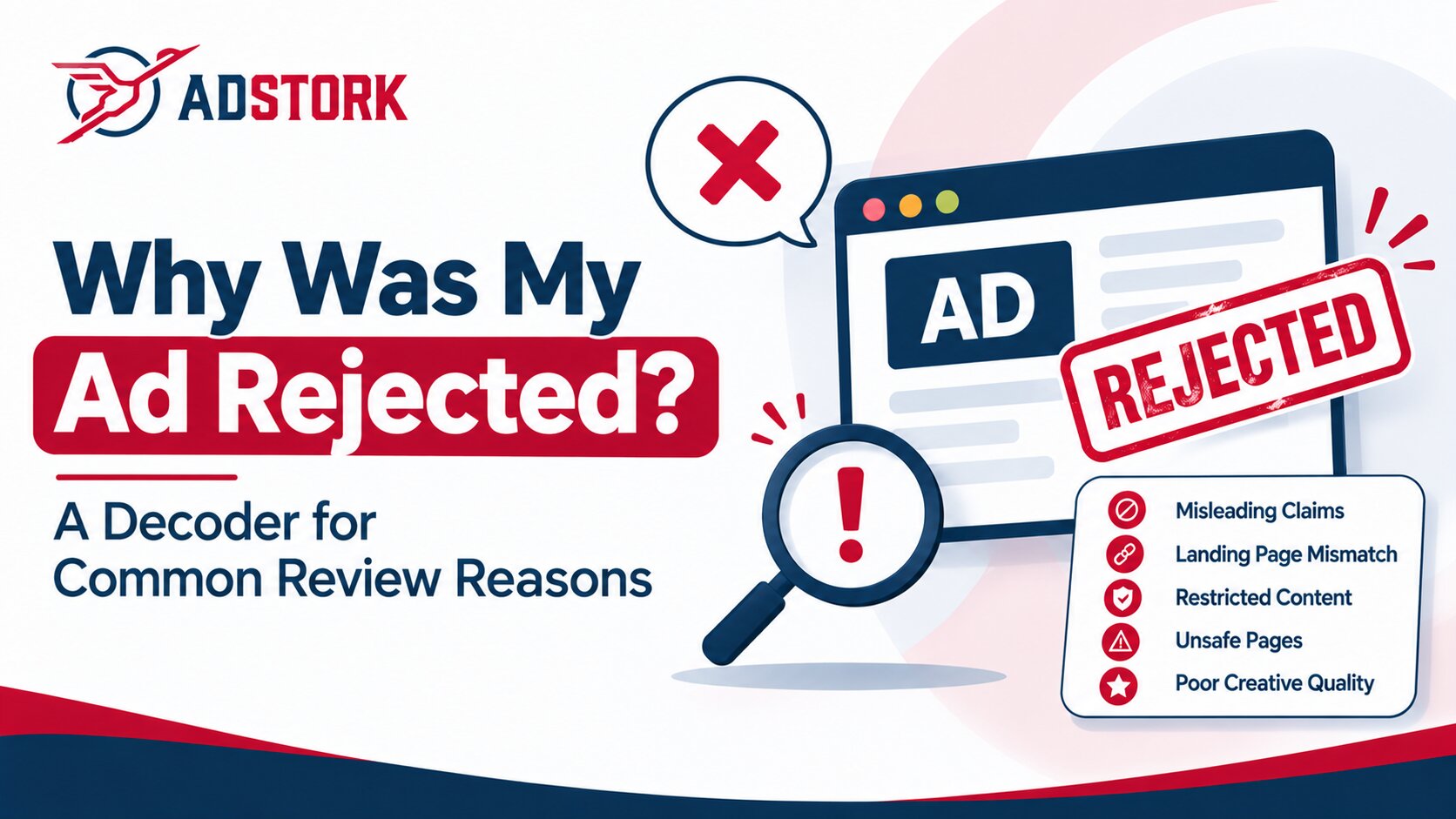
Why Was My Ad Rejected? A Decoder for Common Review Reasons
The email says "non-compliant creative" and nothing else. You change the headline, resubmit, and get the same answer. Advertisers in forums describe this loop constantly, and many assume the problem is their traffic when it is the ad or the page.
In short: Most ad rejections come from a short list of causes: misleading claims, a page that does not match the ad, restricted content, unsafe pages, cloaking, deceptive design, poor creative quality, or missing business information. Match the wording to the decoder below, fix the cause, and resubmit with a clear note.
Written by: The Adstork Ad Network advertiser team
Last updated: November 2026
Note: Rules differ by network. This decoder covers common reasons across the industry, not a single network's policy.
Why Do Rejections Feel So Vague?
Review teams handle large volumes, so messages are short and often generic. Scale matters here: PropellerAds' public Q1 2026 safety report counted 36,085 rejected campaigns, with malware-related issues the second-largest share, and nearly 70% of suspended advertisers were removed for cloaking. Networks are screening hard for unsafe and deceptive ads, which means honest ads sometimes get caught by broad rules. Knowing the usual causes lets you fix them fast.
What Does Each Rejection Usually Mean?
What Should You Check Before You Submit?
1. Every claim in the ad is true and visible on the page.
2. The ad links to the exact page it promises.
3. The page looks the same on phone, desktop, and in every country you target.
4. No forced redirects, surprise downloads, or fake alerts.
5. You own the rights to every image, logo, and brand name used.
6. AI-generated images have been zoomed in and checked for broken text.
7. Sizes and text lengths match the format specs.
8. Price, terms, contact details, and privacy policy are easy to find.
9. Your category's rules are confirmed in writing.
10. The page loads fast on a real phone.
How Should You Resubmit or Appeal?
Subject: Resubmission for campaign ________
Rejection message: ________ (paste it exactly)
What we found: ________ (the likely cause)
What we changed: ________ (list the specific edits)
Request: Please confirm whether the changes resolve the issue, and tell us if anything else needs correcting.
Avoid resubmitting an unchanged ad several times, and never open new accounts to get around a rejection. Both can turn a fixable problem into a suspension.
Where Does Adstork Fit In?
Adstork screens ad quality and traffic integrity, so ads that mislead or put users at risk do not reach readers. If an ad is not approved, ask your account manager for the specific reason and the policy it relates to, in writing, so you can fix the real cause. You can also ask before you build: confirm the rules for your category first, and see our 12 questions to ask an ad network.
What Are the Honest Limits?
Reality check: A decoder gives likely causes, not certainty. Each network sets its own policy, and some rejections are judgment calls that need a human reply. Policies also change, so always read the current rules.
Quick recap
Most rejections trace to eight causes. Match the message to the decoder, run the 10-point check, and resubmit with a specific note. Never hide content from reviewers.
FAQs
Why was my ad rejected without a clear reason? Review messages are often short and generic. Check the likely causes: misleading claims, a page that does not match the ad, restricted content, unsafe pages, deceptive design, poor creative quality, or missing information.
What is cloaking in advertising? Showing reviewers one page and real visitors another. It is treated as a serious violation and is a leading reason advertiser accounts are suspended.
Can I resubmit a rejected ad? Yes, after fixing the cause. State what you changed and ask the network to confirm. Repeated unchanged resubmissions can backfire.
Do AI-generated images cause rejections? They can, when they contain broken text, invented logos, or misleading visuals. Check each image closely before submitting.
How does Adstork handle ad review? Ad quality and traffic integrity are screened, and your account manager can explain the specific reason for a rejection. Ask for it in writing.
Leave a Comment