- 14 Oct, 2026
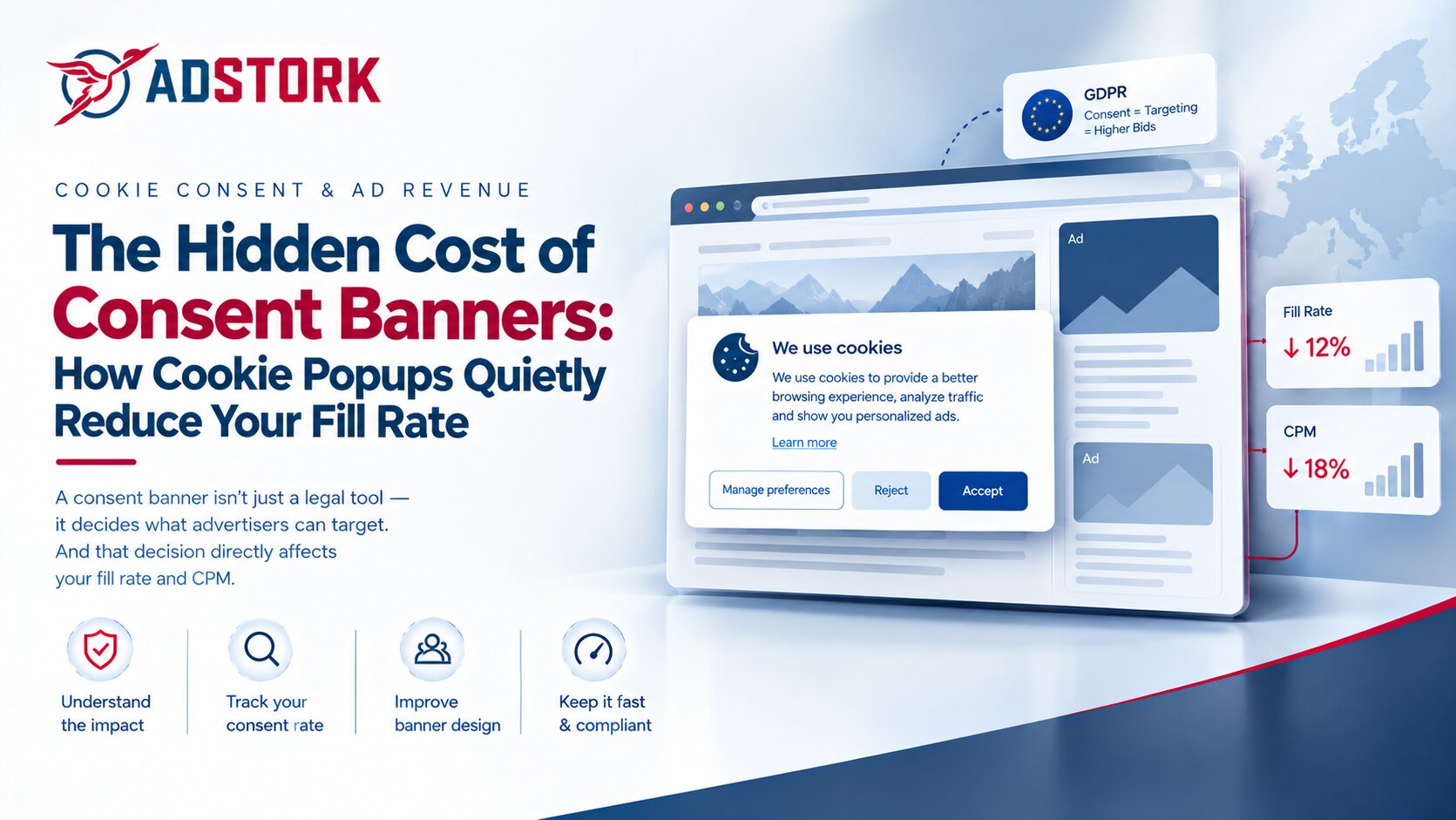
The Hidden Cost of Consent Banners: How Cookie Popups Quietly Reduce Your Fill Rate
A publisher adds a cookie banner to stay compliant, and a few weeks later European revenue looks softer than it should. Traffic is steady and content is unchanged, yet fill rate and CPM for those visitors have slipped. Almost nobody connects the two events, because the banner is filed under legal, not revenue.
The connection is real. The consent banner decides what advertisers are allowed to know about each visitor, and that decides how much they will bid.
In short: A consent banner controls whether advertisers can use cookies and personal data to target a visitor. When a visitor declines or ignores the banner, ads are usually served without personalization, which attracts fewer bidders and lower CPMs. A well-designed, compliant consent setup can recover a meaningful share of that lost revenue.
Key Takeaways
- Consent affects revenue because advertisers pay less for impressions they cannot target.
- Consent rates vary widely between sites, and banner design is one of the biggest reasons.
- Banners can also slow the page and shift the layout, which hurts viewability on top of consent loss.
- The goal is a clear, honest banner that earns consent, not one that tricks visitors into it.
1. Why Does a Consent Banner Affect Ad Revenue?
In regions covered by privacy laws such as GDPR in Europe and the UK, a site generally needs a visitor's permission before advertisers can use cookies or identifiers to target them. Without that permission, the impression can still be sold, but only as a contextual or non-personalized ad. Many buyers bid less for those impressions or skip them, so competition drops and the price falls with it.
There is also a technical side. Many demand sources only bid when the page passes a valid consent signal. If the consent tool is missing, misconfigured, or slow to load, requests can go out with no signal at all, and some buyers will not respond. The result is lower fill rate on exactly the traffic that should be easy to sell.
2. How Can Publishers Tell if Consent Is Costing Them Money?
- Compare regions. If revenue per session in regulated regions is much lower than in similar unregulated ones, consent is a likely factor.
- Check your consent rate. Most consent management platforms report how many visitors accept, reject, or ignore the banner.
- Look at fill rate by country. A sharp gap between regulated and other countries points to a consent or signal problem.
- Test the load order. Confirm the consent tool loads before ad requests fire, so the signal is present when buyers look for it.
3. What Can Publishers Do to Improve Consent Without Cutting Corners?
- Use a reputable consent management platform that supports the industry's standard consent framework, so demand sources can read the signal correctly.
- Explain the value plainly. Short, honest wording about how ads keep content free tends to perform better than dense legal text.
- Make choices equally easy. Accept and reject should both be clear. Regulators have taken action against banners that make refusing deliberately hard.
- Reserve space for the banner. A banner that pushes content down causes layout shift, which hurts both user experience and viewability.
- Keep contextual value high. Clear, well-categorized content helps non-consented impressions sell better, since advertisers can still target the topic of the page.
4. Where Does Adstork Fit In?
Impressions without consent still have value, but only if enough buyers compete for them. Adstork connects publishers to multiple demand sources across banner, native, push, popunder, and video formats, so non-personalized traffic is still matched against real competition rather than a single fixed rate. Transparent reporting by country and format also lets publishers see where consent-related revenue gaps sit and measure whether a banner change actually helped.
5. What Are the Honest Limits?
Consent is a legal requirement in many regions, not an optimization lever to push as far as possible. Some visitors will always decline, and no design should hide that choice. The realistic aim is to remove avoidable losses, such as slow loading, broken signals, and confusing wording, while respecting each visitor's decision. Rules also differ by country and change over time, so publishers should confirm their obligations with a qualified adviser.
Consented vs. Non-Consented Impressions
| Factor | Consented Visitor | Non-Consented Visitor |
|---|---|---|
| Targeting | Audience and context | Context only |
| Bidder interest | Broad | Narrower |
| Typical CPM | Higher | Lower |
| Best lever | Clear, honest consent flow | Strong contextual signals and competing demand |
What Comes Next for Consent and Advertising?
Privacy rules are expanding to more regions, and advertisers are leaning harder on contextual signals and first-party data. Publishers with logged-in or email-subscribed audiences, who have given clear consent directly, will hold an advantage over those relying on anonymous traffic.
Final Word
A consent banner is a compliance tool and a revenue factor at the same time. Getting it right protects both. At Adstork Ad Network, competing demand and transparent reporting help publishers keep non-personalized traffic earning and see exactly where consent is affecting results.
Ready to find the revenue your consent setup might be hiding? Partner with Adstork Ad Network today.
FAQs
Do cookie consent banners reduce ad revenue? They can. When visitors decline or ignore the banner, ads are typically served without personalization, which draws fewer bidders and lower CPMs. The size of the effect depends on the site, region, and banner design.
What is a consent management platform? A tool that shows the consent banner, records each visitor's choice, and passes that choice to advertising partners in a standard format.
Can I still show ads to visitors who decline cookies? Generally yes, as contextual or non-personalized ads, though they usually earn less than personalized ones.
Can a consent banner hurt page speed? Yes. A heavy or late-loading banner can slow the page and cause layout shift, so choose a lightweight tool and reserve space for it.
Is it acceptable to make the reject button harder to find? No. Regulators have acted against banners that steer visitors toward accepting, and honest design is both safer legally and better for trust.
Leave a Comment