- 12 Aug, 2026
Ad Fraud & Bot Traffic Prevention: How to Protect Your Ad Spend
You launch a campaign. Impressions climb, clicks come in, the dashboard looks healthy. Then the conversions never show up. Somewhere between the numbers and the results, the budget just disappeared.
This is the quiet reality behind a huge share of digital ad spend. Ad fraud is the deliberate manipulation of ad metrics, usually through bots, click farms, or spoofed domains, to fake impressions, clicks, or conversions that no real person ever generated. It costs advertisers billions every year and is one of the most underestimated threats to campaign ROI.
Key Takeaways
- Fraud is a structural cost of unprotected programmatic buying, not a rare event
- Bots can fake impressions, clicks, and even app installs at scale
- It hurts both sides: advertisers lose budget, honest publishers lose trust and payouts
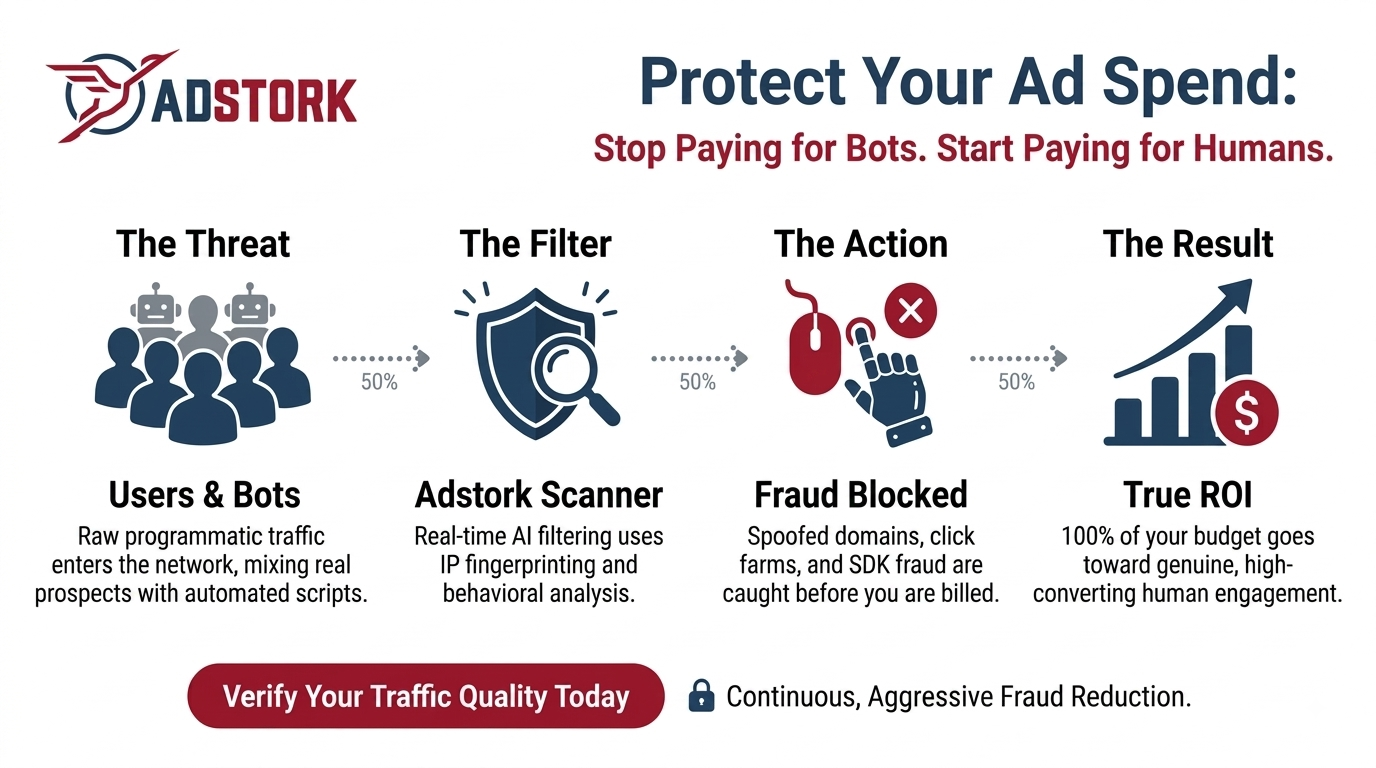
- Detection relies on behavioral analysis, fingerprinting, and real-time filtering
- No network eliminates fraud fully. The goal is aggressive, continuous reduction
1. Why Fraud Is So Easy at Scale
Programmatic advertising runs on speed. Billions of impressions are bought and sold in milliseconds, with almost no human review. That is what makes it efficient, and exactly what makes it exploitable. A bot does not need to fool a person, only a script. Multiply one bot across a botnet of thousands of devices, and a single operator can fake the impression volume of a real mid-size publisher.
2. Common Types of Ad Fraud
- Bot traffic – automated scripts fake pageviews and impressions, sometimes mimicking scroll and click behavior to slip past basic filters
- Click fraud – repeated fake clicks drain budgets or generate fraudulent affiliate revenue
- Domain spoofing – low-quality sites disguise themselves as premium publishers to charge premium CPMs
- Ad stacking / pixel stuffing – multiple ads layered invisibly so one slot bills several impressions no one saw
- SDK spoofing – fake app installs and in-app events, mainly hitting mobile performance campaigns
3. Who Gets Hurt
- Advertisers – they burn budget on impressions and clicks no real prospect ever saw, inflating true CPA
- Publishers – genuine, high-traffic sites get undercut when fraudulent inventory drags down market pricing
- Networks – they lose advertiser trust fast in a market where budget can move to a competitor in one click
A common misconception is that fraud only hits cheap, obscure networks. In reality, spoofing specifically targets premium-looking inventory because advertisers scrutinize it less.
4. How Detection Actually Works
- Behavioral analysis – flags inhuman patterns like identical click timing or zero scroll activity
- IP/device fingerprinting – blocks known data-center IPs and bot-farm device signatures
- Traffic source verification – confirms the claimed publisher domain matches the real ad request origin
- Machine learning models – score traffic in real time and adapt to new fraud patterns
- Post-bid analysis – cross-checks delivered impressions against engagement data after the fact
5. Fraud Type Comparison
| Fraud Type | What It Fakes | Hurts Most | Primary Defense |
|---|---|---|---|
| Bot Traffic | Impressions | Advertisers | Behavioral + IP analysis |
| Click Fraud | Clicks | Advertisers | Click pattern checks |
| Domain Spoofing | Publisher identity | Advertisers, honest publishers | ads.txt verification |
| Ad Stacking | Viewability | Advertisers | Post-bid audit |
| SDK Spoofing | App installs | Performance advertisers | Device fingerprinting |
6. Best Practices for Advertisers
- Choose networks that disclose their fraud-filtering methodology, not vague promises
- Watch for abnormal CTR, both suspiciously high and suspiciously low
- Set frequency caps and dayparting rules
- Request traffic quality reports, not just delivery numbers
Where Adstork Fits In
This is the gap Adstork was built to close. Every impression passes through anti-fraud algorithms that catch invalid traffic before it is ever billed, backed by comprehensive analytics so advertisers can verify quality themselves, not just take our word for it. For publishers, the same filtering protects payout integrity by keeping genuine, high-traffic sites from being priced out by fraudulent competitors.
No honest network can promise zero fraud. It is an arms race, and some sophisticated bots will slip through. The real commitment is catching it early, filtering aggressively, and staying transparent when something gets through.
What's Next
As third-party cookies phase out, fraud detection is shifting toward first-party data and contextual signals instead of pure behavioral tracking. AI-driven anomaly detection is getting faster, but fraud tactics keep adapting too, which keeps traffic quality a real differentiator between ad networks.
Final Word
Fraud is the tax nobody budgets for. It hides inside metrics that look fine until the ROI does not add up. At Adstork Ad Network, we treat traffic quality as infrastructure, not an afterthought, combining anti-fraud technology with full transparency so your spend goes toward real people, not scripts.
Ready to stop paying for traffic that was never really there? Partner with Adstork Ad Network today.
FAQs
What is ad fraud? The use of bots, click farms, or spoofed domains to fake impressions, clicks, or conversions.
How much does it cost advertisers? Industry estimates put global losses in the tens of billions annually.
How can I tell if my traffic is fraudulent? Watch for abnormal CTR, odd-hour traffic spikes, and sessions with no real engagement.
Does fraud only hit low-budget campaigns? No, premium inventory is a common spoofing target precisely because it is trusted more.
Can fraud be fully eliminated? No network can promise that. The goal is continuous, aggressive reduction.
How does Adstork prevent fraud? Anti-fraud algorithms filter invalid traffic before billing, backed by transparent analytics.




Leave a Comment